News
World Bank, experts seek increased funding for IDP children’s education

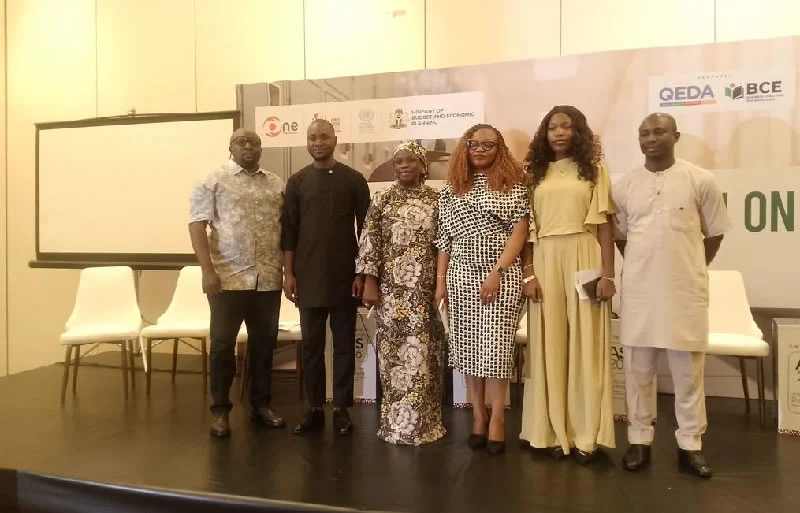
The World Bank has called for increased investment in education, healthcare and nutrition for internally displaced children, warning that failure to support children affected by conflict could undermine Nigeria’s future human capital development.
Due to a decade-long insurgency, especially in the North-East, Nigeria has about 3.7 million internally displaced persons, according to the United Nations Refugee Agency.
Senior Health Specialist at the World Bank, Dr Ritgak Tiiley-Gyado, represented by the bank’s Senior Social Development and Safeguards Specialist, Zara Goni, made the call during a panel session at the Africa Social Impact Summit held at Eko Hotels and Suites, Lagos.
The bank said children living in humanitarian settings should not be denied access to quality education and other essential services, stressing that investment in early childhood development remained one of the most effective strategies for breaking the cycle of poverty.
The session, themed “Financing Early Childhood Development in Crisis: Mobilising Private and Philanthropic Capital for Early Childhood Development in Crisis,” featured experts from the education, health and development sectors.
Others who featured on the panel are the National Coordinator, Nigeria Coalition on Early Childhood Development in Crisis, Arome Agenyi; Education Programmes Lead, Sterling One Foundation, Samuel Ajayi; Education Advisor, Plan International, Tobi Ransomed; Early Childhood Development Youth Ambassador, Priscilia Ibadan.
Speaking during the discussion, Tiiley-Gyado said evidence generated through the bank’s research showed that investing in children during their formative years produced long-term economic and social benefits.
According to her, children who receive quality early childhood education and care become healthier, more productive and better equipped to contribute positively to society.
“Every naira invested in early childhood development generates several more naira through higher productivity and earnings. We have also found that children who receive early childhood development become better and more productive citizens.
“It also promotes healthier populations because investment in health and nutrition during the early years leads to healthier and more stable societies later in life. It equally reduces social costs because positive attitudes are shaped during childhood,” she said.
She added that early childhood development remained critical to breaking intergenerational poverty and strengthening Nigeria’s human capital.
Drawing from his experience working in humanitarian settings in the North-East, Tiiley-Gyado stressed the importance of ensuring that internally displaced children had access to education, nutrition and healthcare despite the challenges posed by insecurity.
She recalled working with the Lake Chad Basin Commission and the Multinational Joint Task Force to improve access to essential services for children living in Internally Displaced Persons camps.
“We ensured that adequate nutrition, healthcare services and education were provided for children in IDP camps because we are looking at the future society. We cannot afford to make mistakes with this generation.
“Regardless of the situation, we cannot move ahead without these children because they also have a role to play in our economy and national development,” he said.
Tiiley-Gyado also called for low-cost, community-driven and scalable interventions capable of delivering sustainable solutions in crisis-affected communities.
Also speaking, the National Coordinator of the Nigeria Coalition on Early Childhood Development in Crisis, Arome Agenyi, called on the Federal Government to increase funding for early childhood education.
He lamented that only about one per cent of the national education budget was allocated to early childhood education and development.
“Across the country, only about one per cent is budgeted for early childhood education and development. We call on the private sector to show greater interest and not leave responsibility solely to the government.
“More people must invest their resources in early childhood development; otherwise we risk losing a generation,” Agenyi said.
The Education Programmes Lead at Sterling One Foundation, Samuel Ajayi, also advocated stronger collaboration between the public and private sectors to improve financing for early childhood development.
“We have to be intentional about investing in early childhood development. Collaboration between the public and private sectors is key if we are to achieve meaningful impact,” he said.
Education Adviser at Plan International, Tobi Ransomed, stressed the importance of nutrition in children’s learning outcomes, noting that malnutrition affected cognitive development and classroom performance.
“Poor nutrition affects children’s ability to learn and assimilate. Hungry children cannot concentrate, and many suffer stunted growth. There has to be a shared funding mechanism to support early childhood development,” she said.
On her part, Early Childhood Development Youth Ambassador, Priscilia Ibadin, urged greater investment in young people, saying youth empowerment would strengthen advocacy for child development within communities.
“Youths should serve as advocates for development in their communities. Investing in young people is equally important because they can drive sustainable development and support early childhood initiatives,” she said.








Breaking: Lagos, Ogun locked down from multiple crashes on Lagos-Ibadan Expressway

Bear Trapped Inside SUV Honks All Night, Which Happens Way More Often Than You Think

US strikes Iran and Bahrain warns of incoming fire amid fresh clashes

Oyo govt defends Court action against EFCC, says Makinde has nothing to hide

Man Turns ₦270k NELFUND Loan Into First Million

Trump rolls out 10% and 12.5% tariffs on trading partners, including EU and China

Presidential insults can’t replace transparency — Atiku

 Investigation3 days ago
65-year-old married female teacher blindfolded and tied 10-year-old schoolboy to bed before having s3x with him
- Investigation3 days ago
âBusinesses are dy!ng in South Africa. Nobody is making money – South African man decries low patronage days after anti-immigrant protest
- Investigation3 days ago
"I ‘m fine and healthy" – Video of late Mary Habila debunking her d3ath rumours 3 days before she d!ed at Umahi’s residence
- National3 days ago
CBN opened domiciliary accounts for Gbajabiamila-linked PFIPC on accountant-general’s order before N400 million bribe probe: Cardoso
- National3 days ago
INEC Officials Accused of Demanding ₦2,000 for PVCs in Onitsha [VIDEO]
- Investigation3 days ago
âl did not k!ll him, he d!ed on top of me" – Sani Abacha’s mistress says
- Investigation2 days ago
Married woman humiliated after allegedly being caught cheating on her husband with another man in Kogi community
- Investigation3 days ago
âThe court should marry her offââ Father of 11 begs Sharia Court to compel 27-Year-Old daughter to marry