National
You cannot build prosperity on deception, waste, duplication, Atiku tells Tinubu

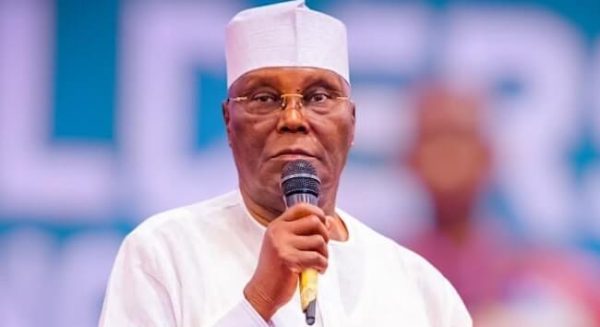
Former Vice President of Nigeria and presidential candidate of the African Democratic Congress (ADC), Atiku Abubakar, has declared that the shocking revelation of over ₦210 billion in overlapping and duplicated allocations in the 2026 Federal Budget, coming on the heels of Nigeria’s dismal performance on nearly 90 percent of globally recognised prosperity indicators, has exposed the Tinubu administration as one of the most fiscally reckless governments in Nigeria’s democratic history.
This was disclosed in a statement issued by his Senior Special Assistant on Public Communication, Phrank Shaibu.
According to the statement, Atiku said the two independent reports have finally stripped away the propaganda surrounding the administration’s so-called economic reforms and revealed a painful truth: Nigeria is not failing because of a lack of resources, but because of a profound failure of leadership.
“For more than three years, Nigerians have been subjected to relentless hardship. They were told that fuel subsidy removal, exchange rate unification, higher taxes and rising tariffs were bitter pills that would eventually restore economic stability. Yet today, the same government cannot explain how more than ₦210 billion found its way into duplicated and overlapping budget provisions.
“When a government asks its people to sacrifice, it must first demonstrate discipline. Instead, what Nigerians have seen is a budget riddled with duplication, questionable insertions, overlapping projects and expenditures that offend both common sense and fiscal responsibility.”
Atiku noted that this latest investigation did not emerge in isolation but adds to a growing catalogue of troubling budget practices that have repeatedly raised serious questions about the integrity of public finance.
“In recent months, Nigerians have witnessed budgetary allocations for projects outside the statutory mandates of agencies, controversial insertions running into billions of naira, and expenditures that bear little relationship to the pressing needs of ordinary citizens. Rather than responding with transparency, the government has too often resorted to denial before reluctantly acknowledging problems when confronted with overwhelming evidence.
“Nothing illustrates the bankruptcy of this administration’s so-called reforms more than the fuel subsidy deception. Nigerians were told in 2023 that subsidy was gone and were compelled to endure unprecedented hardship—skyrocketing fuel prices, crushing transportation costs, runaway inflation and a collapsing standard of living—in the name of economic reform. Yet NNPC Limited’s own audited 2024 financial statements now reveal that a staggering ₦7.13 trillion was still expended on what it calls ‘Energy Security Expenses,’ a category the company itself identifies as petrol subsidy, otherwise known as under-recovery. This means Nigerians were never told the whole truth. The subsidy was not eliminated; it was merely repackaged, renamed and quietly charged against the Federation. A government that conceals ₦7.13 trillion behind a convenient euphemism while demanding sacrifice from millions of struggling citizens cannot claim the moral authority to preach reform, prudence or fiscal discipline. Nigerians deserve to know who authorised this expenditure, who benefited from it, and why the administration chose to market deception as economic reform.”
According to him, this pattern demonstrates that the problem is no longer isolated errors but a systemic breakdown in budget discipline.
“The national budget is the single most important economic policy document of any government. It should reflect national priorities, inspire investor confidence and assure citizens that every naira borrowed or earned will be spent wisely. When that document itself becomes contaminated by duplication and overlapping allocations, confidence in the entire machinery of government is undermined.”
The former Vice President said the consequences of this fiscal indiscipline are evident in the country’s declining prosperity rankings.
“While government officials celebrate selective macroeconomic indicators, Nigerians are experiencing a different economy entirely. Families are skipping meals. Parents are struggling to pay school fees. Small businesses are shutting their doors. Manufacturers continue to battle soaring production costs. Young graduates cannot find jobs. Farmers are trapped between insecurity and inflation.
“It therefore comes as no surprise that Nigeria is now lagging behind its peers across almost every meaningful indicator of prosperity. A nation cannot budget for waste and expect prosperity. It cannot institutionalise inefficiency and hope for development.”
Atiku said the contradiction at the heart of the Tinubu administration has become impossible to ignore.
“On one hand, government claims reforms are succeeding. On the other hand, it continues to borrow aggressively despite periods of stronger oil prices, while revelations of duplicated allocations raise legitimate questions about how public resources are being managed. The tragedy is not merely that Nigeria is borrowing; it is that Nigerians are increasingly uncertain whether those borrowings are producing commensurate value.”
He stressed that genuine reform requires government to subject itself to the same discipline it demands from citizens.
“Reform without accountability is merely another name for hardship. Fiscal adjustment without transparency is simply organised waste. Leadership is not measured by the number of speeches delivered but by the integrity with which public resources are managed.”
Atiku called on the National Assembly to immediately conduct a comprehensive forensic review of the 2026 Appropriation Act, publish every duplicated allocation, identify every official responsible for inserting or approving such provisions and ensure that all improperly appropriated funds are recovered.
He also urged the Auditor-General of the Federation, anti-corruption agencies and civil society organisations to carry out independent scrutiny of the budget and make their findings available to the Nigerian people.
“The days when budget manipulation could be dismissed as mere clerical errors must come to an end. Every duplicated allocation represents a classroom not built, a hospital not equipped, a road left abandoned and a community denied development.”
The former Vice President assured Nigerians that an ADC administration would restore credibility to public finance through transparent budgeting, zero-based expenditure planning, digital public expenditure tracking, stronger legislative oversight and strict personal accountability for every public officer entrusted with taxpayers’ money.
“Nigeria’s greatest problem is not the absence of wealth. It is the absence of discipline in the management of that wealth. A government that cannot protect the integrity of its budget cannot protect the future of its people.”
He concluded with an African proverb:
“When the owner of the barn invites goats to keep watch over his harvest, he should not be surprised when hunger follows abundance. Nigeria deserves custodians of her commonwealth, not Bourdillon caretakers of waste.”


2027 Election Is Between Nigerians and Tinubu’s Govt – Peter Obi

Tinubu is Nigeria’s Lee Kuan Yew, says Uzodimma

White House doubles down on Trump's baseless election interference claims

Singer Don Gz releases Afrobeat single

IPAC projects 2.5m electorate to vote in 2027 general election in Cross River

Canadian wildfire smoke blankets parts of U.S. as Texas floods turn deadly

FCT getting better under Wike 50 years after creation – Tinubu

 News3 days ago
Retiree’s Pension Jumps From N18,000 To N206,000 After Government Reform
- Investigation3 days ago
R Kelly officially asks President Trump to end his 30-year prison sentence for s 3x crimes
- National2 days ago
2026 Ballon d’Or: Top 4 players to win award ahead of World Cup final
- Society6 hours ago
Heartbroken Girlfriend Storms Studio To Remove Portrait Tattoo Of Cheating Boyfriend From Her Back
- Investigation3 days ago
Why Oyoâs rescue model canât be replicated in the North â Ex-DSS Assistant Director-General
- Investigation3 days ago
This DNA is a mustâ â Mohbadâs father says paternity test is key to uncovering singerâs death
- News3 days ago
Reps demand breakdown of ₦34tn Customs waivers, query revenue reporting
- World2 days ago
More than 500 people feared dead after 'boats carrying refugees capsize'