Investigation
Cancer cases set to rise 67 Per Cent by 2050, new report says

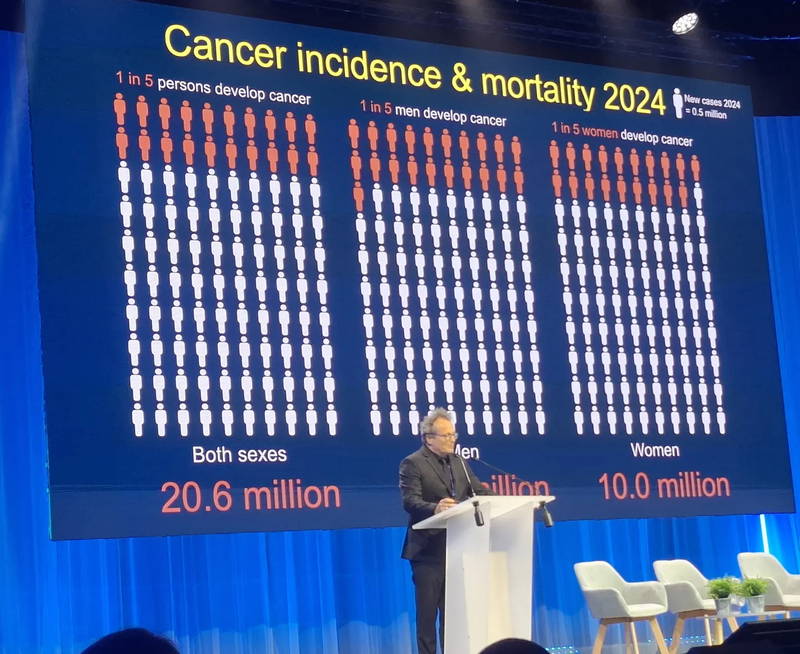

Cancer cases are set to rise 67 per cent by 2050, according to the latest GLOBOCAN report, which highlights a sharp increase in the global cancer burden alongside deep inequalities in prevention, early detection, treatment, and surveillance.
The report recorded 20.6 million new cancer cases and 9.8 million deaths worldwide in 2024. Latest estimates from the International Agency for Research on Cancer (IARC), the World Health Organization’s specialised cancer agency, project that annual new cancer cases could reach 34 million by 2050, a 67 per cent increase from 2024 levels.
Over the same period, annual cancer deaths are projected to rise to 17.5 million, an increase of nearly 80 per cent.
Released to mark IARC’s 60th anniversary, the GLOBOCAN 2024 report provides a global assessment of cancer incidence and mortality across countries, regions, age groups, and sexes.
Of the 20.6 million new cases recorded in 2024, men accounted for 10.6 million and women for 10 million.
Men also accounted for 56 per cent of the 9.8 million cancer deaths, while women accounted for 44 per cent.
The figures reflect the disproportionate impact of cancer on men, with one in nine men and one in 13 women dying from the disease. This disparity stems from variations in the types of cancer affecting men and women, alongside generally poorer prognoses for cancers predominantly affecting men.
Significant geographical disparities persist across the globe, driven by population size, ageing, risk factor exposure, and unequal access to healthcare services. China accounts for approximately one in four cancer cases and one in four cancer deaths worldwide.
Meanwhile, Europe, home to 9.2 per cent of the global population, accounts for more than 20 per cent of global cancer incidence. Standardised incidence rates vary as much as threefold between countries, while mortality rates differ by up to fivefold.
The highest incidence rates were recorded in countries including Australia and Denmark, whereas some of the lowest rates were observed in parts of sub-Saharan Africa. Conversely, mortality rates peaked in Eastern Europe and Melanesia. Specific high-burden regions include liver cancer in Mongolia and cervical cancer in Zimbabwe.
Addressing these variations highlights not only differing risks of developing cancer, but also widespread disparities in early detection, diagnosis, and access to effective care.
Maintaining current absolute numbers of cases and deaths would require a 2 per cent annual decline in both incidence and mortality, a target current global trends fall far short of reaching.
Lung cancer remains the leading cause of both cancer incidence and mortality globally, serving as the primary cause of cancer death in 89 countries, particularly among men.
Breast cancer remains one of the most frequently diagnosed cancers worldwide. Excluding China, it is the most commonly diagnosed cancer across all levels of the Human Development Index.
Among women specifically, breast cancer is the most frequently diagnosed cancer in 164 countries and the leading cause of cancer death in 122 countries. Meanwhile, prostate cancer is the most common diagnosis among men in 123 countries, driven in part by increased diagnostic testing.
Cancer patterns globally are increasingly shaped by sex, economic development, demographic ageing, and infections. In sub-Saharan Africa, breast and cervical cancers combined account for more than half of all cancers among women, while infection-related cancers drive roughly 80 per cent of preventable cases in the region.
Continued tobacco use, population ageing, and structural inequalities in cancer control risk driving further increases in incidence and mortality.
Although mortality rates have begun to drop in some high-income nations due to targeted prevention, earlier detection, and improved treatments, overall incidence continues to climb in most settings.
Underlying these challenges is a critical deficiency in global data collection: currently, only one in three countries reports high-quality cancer incidence data, and only one in four maintains reliable mortality data


Newly Installed AC Leaves Homeowner Worried After Producing Strange White Mist And Smoke

Kwara CP Begins Unannounced Inspection Of Police Formations

67 Nigerians repatriated from South Africa arrive Lagos

Subsidy: Atiku will sign fuel price contract with Nigerians — Ralph Nwosu

Kano-Katsina Railway Set for December 2026 Opening

Odogwu Asaba’s wife: My husband had affair with 20-year-old, not rape + Video

Former Texas Teacher Arrested Over Alleged Inappropriate Relationship With Student

 Investigation3 days ago
How I survived as my husband and two children di£d after eating amala â Widow speaks
- Investigation2 days ago
Former BBNaija star Ike Onyema issues warning amid photographer David Martins and wife Alicia Daniellaâs drama; claims that gospel singer Neon Adejo flirted with Alicia
- Investigation2 days ago
K!ller Robots could target humans â UN and Red Cross warn
- Breaking3 days ago
Edo Assembly converts ex-Speaker’s “resignation” to impeachment
- National3 days ago
Adeleke disburses N500m to victims of election violence
- Investigation2 days ago
âNot every relationship needs to be revisited. Learn your lesson and move onâ â Actress Ireti Doyle advises
- Investigation2 days ago
Kano man opens fire at neighbourâs wedding ceremony over loud music, k!lls one guest and injures four others
- Investigation3 days ago
Oby Ezekwesili reveals âonly achievementâ recorded under Tinubu