National
Cause of Warri-Itakpe train derailment yet to be established — NRC

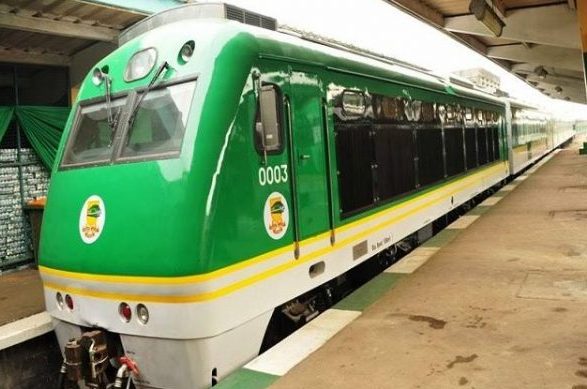
The Nigerian Railway Corporation (NRC) on Monday released its preliminary report on the June 8, 2026, Warri-Itakpe Train Service (WITS) derailment.
The corporation confirmed that four people, comprising three adults and a child, died in the incident, while 64 others were injured.
However, the NRC said the definitive cause of the derailment had yet to be ascertained.
According to the preliminary report, the incident occurred at about 4:17 p.m. near the Goodluck Jonathan Railway Station in Owa-Oyibu, Delta State.
The train reportedly departed Itakpe at noon with 482 persons on board, comprising 442 passengers and 40 operational personnel, when five coaches, one locomotive and a power car derailed at kilometre 177.
“Three of the coaches and the power car overturned, while other rolling stock derailed but remained upright,” the NRC stated.
NRC Managing Director, Kayode Opeifa, who disclosed the report on Monday, said emergency response was activated immediately, with support from the Delta State Government, Nigeria Police Force, Federal Road Safety Corps, National Emergency Management Agency (NEMA), local authorities and medical teams.
He said all passengers were evacuated within two hours of the incident.
Of the 64 injured persons, 28 passengers were treated and discharged at the Railway Hospital, Owa-Oyibu, while another 36 were taken to general hospitals in Owa-Oyibu, Owa-Alero and the Central Hospital, Agbor.
“Most of those admitted were discharged within 72 hours. Three persons, including one NRC personnel who required surgical intervention, remain under specialist medical care and two subsequently had surgical procedures carried out,” the report stated.
The NRC also clarified that an initial report of five fatalities was revised to four after verification with the Delta State medical team.
The corporation expressed condolences to the families of the deceased.
According to the report, the NRC constituted an internal investigation team that conducted site inspections, collected evidence, reviewed operational records, examined the locomotives and rolling stock and interviewed crew members, staff and emergency responders.
The team identified a possible sudden development of a bogie or wheel defect while the train was in motion as a potential primary factor in the derailment.
“Based on preliminary observations, the team cited a possible cause, indicating the possible sudden development of a bogie/wheel defect while en route.
“This observation is being investigated further as a potential primary factor in the derailment,” the report stated.
It explained that such a defect could have resulted in abnormal wheel-rail interaction, excessive impact loading and loss of running stability.
The NRC added that the possible manner of brake application might also have contributed to the severity of the incident.
“These remain working hypotheses. The definitive cause or causes of the accident will be determined through comprehensive analysis and will be set out in the final report,” it said.
Unlike the derailments recorded on the same route on November 1 and November 8, 2025, the NRC said its inquiry team found no evidence of track vandalism.
“Site examination by the inquiry team observed that the points were intact and that no evidence of track vandalism was found,” it stated.
The Nigerian Safety Investigation Bureau (NSIB) has also commenced an independent investigation into the incident.
The NRC said it was cooperating fully with the NSIB investigation and would be guided by its findings and recommendations.
The NRC said its internal review produced six key recommendations, including strengthening rolling stock and infrastructure management through comprehensive inspections, audits and timely replacement of defective components.
It also recommended reviewing and strengthening operational safety procedures through updated standard operating procedures and stricter enforcement of safety compliance.


"I wish someone could tell my mother, her husband will not love her any day soon" Man writes about the abuse his mother suffered from his father

Atiku’s subsidy removal promise is political deception, says Yilwatda

Ondo Amotekun arrests suspected kidnapper negotiating ransom, another targeting his former employer’s wife

Singer Poco Lee remanded in UK prison, to appear in London court in September â Nigerians in UK leader says

Why I declined House of Reps ticket â Aisha Yesufu

2027: APC disowns Abayomi Hunye as its Ogun governorship candidate

Atiku accuses Tinubu of favoring oil companies with tax incentives amid rising petrol prices

 Investigation3 days ago
Reality star Kim Zolciakâs 15-year-old son KJ Biermann arrested for sod0my and s£xual battery
- News2 days ago
Police rescue 13 abducted passengers in Benue
- Investigation3 days ago
President Tinubu orders arrest, suspends three perm secs as ICPC uncovers fake agency
- Investigation3 days ago
Troops arrest suspected female gunrunner, recover AK-47 rifle and magazines in Plateau
- Investigation2 days ago
Donât hide Tinubuâs records from Nigerians, Atiku tells FBI
- Investigation3 days ago
Music executive Pierre ‘P’ Thomas hospitalized after heart attack
- Investigation3 days ago
Prince Harry, Elton John, and others told to pay £9,500,000 to Daily Mail
- Investigation3 days ago
Ariana Grande warns President Donald Trump to stay away from her songs following anti-trans post