Breaking
Tinubu didn’t remove subsidy, he gave it to his rich friends — Atiku

Advertisement
Advertisement
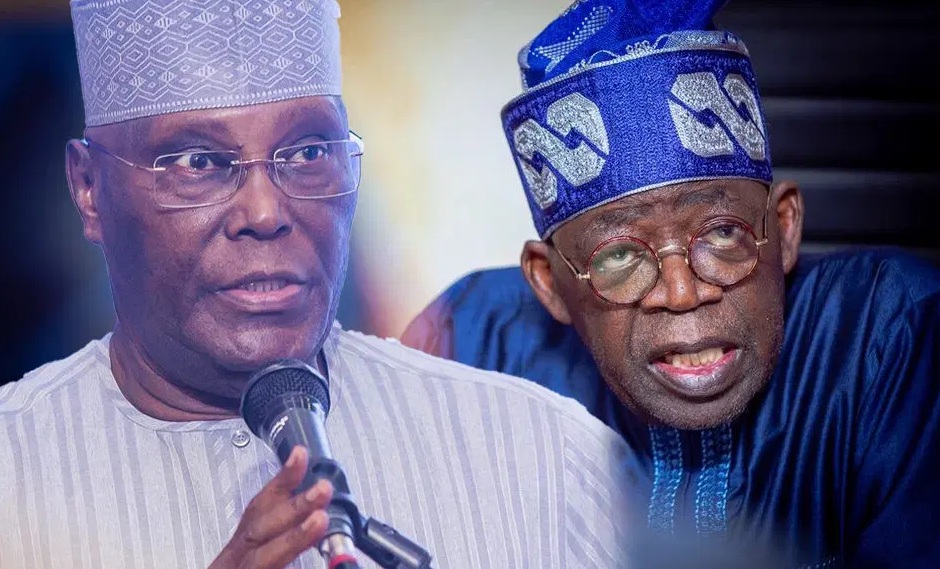
Former Vice President Atiku Abubakar has accused President Bola Tinubu’s administration of hypocrisy over its handling of petroleum subsidies, arguing that the government cannot claim to have abolished subsidy while granting tax credits, concessions and other fiscal incentives to operators in the petroleum industry.
Mr Atiku described the celebration of subsidy removal by the Tinubu administration as “one of the biggest economic frauds” being sold to Nigerians, insisting that his proposed targeted intervention would protect vulnerable citizens without returning the country to the opaque and corruption-ridden subsidy regime of the past.
Mr Atiku stated this in a statement issued by his Senior Special Assistant on Public Communication, Phrank Shaibu, on Sunday.
According to him, the Tinubu administration has become increasingly defensive since the unveiling of his Atiku Economic Recovery Plan, particularly over the proposal to introduce targeted relief measures for Nigerians struggling with the rising cost of living.
Mr Atiku argued that the government’s position was inconsistent, noting that while it had subjected Nigerian households to the full impact of market forces following the removal of petrol subsidy, it had continued to provide incentives aimed at reducing the risks faced by major petroleum investors.
“Tinubu stood at Eagle Square and declared that subsidy was gone. Petrol prices exploded, transportation costs soared, food prices followed, businesses buckled and household purchasing power collapsed.
“Nigerians were told there was no alternative and that enduring this pain was the necessary price of economic reform.
“But when major oil investors knock on Tinubu’s door, the sermon changes. Suddenly, government intervention is good economics; tax credits are necessary; fiscal concessions are strategic; and private investment must be ‘de-risked.’ Apparently, subsidy is only evil when poor Nigerians benefit from it,” he said.
Mr Atiku cited the government’s Deep Offshore Oil and Gas Projects Incentives framework, which, according to him, provides qualifying petroleum developments with production tax credits beginning at $3 and $4.50 per barrel, with supplementary credits capable, in qualifying circumstances, of taking the combined benefit to as much as $11.50 per barrel.
He questioned the rationale behind what he described as selective government intervention.
“So, what exactly is Tinubu’s objection: government intervention itself, or government intervention for Nigerians?” he asked.
The former vice president also questioned the administration’s repeated reliance on the Petroleum Industry Act, PIA, to justify the end of petrol subsidy, arguing that records contained in the audited accounts of the Nigerian National Petroleum Company Limited, NNPCL, raised questions about the government’s claim.
According to Mr Atiku, NNPC’s 2023 accounts recorded approximately N4.84 trillion as energy-security expenses and related shortfalls, while its 2024 audited financial statements recorded about N7.13 trillion under energy-security expenses.
He said NNPC had explained that the expenditure arose partly from the difference between the exchange rate used to determine the regulated PMS ex-coastal price and the prevailing exchange rate when import obligations were settled.
“In plain English, government was still absorbing a price differential after Tinubu had triumphantly announced that subsidy was gone,” he said.
Mr Atiku therefore demanded an explanation of what he described as the apparent contradiction between the government’s declaration that subsidy had ended and the continued absorption of petroleum-related price differentials.
“If Nigerians were paying market prices because ‘subsidy is gone,’ why was the Federation still carrying trillions of naira in under-recovery and energy-security costs?
“If such intervention was lawful and economically necessary when Tinubu authorised it, on what intellectual basis is Mr Tinubu and his spokesmen now abusing Atiku for proposing an intervention that is targeted, capped, budgeted, independently audited and beneficial to Nigerians?” he asked.
He further criticised the use of terms such as “shortfall,” “under-recovery” and “energy security” to describe government expenditure associated with petroleum pricing.
“Whether government calls it subsidy, under-recovery, shortfall or energy security, public resources were being used to bridge a gap between economic cost and the price at which petrol was sold.
“You cannot abolish subsidy at the podium and resurrect it in the accounts under an alias,” Mr Atiku said.
He accused the administration of operating what he called a “two-tier economic system” in which large petroleum investors receive fiscal incentives while ordinary Nigerians are left to bear the full impact of rising prices.
“This is the fraud at the heart of Tinubunomics. Nigerian families are subjected to the harshest interpretation of market economics while major petroleum investors are offered incentives to improve the commercial viability of their investments.
“Tinubu cannot operate two economies in one country — brutally savage capitalism for poor Nigerian families and compassionate capitalism for big oil money operators. In fact, it is one rule for them and another rule for the rest of us,” he said.
Mr Atiku argued that the government’s willingness to provide incentives to investors demonstrated that intervention was not inherently incompatible with market-oriented economic reforms.
“The government can protect a multibillion-dollar oil investment from risk, yet it says protecting the Nigerian worker from crushing hardship is bad economics.
“It can bend policy to make every barrel of crude more profitable, but tells a struggling mother that making the litre of petrol she needs to take her children to school more affordable is irresponsible,” he said.
According to him, the proposed Atiku Economic Recovery Plan is not designed to restore the former subsidy regime but to introduce a targeted and transparent mechanism for cushioning the effects of high energy costs on vulnerable Nigerians.
“This is precisely why the Atiku Economic Recovery Plan rejects Tinubu’s false choice between the corrupt subsidy regime of yesterday and the cruel shock therapy of today.
“Atiku is not proposing a return to an unlimited, opaque and corruption-ridden subsidy racket. What he proposes is a targeted, capped, transparently budgeted and independently audited intervention with a clearly defined exit mechanism, accompanied by accelerated domestic refining, competition, mass transportation and measures to restore household purchasing power,” he said.
Mr Atiku also questioned why government intervention should be considered economically sound when it benefits investors but irresponsible when aimed at reducing the burden on households.
“If Tinubu understands the logic of reducing the cost and risk borne by an investor in order to stimulate production, why does he suddenly become economically illiterate when the proposition is to temporarily reduce the crushing burden on Nigerian households?
“If government can legitimately de-risk investment, why is it economic heresy to de-risk survival?” he asked.
He accused the administration of providing “fiscal cushions” for petroleum investors while asking workers, traders, farmers and families to absorb the economic shocks associated with subsidy removal and other reforms.
Mr Atiku, however, stressed that he was not opposed to investment incentives, including those designed to attract foreign capital.
“Let nobody deliberately misrepresent our position. Atiku supports investment, including foreign investment, and recognises the place of transparent and performance-based incentives in attracting capital.
“But what we reject is the intellectual dishonesty of pretending that government intervention becomes sound economics when corporations benefit and economic ignorance when Nigerian citizens benefit,” he said.
He demanded greater transparency over the beneficiaries and costs of petroleum-related tax credits, remissions and other incentives granted by the government.
“Nigerians deserve to know the beneficiaries of major petroleum tax credits, remissions and incentives, the value of revenue surrendered, the investments delivered in return and whether Nigerian investors have equal and transparent access to comparable incentives.
“These concessions belong to the Nigerian people and must never become instruments of patronage dispensed behind closed doors,” he said.
Mr Atiku further argued that economic reforms should be assessed by their impact on citizens rather than by the extent of hardship imposed on them.
“Economic reform is not a competition over how much suffering a President can impose on his citizens.
“Removing subsidy without adequate buffers while simultaneously providing fiscal cushions to investors in the same petroleum industry is not courage. It is selective economics dressed up as reform,” he said.
He urged the Tinubu administration to stop presenting subsidy removal as an achievement in itself, arguing that the ultimate measure of economic reform should be whether Nigerians are better off.
“The test of economic reform is not how loudly a President announces that ‘subsidy is gone’; it is whether citizens are better off, businesses are productive, jobs are being created and household incomes can sustain basic living costs,” he said.
Atiku said his economic recovery plan was founded on the principle that markets should function, investors should receive fair returns and public finances should be protected, while citizens remained the ultimate beneficiaries of government policy.
“A government cannot preach unrestrained market forces to the poor while practising interventionist economics for his rich foreign friends.
“It cannot demand sacrifice from Nigerian families while extending concessions to powerful corporate interests. It cannot provide cushions for corporations and punishment for citizens and then call the resulting misery reform.
“That is not economic reform. It is classic economic apartheid,” he said.
Atiku also vowed to pursue his proposed targeted subsidy policy despite opposition from the Tinubu administration.
He said the proposed intervention would be designed with clear limits, transparency and accountability, while being accompanied by measures to expand domestic refining, improve competition and strengthen public transportation.
“Even 100 million Tinubus cannot stop us from restoring targeted subsidy to suffering Nigerians,” Mr Atiku said.


Tears Flow As Mother and Two-Year-Old Daughter Killed by Lightning in Florida

2027: APC has a lot to tell Nigerians as achievements — Akpabio

Meghan Markle’s estranged father expresses concern over his daughter and Prince Harry’s return to the UK

Mandate Nigerian newscasters and on-air personalities to wear made-in-Nigeria clothes and speak in Nigerian accents- Reno Omokri tells NBC

Rare Birth In India: Baby Born With Four Arms And Four Legs Sparks Attention Online

Three arrested over d3ath of pregnant woman and alleged unlawful disposal of her remains in Lagos

Activist warns NGO Bill could hit mosques, churches, student unions

 Investigation3 days ago
Rolex, Range Rover: BBNaija star Sheggz flaunts âLuxury Lifestyleâ after being called âbrokeâ for allegedly owing ex-girlfriend Bella Okagbue N11 million
 Investigation3 days ago
Kindly delete my videos â Precious takes a dig at Jeffrey and Chidinma after split from romantic throuple
- Investigation3 days ago
Donât hide Tinubuâs records from Nigerians, Atiku tells FBI
- Society1 day ago
Truck Driver Documents How Police At Tema Harbour Entrance Demand ¢20 Bribes But “Kills” Stubborn Drivers Who Fail To Pay
- Politics3 days ago
Ikhuiwu Gives Directives To Set Up CSDM Unit Across Branches Of CCCOGI
- Politics3 days ago
Okpebholo Hails Coronation Of Alimikhena As Okumagbe Of Uwanno, Urges Unity In The Kingdom
- Society3 days ago
Brad Pitt’s Daughter Takes Major Step, See Why She Wants Removed From Her Name
- Society3 days ago
See the Marriage Requirements That Got This 50-Year-Old Man Dragged On Social Media