News
Fruits of Poisonous Tree: Outrage as fraudulent party primaries throw up candidates


•1, 2, 3, 100, 2000: The scandalous mathematical sorcery now threatening to define our 2027
By Omeiza Ajayi
In courtrooms across the world, there is a rule so fundamental it has its own name. Evidence derived from an illegal search cannot be used in court. It does not matter how incriminating it is or how neatly it appears to prove guilt. The evidence is worthless, if it was gathered in violation of the law. Lawyers call it “the fruit of the poisonous tree” — tainted at its root, unreliable at every branch.
Read Also: Tinubu in Three Years: More public revenue, less impact on masses
Nigerian voters watching the scenes that emerged from party primaries across the country over the past two weeks may be forgiven for reaching for that same phrase. From Ebonyi to Gombe, from Delta to Abia, from Yobe to Lagos, a remarkable procession of irregularities, fabricated votes, phantom party members, and now outright mathematical sorcery has produced the candidates who will seek their mandate in February 2027.
And across the country, Nigerians are asking a question that no party chairman or returning officer has been able to convincingly answer: if the primary was this corrupt, what exactly does it produce?
The New Arithmetic
The most visceral symbol of the crisis — the image that has convulsed social media and tormented the ruling class — is not a leaked document or a whistleblower affidavit. It is a human being, microphone in hand, counting out loud.
A clip from the ruling All Progressives Congress APC primary in Ebonyi State went viral after an electoral officer physically counting voters jumped from 85 straight to 201. Nigerians watching online were left in disbelief.
Social media commentators, many of them caustic, noted that similar leaps were recorded elsewhere in the same exercise. “They did it across the country,” one widely-shared post read. “They were all told to do so, I believe.”
APC fights back
In Bende Ward, Abia State, the Returning Officer for the ward, Chief John Okezie, denied allegations of vote manipulation after a viral video showed him counting figures inconsistently.
He described the clip as AI-generated and threatened legal action against those behind its circulation.
The counting heard in the video — “7, 8, 9… 1011” — has since become a shorthand for what critics are calling the new language of Nigerian democracy.
APC National Chairman, Professor Nentawe Yilwatda, has dismissed the viral clips as recycled, misattributed content.
He said; “Sometimes you see videos online. I even received a video that was sent to me, which I later found out was from an event that happened three or four years ago.
“These are unverified videos and were not even meant for our party activities. They were from activities somewhere else, even union or leadership elections in different settings, but are being circulated as if they were APC activities. If you check all our activities, we have our flags, our banners, and people raising their membership cards. In those videos, you cannot see any APC banner anywhere.”
But the professor’s defence has persuaded few people.
A chieftain of the African Democratic Congress ADC and former National Publicity Secretary of the Peoples Democratic Party PDP, Kola Ologbondiyan puts it bluntly during an interview on Channels Television.
“Nigerians are laughing at the figures the All Progressive Congress brought out, and they are asking a question: ‘Where did they find it? Where did they get this one?’”
“We don’t want geometric counting. Whatever you have, bring it forward. Whatever you have recorded, bring it forward. We don’t need to go into moving it from numerical 1, jumping into 99, and going to numerical 100″, he said.
Ologbondiyan was at pains to distance the ADC from the phenomenon. He acknowledged, however, that the disease had spread beyond the APC. “I cannot deny the fact that I had seen one in Yobe,” he admitted, referring to an instance of geometric counting observed during his own party’s presidential primary in Yobe State.
Votes outnumber Voters
The chaos has not been confined to counting irregularities alone. In the PRP, a campaign organization has produced what it describes as arithmetic proof of manipulation — not opinion, not allegation, but numbers that refuse to add up.
The Ufere2027 Presidential Campaign, representing Dr Nnaoke Ufere who contested against former Cross River State governor Donald Duke at the PRP presidential primary held on May 25, has presented a state-by-state breakdown that it says makes the fraud impossible to deny.
Speaking with Saturday Vanguard, Executive Director of the Campaign, Ishaq Alhassan, said; “In Gombe, a party membership register of 348 persons somehow produced 1,431 declared votes — a 311 per cent inflation. In Bauchi, 593 registered members produced 760 votes. In Kwara, 55 members yielded 82 votes. Across those three states alone, 996 registered members produced 2,273 votes — meaning more than half the declared total corresponded to no real human being on the party’s INEC-approved membership list.
“A register is a ceiling. Turnout cannot exceed 100 per cent of the people allowed to vote. Every vote beyond the register is, by definition, a vote that should never have been counted”, he said.
The campaign noted that the phantom votes broke “overwhelmingly, in state after state,” in favour of Duke, who it alleged joined the PRP only days before the primary after defecting from another platform, did not campaign publicly at any point during the contest, and was reportedly outside the country while the election was being conducted.
Duke, the campaign further alleged, openly offered to refund rival aspirants their costs if they would step aside.
Adding insult to documented injury, the campaign said that in the late hours of the primary, organized groups armed with knives were deployed to intimidate voters at a polling location in the FCT — a development it described as electoral violence requiring immediate investigation.
Hotel rooms balloting
The ADC primary, which was being marketed as a cleaner alternative to the APC’s exercise, has produced its own crisis.
Comrade Ibrahim Garba Wala, a supporter of former governor Chibuike Rotimi Amaechi who personally monitored voting in Gombe State, described what he witnessed as “a brazen, shameless auction that betrayed every value the ADC promised to uphold.”
“What we witnessed during the primary elections was not a democratic primary; it was a brazen, shameless auction that betrayed every value the ADC promised to uphold,” Wala wrote in a statement.
He alleged that a hotel room was converted into a clandestine operations base where results were manufactured. “I was personally approached by an agent offering to take me to the committee leadership’s hotel room to secure whatever I needed. This hotel room was treated exactly like a clandestine situation room where the state party leadership retired after their field day to finish their manipulative work behind closed doors,” he said.
Wala described the vote-buying as “crude, aggressive, and carried out with complete audacity,” and expressed particular sympathy for young aspirants who, in his words, became “the poor, bruised victims of old-school election rigging.”
He was unsparing in pointing to former Vice President Atiku Abubakar as the primary beneficiary. “It has become painfully clear that Atiku is desperate, and is willing to go to any length to secure his last chance at a just four-year tenure,” Wala wrote.
He urged Atiku, on the occasion of Eid el Kabir, to publicly dissociate himself from the results, describing them as “a forbidden fruit — one that is highly poisonous to the very democracy the ADC preaches to every Nigerian.”
Amaechi himself had declared the process fraudulent ahead of the official announcement of results, posting on his X handle that it failed to meet the standards of transparency and fairness earlier promised by the party.
Mohammed Hayatu-Deen, the third aspirant in the ADC race, also declined to attend the official announcement of results, citing what he described as widespread irregularities he personally witnessed.
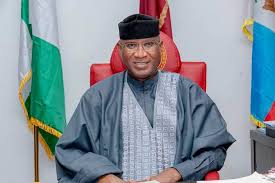
Across the country, the scale of the APC’s own internal crisis has been staggering. In Delta Central, Senator Ede Dafinone scored 116,252 votes against former Deputy Senate President Ovie Omo-Agege, who polled 3,643. In Edo South, two separate officials announced two different winners in the same senatorial contest, same as in Kogi West.
In Delta North, the camp of Senator Ned Nwoko, claiming he had in fact won with 123,000 votes against former governor Ifeanyi Okowa’s 5,000, said the results being paraded were written before election day.
“The senatorial primary election held on the 18th of May 2026 cannot, by any honest standard, be described as free, fair, credible, or transparent,” said Dr. Chris Okobah, the senator’s legal adviser.
In Gombe State, aspirant Alfred Attajiri described what he witnessed in Balanga and Billiri local government areas as an “invisible election” — across the wards of the federal constituency, party members waited in vain. No accreditation officers arrived. No ballot papers were distributed. No counting took place. Hours later, a returning officer walked to a microphone and announced results.
Invisible Registers
Beneath all the surface chaos lies a more structural failure, one that electoral analysts say has made the manipulation not just possible but almost inevitable: the near-total absence of verifiable party membership registers as a functioning check on the process.
Section 77(2) of the Electoral Act 2026 requires every registered political party to maintain a digital register of its members, containing for each person their name, sex, date of birth, address, state, local government area, ward, polling unit, National Identification Number and photograph. Under Section 77(4), this register must be made available to INEC not later than 21 days before any primary. Under Section 77(5), only members whose names appear in the submitted register shall be eligible to vote or be voted for in any party primary.
The law is clear. In practice, it has been largely neutralised. Parties were required to submit their digital membership registers to INEC by April 2, 2026, with failure to comply risking their exclusion from the 2027 elections.
A court subsequently nullified that deadline. Justice Mohammed Garba Umar ruled that all registered parties have until September 2026 to submit an updated list of party members, nullifying the initial deadline.
The practical effect of that court order — whatever its legal merits — was that parties conducted nationwide primaries this month without verified, publicly accessible membership registers as a binding constraint. Which meant that when the PRP returned 2,273 votes from 996 registered members in three states, there was no readily available mechanism to stop the collation in its tracks.
In some places, villagers – not registered party members – were simply herded together and counted by party officials.
The NDC, the newest entrant into the space occupied by hopeful Nigerians, has been marketing itself heavily as a different kind of party.
Its leadership has spoken of electronic voting in the future and transparent processes. It has also, in multiple states, adopted the consensus method of selecting candidates — a route that sidesteps the chaos of open primaries but raises its own questions about internal democracy.
The NDC acknowledged having to drop its planned electronic voting system for the primaries due to time constraints, with its founder and National Leader, Senator Henry Seriake Dickson, confirming this in a statement.
The party’s claimed membership figures have also attracted scrutiny. No independent verification of the NDC’s membership numbers has been publicly produced.
For the NDC leadership, the consensus selection process represents an experiment in internal conflict management at a time when Nigerian parties frequently face accusations of imposition, manipulation, and opaque delegate systems. Whether that experiment produces anything meaningfully different from what other parties have done remains to be seen.
A broken pipeline for 2027
The NDC is not alone in seeking to profit from the wreckage of the APC primaries. In Bayelsa State, opposition strategists have declared themselves “increasingly convinced that the ruling party’s internal crisis has handed them a valuable political opening ahead of the 2027 general elections.”
Dickson’s NDC, is said to be eyeing three specific pathways into the vacuum: voter apathy among alienated APC loyalists, silent defection by discontented insiders, and propaganda capital generated by a ruling party publicly tearing itself apart.
The defections have already begun. Two former Inspectors General of Police – Mohammed Adamu and Usman Baba Alakali -, former ministers including Dr Isa Ali Ibrahim Pantami and Uche Nnaji, former Deputy Senate President Ovie Omo-Agege, former Delta State House of Assembly Speaker Victor Ochei and a former Airforce chief have all abandoned the APC in the wake of the primaries.
House Leader Julius Ihonvbere, who lost the APC ticket in the Owan East/Owan West Federal Constituency in Edo State, was categorical about what he believed happened. “I did not lose the election. They did not even come to the field,” he said, rejecting the result entirely.
An aggrieved party member in Lagos, whose name was not made public, was equally blunt at a polling centre in the state where irregularities were reported: “We reject whatever outcome emerges from today’s election because the process was flawed and manipulated.”
The legal principle from which this report takes its headline holds that a tainted process cannot yield untainted results. In the Nigerian context, the question that now hangs in the air — over the APC, the ADC, the PRP, and the NDC alike — is the same one the courts pose when they invoke that doctrine: if the root is poisonous, what are you to do with the fruits?
For millions of Nigerian voters who will be asked, in February 2027, to choose from the candidates these primaries have delivered, it is not yet clear that anyone has a satisfying answer.
The post Fruits of Poisonous Tree: Outrage as fraudulent party primaries throw up candidates appeared first on Vanguard News.
Full Details Here...






2027: Aisha Yesufu denies dropping out of FCT senatorial race

Mbah’s ‘Tomorrow Is Here’ agenda yielding results in Enugu — Nwaokobia

Airport heist: How syndicates target, loot passengers’ luggage

Medical report: Trump's doctor declares him 'fully fit' but 'should lose weight'

Windstorm kills businesswoman, destroys homes, roads in Benue community

Major Donald Trump health update as White House doctor releases bombshell statement

Petrol Price stands at N1,532.93 Per litre in April â NBS

 Breaking2 days ago
Last-minute power game deepens as Kwankwaso plans to unveil Comrade Abdussalam as Kano NDC governorship candidate
- News2 days ago
Your phone has an expiry date – here’s how to find it
- News2 days ago
Full list of Samsung phones that will get the Android 17 update
- Breaking3 days ago
A prayerful man who doesn’t cheat and lie – Nigerian acid attack survivor reveals what she wants in a partner
- Politics3 days ago
Governor Okpebholo Reaffirms Commitment to Child Protection at 2026 Children’s Day Celebration
- Breaking2 days ago
Matthew Perryâs assistant who is accused of concealing evidence allegedly drove the late actorâs car at 4AM shortly after his de@th
 Politics3 days ago
Omo-Agege quits APC amid Delta crisis
- World2 days ago
Marco Rubio says no more Ebola patients will be allowed into U.S.