News
Tinubu unveils four CNG projects in Lagos, Abuja, Owerri

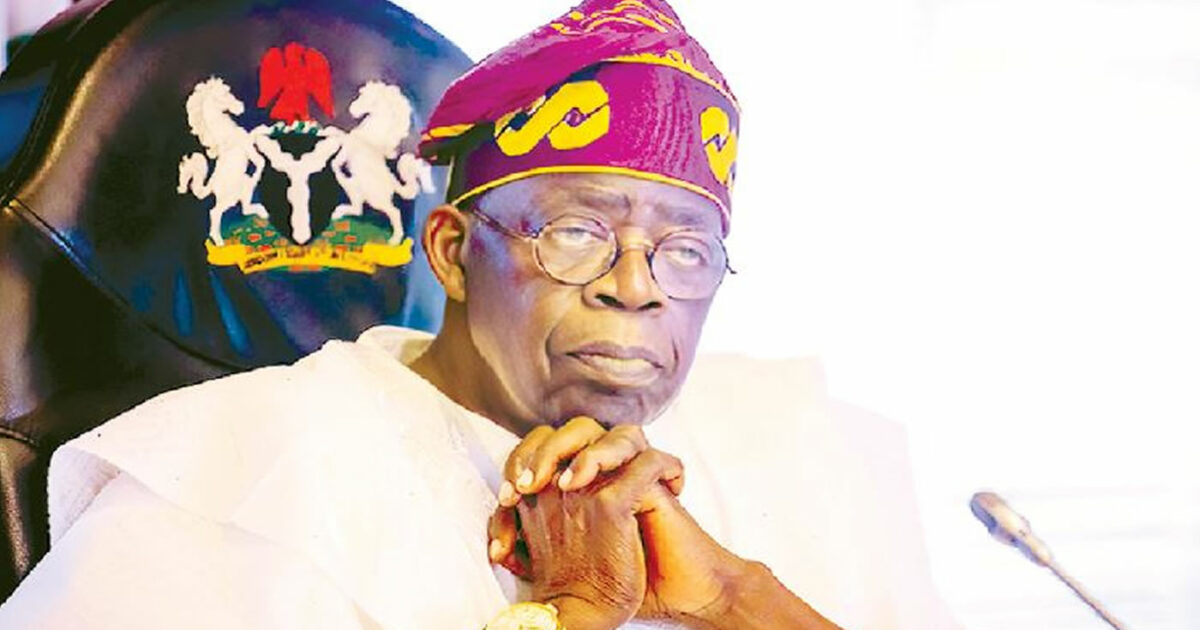
President Bola Tinubu on Friday commissioned four major Compressed Natural Gas infrastructure projects in Lagos, Abuja and Owerri, declaring that the country’s energy future will be built from its own gas resources rather than imported alternatives.
The projects, all delivered under the Midstream and Downstream Gas Infrastructure Fund, were commissioned on the third anniversary of the administration and form part of the Federal Government’s accelerated response to the petroleum subsidy removal, designed to reduce transport costs, expand domestic gas utilisation and accelerate the country’s transition to cleaner fuels.
A statement signed by the Special Adviser to the President on Information and Strategy, Bayo Onanuga, said the first two projects were commissioned at Ojota, Lagos.
The statement is titled ‘President Tinubu Commissions Four MDGIF-Supported CNG Projects In Major Push for Clean Transport Energy.’
The Portland Gas CNG Mother Station has a daily dispensing capacity of 96,000 standard cubic metres and includes two skid trucks for distribution, a 54-metric-tonne Liquefied CNG storage facility and an associated CNG Daughter Station at Kubwa, Abuja.
Also, at Ojota, Tinubu commissioned the IBILE Oil and Gas Corporation CNG Refuelling Station, the flagship of a network of 15 IOGC-MDGIF refuelling stations being delivered across Lagos at Ogudu, Ikota, Agege, Ojota, Oko-Oba, Ajah, Idimu, Ogolonto, Abule Egba, Badagry, Ayobo and four additional metropolitan locations.
In Jahi District of Abuja, the President commissioned what the Presidency described as the most advanced CNG Daughter Booster Station of its kind in West Africa, developed by Rolling Energy Limited in a joint venture with the MDGIF.
The facility is equipped with a 1,000-standard cubic metre-per-hour compressor, a 3,200-standard cubic metre cascade storage system, two CNG tube skids of 8,500 standard cubic metres each, and four dual-nozzle dispensers with a daily sales capacity of 20,000 standard cubic metres, capable of serving 900 to 1,000 cars and tricycles, and up to 50 trucks and buses, daily.
It also houses a mass conversion centre with eight conversion pits converting up to 20 cars and 25 tricycles daily.
At the Federal University of Technology, Owerri, in Imo State, the fourth project commissioned was the FEMADEC CNG Daughter Station and Conversion Centre, the flagship of a nationwide 20 Universities CNG Ecosystem Initiative delivered under the Special Palliative Relief on University Transportation programme, approved by the President to cushion the effects of subsidy removal on tertiary students and staff.
The facility includes a 1,000-standard cubic metres per hour integrated refuelling unit, four-way dispensing units, a CNG-powered on-site generator and a Vehicle Conversion Workshop and Training Centre, alongside CNG-powered buses and tricycles for intra-university transportation.
Speaking at the virtual commissioning, Tinubu said the projects represented the point at which gas reform moved from policy paper to pump.
“Nigeria is a gas nation. Our energy future will not be borrowed. It will be built from what we have, and every project we are commissioning today is proof that we are building it.
“Lagos moves the country, and when Lagos can fuel itself with our own gas, at our own prices, the whole country benefits. Abuja today receives one of the most advanced CNG facilities in West Africa.
“This is what our gas reform looks like when it leaves the policy paper and arrives at the pump,” the President said.
On the university-focused FUTO project, he added: “Our students, too, must not bear the heaviest weight of the reforms we have undertaken.
“The SPROUT programme is our deliberate response, and FUTO today joins a national network that will, in time, change the cost of mobility on every Nigerian campus.”
To ease vehicle conversion for the public, the government has partnered with the Nigerian Consumer Credit Corporation, Moniepoint Microfinance Bank and the National Credit Guarantee Company Limited to offer structured consumer credit under the Credit Access for Light and Mobility Fund.
Motorists and commercial transport operators can now convert their vehicles without paying the full amount upfront, with financing options backed by credit guarantees at rates as low as nine per cent, with repayments spread over six months.
Minister of State for Petroleum Resources (Gas), Ekperikpe Ekpo, said Nigeria sits on more than 210 trillion cubic feet of proven gas reserves, a resource he said, if properly harnessed, could fuel industries, power homes, move vehicles and lift millions out of poverty.
“These projects mark a decisive step in operationalising Nigeria’s Decade of Gas agenda,” he said.
Executive Director of the MDGIF, Oluwole Adama, said the projects showed what was achievable when government, regulators, investors and technical partners united around a shared purpose, “They demonstrate that real progress happens when vision is translated into action.”




Nigeria Super League final set after thrilling elimination stage

The ghost in the machine is real: How physicists finally tracked down the hidden force disrupting CERN's most powerful accelerator

NSIB probes Bonny vessel collision, oil spill incident

Ujiri challenges government, Nigerians on maintenance culture

NSIB launches probe into vessel collision in Bonny

Ekiti 2026: Eight govs, NASS leaders head APC campaign council

H-1B Redditor says he applied to 1500+ job openings across US, Internet says 'go back home'

 Breaking2 days ago
Last-minute power game deepens as Kwankwaso plans to unveil Comrade Abdussalam as Kano NDC governorship candidate
- News1 day ago
Your phone has an expiry date – here’s how to find it
- News2 days ago
Full list of Samsung phones that will get the Android 17 update
- Breaking3 days ago
A prayerful man who doesn’t cheat and lie – Nigerian acid attack survivor reveals what she wants in a partner
- Politics2 days ago
Governor Okpebholo Reaffirms Commitment to Child Protection at 2026 Children’s Day Celebration
- Breaking2 days ago
Matthew Perryâs assistant who is accused of concealing evidence allegedly drove the late actorâs car at 4AM shortly after his de@th
 Politics2 days ago
Omo-Agege quits APC amid Delta crisis
- World2 days ago
Marco Rubio says no more Ebola patients will be allowed into U.S.