Politics
Dankwambo vs Yahaya: Two titans, one seat

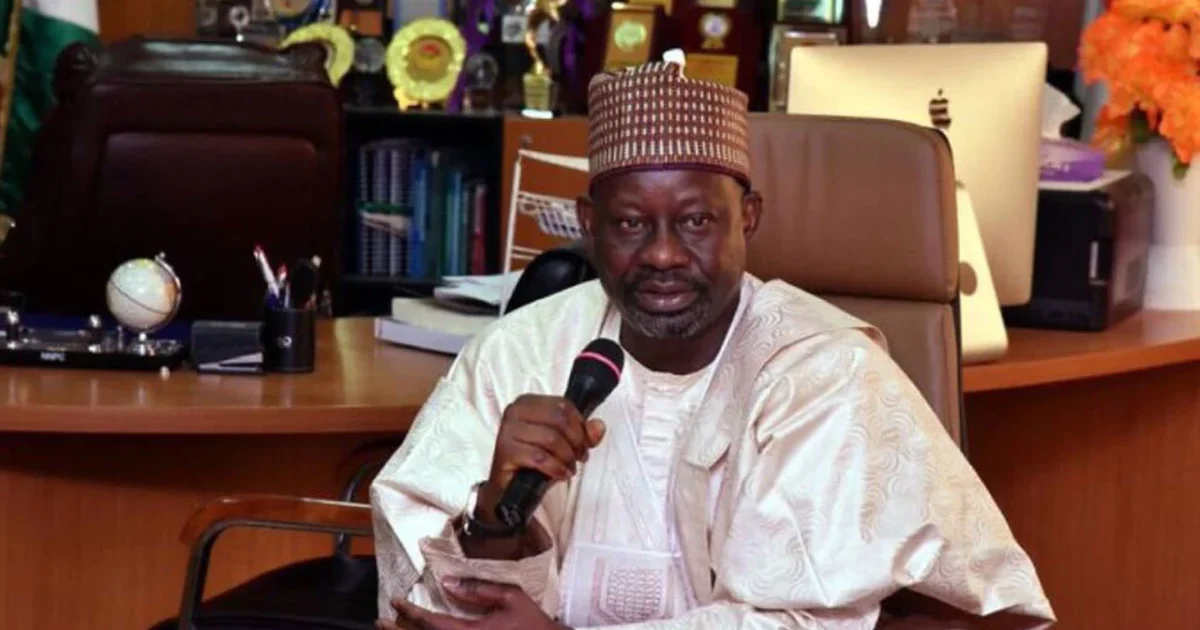
Two familiar names. One prize. As Governor Muhammadu Yahaya finishes his second term, he and Senator Ibrahim Dankwambo are gearing up for a high‑stakes fight over the Gombe North Senate seat in 2027. Their decade‑long rivalry now moves from the corridors of Government House to the chamber of the Senate, writes CHIMA AZUBUIKE
Politics in Gombe State has, for more than a decade and a half, revolved around a small circle of influential political actors whose ambitions, alliances and rivalries have significantly shaped the state’s political direction. Among these figures, no rivalry has attracted more attention or had greater impact on the state’s political evolution than the prolonged contest between Senator Ibrahim Hassan Dankwambo and Governor Muhammadu Inuwa Yahaya. For years, their competition was primarily associated with the struggle for control of the Gombe State Government House. Today, however, the political battlefield has shifted from the executive arm of government to the legislative arena, where both men appear poised for another major confrontation over the Gombe North Senatorial District seat in the 2027 general elections.
The expected contest has already generated intense political discussions across the state because it brings together two of Gombe’s most experienced politicians whose political journeys have remained interconnected for well over a decade. Unlike many electoral contests that emerge suddenly, the anticipated battle between Dankwambo and Yahaya is deeply rooted in a long history of political competition, shifting alliances and personal ambition. The election is expected to attract considerable national attention because it will pit an incumbent senator and former governor against a sitting governor completing his second and final constitutional term in office.
The importance of the contest extends beyond the race for a Senate seat. Many political observers view it as a struggle for political relevance in the post-2027 era. The outcome may ultimately determine which political bloc retains greater influence over the future direction of Gombe State politics. It may also provide answers to broader questions about the continuing strength of political incumbency, the durability of personal political structures and the ability of opposition figures to remain relevant in states dominated by ruling parties.
To understand the significance of the coming contest, it is necessary to examine the political trajectories of both men and the events that brought them to this point. Senator Ibrahim Dankwambo remains one of the most accomplished public servants to emerge from Gombe State. Before entering partisan politics, he built a distinguished professional career in public finance. He served as Accountant-General of Gombe State and later rose to become Accountant-General of the Federation, one of the most important positions within Nigeria’s financial management structure. His elevation to such a strategic national office contributed significantly to his reputation as a technocrat and financial administrator.
When Dankwambo eventually entered partisan politics, he quickly established himself as a formidable political figure. He won the governorship election in 2011 and governed Gombe State for two consecutive terms until 2019. Throughout his tenure, he cultivated a political network that remains influential today. Supporters frequently describe him as a detribalised leader with extensive national connections and a reputation for administrative competence. Even after leaving office, he continued to maintain a significant political presence within the state.
Governor Muhammadu Yahaya’s political journey followed a different path. He emerged from the political structure built by former Governor Danjuma Goje and served as Commissioner for Finance during Goje’s administration. For many years, Yahaya was regarded as one of the leading political figures within that political family and was widely expected to play a prominent role in determining the state’s future leadership. However, events surrounding the 2011 governorship succession altered his political trajectory and set him on a collision course with Dankwambo.
The origins of the rivalry can be traced directly to the closing months of Goje’s administration. At the time, many political stakeholders believed Yahaya would receive Goje’s endorsement to succeed him as governor. Instead, Goje surprised many observers by supporting Dankwambo, who was then serving as Accountant-General of the Federation. The decision changed the political fortunes of both men. Dankwambo secured the governorship ticket and eventually won the election, while Yahaya was forced to pursue his ambitions from outside the Government House. What began as a dispute over succession eventually developed into one of the longest-running political rivalries in the state’s history.
Ironically, the alliance between Goje and Dankwambo did not survive throughout Dankwambo’s administration. As political realities evolved, disagreements reportedly emerged between both men over political influence, succession plans and control of party structures. The relationship deteriorated and eventually collapsed. The fallout divided political stakeholders into competing camps and fundamentally reshaped the political landscape of Gombe State. It was during this period that Yahaya found a new ally in Goje. The former governor gradually shifted his support toward Yahaya, creating a powerful opposition force against Dankwambo and transforming the political dynamics within the state.
The consequences of that political realignment became evident during the 2015 governorship election. Yahaya emerged as the APC candidate and directly challenged the incumbent governor. Although Dankwambo eventually secured re-election, the election demonstrated Yahaya’s growing political strength and established him as the principal challenger to Dankwambo’s dominance. The contest was widely regarded as one of the most fiercely fought elections in the state’s history and marked the moment when the rivalry evolved into a defining feature of Gombe politics.
Many analysts, including respected political commentators such as Philip Danladi, have often pointed to the 2015 election as the point at which Gombe politics effectively became organised around two major political tendencies represented by Dankwambo and Yahaya. Even today, many of the state’s political alignments can be traced back to loyalties formed during that period. The election revealed that Yahaya possessed the organisational capacity and political appeal necessary to challenge an incumbent governor despite the advantages enjoyed by those in power.
“The rivalry intensified further in 2019 when Yahaya finally achieved a major political breakthrough. With Dankwambo constitutionally barred from seeking a third term, the PDP presented Senator Usman Bayero Nafada as its governorship candidate. Yahaya, running under the APC platform, emerged victorious and became governor of Gombe State. His victory represented not only a personal triumph but also a significant shift in the state’s political balance. For the first time in eight years, political power returned to a camp opposed to Dankwambo’s political structure,” Danladi added.
Yahaya’s emergence as governor altered the state’s political landscape considerably. The APC gradually strengthened its position and expanded its influence across elective offices. By the time of the 2023 elections, the party had become the dominant political force in the state. Yahaya further consolidated his influence by securing a second term in office after defeating the PDP candidate, Muhammad Jibrin Barde. The APC also maintained control of most major elective positions within the state, reinforcing perceptions of its political dominance.
Danladi added, Yet despite APC’s dominance, Dankwambo remained politically relevant. His victory in the 2023 Gombe North Senatorial election demonstrated that he continued to command substantial support within the district. Defeating former Minister of Transportation Saidu Alkali enabled Dankwambo to return to elective office and re-establish himself as the leading opposition figure in Gombe State. For many residents the result illustrated that personal political structures can remain effective even in environments where a ruling party enjoys overwhelming institutional advantages.”
Since returning to public office through the Senate, Dankwambo’s performance has generated mixed reactions. Critics argue that he has maintained a relatively low profile compared to expectations. Some stakeholders within Gombe North have suggested that the senator has not been sufficiently visible among constituents since his election. These concerns have been raised in various political discussions across Dukku, Funakaye, Kwami, Nafada and Gombe local government areas.
However, supporters strongly reject such criticisms. They argue that public visibility should not be confused with effectiveness. According to many members of Dankwambo’s political camp, the senator has continued to provide support and empowerment programmes for constituents without seeking extensive publicity. They maintain that his style of politics has always emphasised substance over public spectacle. As the 2027 election approaches, this debate over visibility and accessibility is likely to become one of the central issues shaping public perceptions of his performance.
Political analyst Adams Shehu has often argued that electoral success in Nigeria depends not only on performance but also on public perception. In this regard, both candidates face important challenges. Dankwambo must convince voters that his relatively quiet political style should not be interpreted as disengagement. At the same time, Yahaya must persuade voters that his transition from Government House to the Senate represents a continuation of public service rather than merely an attempt to retain political relevance after leaving office.
“As the race approaches, Governor Yahaya enters the contest with several significant advantages. Perhaps the most obvious is the influence associated with incumbency. Although he will not be seeking another term as governor, he remains the state’s chief executive until the completion of his tenure. This position provides visibility, institutional influence and opportunities to deepen relationships with stakeholders across the district. Many observers believe Yahaya will use the remainder of his tenure to strengthen political alliances, address concerns raised by supporters and expand his influence in areas previously considered difficult for the APC,” Shehu added.
Another major advantage lies in the strength of the APC structure. Political analyst Buba Garko has repeatedly observed that political parties often derive strength from their ability to mobilise supporters through established networks. In Gombe State, the APC currently possesses extensive organisational capacity, controlling key elective offices and maintaining a presence across virtually every level of government. Such structures can prove valuable during elections, particularly in highly competitive contests.
“Supporters of Yahaya also point to infrastructure projects undertaken during his administration. Road construction, urban renewal initiatives, educational investments and pension-related interventions are frequently cited as achievements that could strengthen his appeal among voters. Whether these projects ultimately translate into electoral support remains uncertain, but they provide important material for his campaign narrative,” Garko added.
Nevertheless, Yahaya is not without challenges. Some APC stakeholders have occasionally expressed concerns regarding access to government and participation in political decision-making processes. Critics have argued that certain loyal party members have not received sufficient recognition despite their contributions to previous electoral victories. Although such grievances are common within ruling parties, unresolved tensions can influence mobilisation efforts during elections.
Garko added, “For Dankwambo, one of the greatest strengths remains his enduring political network. Years after leaving Government House, he continues to command loyalty among many political stakeholders. His supporters frequently point to his professional credentials, administrative experience and broad network of relationships as evidence of his continued relevance. Unlike many former governors who struggle to remain politically active after leaving office, Dankwambo has successfully maintained a significant presence within state politics.”
The role of political alliances will also be crucial in determining the outcome of the contest. Elections in Nigeria are rarely won solely on individual popularity. They are often influenced by networks of supporters, local leaders, party officials and community stakeholders. Both Dankwambo and Yahaya possess extensive political structures built over many years. The effectiveness of these competing networks may ultimately prove more important than campaign rhetoric or media narratives.
The influence of former Governor Danjuma Goje remains another significant factor. Although he currently represents Gombe Central Senatorial District, his political legacy continues to shape political developments throughout the state. Many observers believe his relationships with key stakeholders across different political camps could still affect the broader political environment leading into 2027. Whether his influence directly benefits any particular candidate remains a matter of speculation, but few analysts doubt that he remains an important figure in Gombe politics.
As the campaign season approaches, discussions about federal political influence are also likely to intensify. Various political actors maintain relationships with national figures within both major parties. However, history has repeatedly shown that endorsements alone do not guarantee electoral success. Ultimately, elections are decided by voters, and local political realities often outweigh external influences. While national alliances may provide strategic advantages, they rarely substitute for effective grassroots mobilisation.
Political analyst Ben Ngwakwe recently observed that the 2027 contest may become one of the most closely watched senatorial races in northern Nigeria because it brings together two politicians with substantial political experience, established support bases and proven electoral credentials. Unlike many elections where one candidate clearly enjoys overwhelming advantages, the anticipated Gombe North contest appears remarkably balanced.
“The electoral mathematics of the district suggest that both candidates have plausible paths to victory. Yahaya will seek to leverage APC’s organisational strength, his record as governor and the advantages associated with incumbency. Dankwambo, meanwhile, will attempt to build upon the coalition that delivered victory in 2023 while highlighting his experience and record of public service. In such circumstances, voter turnout, campaign effectiveness and local political dynamics may prove decisive,” Ngwakwe said.
For many residents of Gombe North, the election represents far more than a routine contest for legislative representation. It is the latest chapter in a political rivalry that has shaped governance, elections and political alignments within the state for more than fifteen years. The contest embodies competing visions of leadership, different political traditions and contrasting approaches to public service.
“Whatever the outcome, the election is likely to have lasting consequences for the future of Gombe politics. A victory for Yahaya would further strengthen APC’s dominance and position him as a major political figure in the post-governorship era. A victory for Dankwambo would reinforce the continued relevance of opposition politics within the state and demonstrate the enduring power of personal political structures,” he added.
Ultimately, the anticipated confrontation between Senator Ibrahim Hassan Dankwambo and Governor Muhammadu Yahaya is not merely a contest between two individuals. It is a struggle between two political legacies, two networks of influence and two visions of leadership that have shaped Gombe State for more than a decade. As 2027 approaches, voters across Gombe, Kwami, Dukku, Funakaye and Nafada will be called upon to decide which of these influential figures will carry their mandate into the Senate and, perhaps more importantly, which political bloc will emerge with greater influence over the state’s future political direction.


Troops arrest suspected ISWAP spy over planned attack on Borno bases
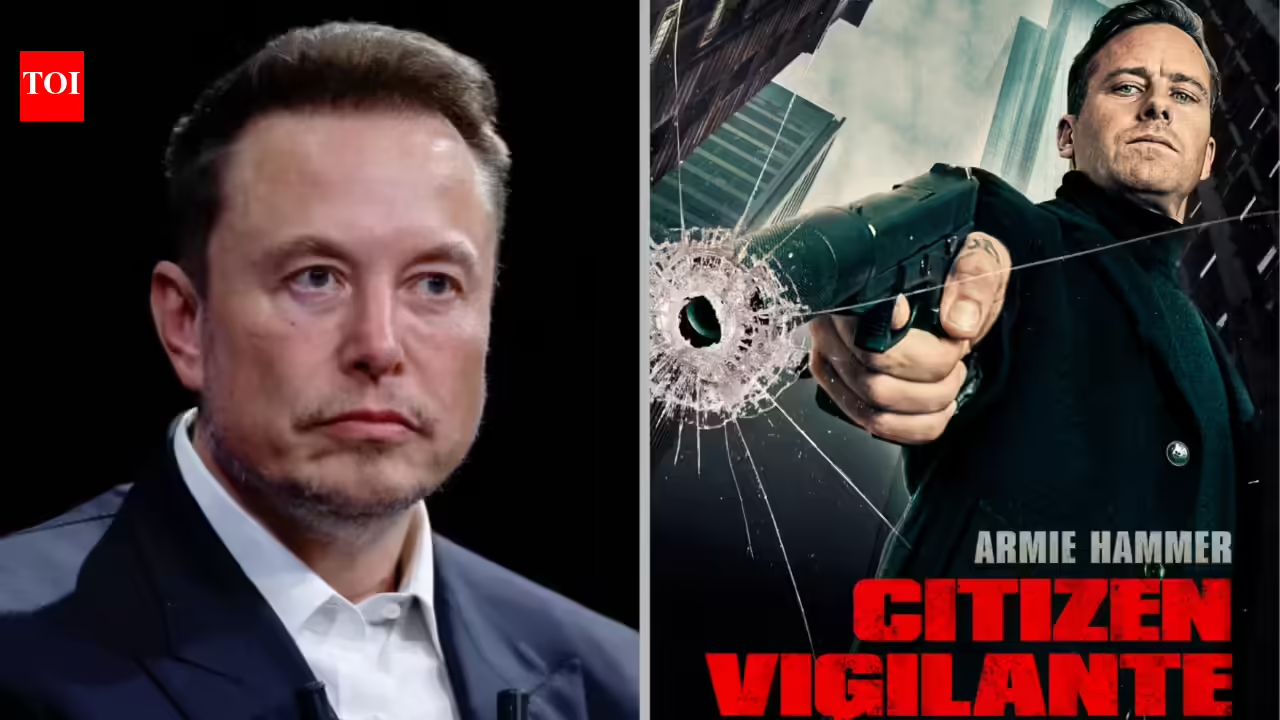
Elon Musk sparks row after posting banned 'anti-immigrant' film on X

ECOWAS Court Launches Electronic Case Management System in Abuja, Dismisses SERAP Debt Suit

CBN’s Data Localisation Mandate Spurs Data Centre Readiness and Local Manufacturing Ambitions

Three Indian-origin men jailed in London for running £174,000 drugs network

I was worried about being the oldest mommy in school – Toke Makinwa shares her initial apprehension on embracing motherhood at 40

Nigeria, Tanzania, Ethiopia lead Africa electrification surge – Report

 Investigation3 days ago
Nud£ painting done by Sigmund Freudâs grandson sells for a mind-blowing $39M at auction
- Society3 days ago
“I smuggled cocaine and marijuana to the UK for my son’s father, then served 10 years in prison”-Ghanaian woman recounts ordeal
- Investigation2 days ago
Stop insulting the intelligence of Nigerian women – Arise TV anchor, Ayo Mario-Ese knocks First lady, Remi Tinubu, over âAkara, Kuli-Kuliâ business advice
- Society3 days ago
Tears flow as Notre Dame Girls SHS student dies moments after completing final WASSCE paper
- National3 days ago
Court Orders EFCC To Immediately Withdraw Wanted Publications Against Dominic Duru, Khalidur Talukder; Stops Yellow Card From Further Using Security Agents In Commercial Dispute
- Breaking15 hours ago
UNBELIEVEABLE: Video of A Fat Wife Beating And Flogging Her Slim Husband Sparks Debate Online Among Couples and Youths
- Breaking2 days ago
Ondo state government withholds WASSCE results of graduating students over signing out rampage
- Investigation3 days ago
âIf you can’t discipline your child, don’t bring them to public placesâ â Lady criticises âgentle parentingâ