News
Payment system key to lifting Nigerians from poverty – Cardoso

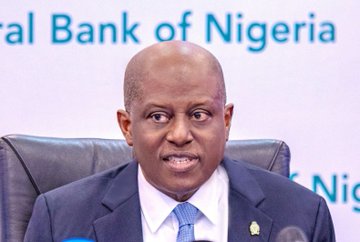
The Governor of the Central Bank of Nigeria, Mr Olayemi Cardoso, on Monday said an efficient payment system remains one of the fastest ways to lift millions of Nigerians out of poverty, as the apex bank unveiled the Nigeria Payments System Vision 2028.
Speaking at the launch of the vision document in Abuja, Cardoso said the country’s payment infrastructure must go beyond facilitating transactions and become a catalyst for economic growth, job creation, financial inclusion, and poverty reduction.
According to him, “One of the fastest ways to take a large number of people out of poverty is through an efficient payments system. It’s through an efficient payment system. So let us not look at it lightly.”
The event brought together regulators, banks, fintech operators, development partners, and other stakeholders in the financial services sector.
Cardoso said the Payments System Vision 2028 builds on Nigeria’s progress in digital payments and provides a roadmap for developing a payment ecosystem that is secure, resilient, inclusive, and globally competitive.
He noted that Nigeria’s payments ecosystem had evolved into one of the most dynamic and innovative in the world over the past two decades, driven by instant payments, digital adoption, and fintech innovation.
“Today, we unveil more than a payment strategy. We unveil a vision for how Nigerians will transact, trade, save, invest, and participate in an increasingly digital economy,” he said.
The CBN governor stressed that payment systems had become critical infrastructure for economic growth, saying they reduce the cost of doing business, improve productivity, strengthen transparency, support trade, and broaden participation in economic activities.
“In a modern economy, payment infrastructure is not simply a financial utility. It is a strategic national asset,” Cardoso stated.
He added that the vision was designed to support broader economic reforms being pursued by the apex bank since 2023 by strengthening the efficiency, resilience, and international connectivity of Nigeria’s payments ecosystem.
According to him, the initiative will help facilitate trade and remittance flows, deepen investor confidence, and improve the country’s balance of payments position over time.
Cardoso said the vision was anchored on the belief that a modern payments system was indispensable to economic growth, financial inclusion, innovation, and national competitiveness.
He explained that the framework seeks to ensure that every Nigerian participates meaningfully in the digital economy while positioning the country to benefit from opportunities under the African Continental Free Trade Area and the expansion of digital commerce.
The governor added that efficient and interoperable payment systems would enable entrepreneurs, traders, and small business owners across the country to access new markets, receive payments faster, and participate more actively in regional and global commerce.
He argued that Nigeria’s position as a leader in Africa’s payments landscape created opportunities to expand financial access, support trade and investment, accelerate economic formalisation, and strengthen the country’s standing in the global economy.
Cardoso also challenged stakeholders to focus on measurable outcomes rather than policy documents alone, stressing that the success of the vision would be determined by implementation.
He further linked the initiative to broader economic objectives, including higher output and poverty reduction.
“The journey is to impact the lives of the poor. That’s part of it and a major part of it. The journey is to lift people out of poverty, and the journey is to have an impact on GDP,” he said.
Cardoso disclosed that the CBN was targeting 95 per cent financial inclusion by 2028, which he said could bring about 50 million additional market women, farmers, and young people into the formal financial system.
“Under Vision 2028, I would like to see this reaching 95 per cent inclusion. That means 50 million more market women, farmers, and young people will have a bank account or wallet in their name with their name and BVN protecting them,” he said.
He also outlined plans to reduce cash usage in the economy, expand digital payment acceptance through QR codes and tap-to-phone solutions, and strengthen trust in electronic transactions.
The governor said the apex bank would seek to reduce cash outside the banking system to less than 40 per cent of money in circulation while promoting digital payments across markets, transport hubs, and rural communities.
He added that the CBN was targeting fraud losses of less than 0.001 per cent of total transactions by 2028 through stronger identity verification, artificial intelligence-driven fraud detection, and deeper integration of the Bank Verification Number system.
“A payment system is only as strong as the trust people have in it,” Cardoso said.
He further disclosed that open banking reforms had already made more than 100 licensed application programming interfaces available, creating opportunities for innovation and supporting the emergence of new fintech companies.
According to him, the future of finance would be shaped by systems that are faster, smarter, more connected, and more inclusive, adding that Nigeria must continue investing in trusted and resilient financial infrastructure to remain competitive.
Also speaking at the event, the Deputy Governor, Economic Policy Directorate of the CBN, Dr Muhammad Abdullahi, said the success of Nigeria’s economic growth would increasingly depend on the seamless and secure movement of money across households, businesses, governments and borders.
Abdullahi described the Payments System Vision 2028 as a strategic framework designed to shape the future of payments, commerce and economic interactions in Nigeria, noting that modern payment systems had become critical economic infrastructure rather than mere transaction channels.
According to him, the vision was developed to build a payment ecosystem that is innovative, inclusive, resilient and globally connected while supporting Nigeria’s ambition of becoming a leading hub for trade, investment and financial services in Africa.
He said the framework was built around five strategic pillars, namely payment infrastructure, financial inclusion, innovation, cross-border payments, and regulation and cybersecurity.
On infrastructure, Abdullahi said the vision sought to modernise national payment systems, achieve full interoperability among banks, fintechs and payment service providers, and scale real-time payments across the economy.
“Efficient payment infrastructure lowers transaction costs, improves business productivity, and enables firms of all sizes to participate competitively in the digital economy,” he stated.
The deputy governor said the financial inclusion pillar would focus on expanding access through mobile platforms and agent networks, strengthening consumer protection and financial literacy, and delivering products targeted at women, youths, rural communities and micro, small and medium-sized enterprises.
“Financial inclusion is an economic growth strategy. Bringing individuals and MSMEs into the formal financial net deepens national liquidity, expands the tax base, and connects small businesses to new markets,” he said.
Abdullahi added that the vision would leverage emerging technologies such as artificial intelligence, blockchain, open banking and digital identity solutions to improve efficiency and unlock new economic opportunities.
He further said Nigeria planned to deepen integration with the Pan-African Payment and Settlement System and the African Continental Free Trade Area framework to reduce cross-border payment costs, facilitate trade and strengthen the country’s position as a regional settlement hub.
On regulation and cybersecurity, he stressed the importance of trust, saying the CBN would prioritise stronger risk management, fraud response systems and real-time oversight to safeguard the financial system.
Earlier, the Director of Payments System Policy at the CBN, Musa Jimoh, said the country’s payments transformation journey began in 2007 when the apex bank introduced the Payment System Vision 2020 to modernise a largely cash-based economy.
According to him, Nigeria at the time had a limited electronic payment infrastructure, with few digital channels available to consumers and businesses.
He said the CBN’s efforts were also tied to a commitment made by Nigeria at a global policy forum in 2010 and 2011 to expand financial inclusion and increase access to formal financial services.
Jimoh identified high banking costs, poor proximity to financial services, and stringent account-opening requirements as the major barriers to inclusion at the time.
“Unless we remove these three major deterrents, we’re not going to achieve it,” he said.
He explained that the CBN responded by introducing policies such as the cashless initiative and agent banking framework, which helped reduce the cost of financial services and expand access nationwide.
“Today, we are proud to announce that we have over two million agents spread across the country,” he said, describing the agents as business owners helping to deepen financial access while creating jobs.
Jimoh added that the new Payments System Vision 2028 was designed to deepen financial inclusion further, strengthen trust in digital financial services, and improve Nigeria’s competitiveness in the global payments landscape.
Also speaking, the Director-General of the Securities and Exchange Commission, Dr Emomotimi Agama, stressed the importance of collaboration among regulators and financial sector operators.
Agama said Nigeria had become a global reference point in digital payments and urged stakeholders to tell the country’s success story more effectively.
The Executive Vice Chairman of the Nigerian Communications Commission, Dr Aminu Maida, also backed the vision, describing it as a critical step towards achieving the Federal Government’s goal of building a $1tn economy.
Maida said many of today’s challenges, particularly fraud and cybersecurity threats, cut across sectors and national borders, making collaboration among regulators and institutions essential.
He added that the NCC was working to expand fibre infrastructure and broadband access across the country to support digital payments, financial inclusion, and the broader digital economy.
Maida urged stakeholders to focus on outcomes rather than transaction volumes alone.






German football legend Thomas Müller tips Olise to win Ballon dâOr award ahead of Harry Kane

IShowSpeed’s new World Cup anthem ‘Champions’ has fans calling it FIFA 2026’s unofficial song

120 bag first class degrees as UNIPORT graduates 8,156 students

Kano lawmaker dumps NDC, returns to APC after meeting Barau

87-year-old Florida man dies after Tesla on Autopilot mode crashes into pond

Netherlands Police drags Pregnant Woman along floor by her hair (video)

APC suspends Reps member, six others over alleged anti-party activities

 Breaking2 days ago
Nigeria confronted with outcomes of institutional neglect — Tunde Bakare
- News2 days ago
Seyi Makinde clinches APM presidential ticket
- World2 days ago
5/30: Saturday Morning
- World2 days ago
Raheem Sterling arrested for suspected drug driving amid ‘strain from career’
- Politics2 days ago
Osun NNPP concedes 50% of legislative tickets to female candidates
- News2 days ago
Saraki urges young women to prioritise education, skills for economic independence
- World2 days ago
Trump lashes out after removal of his name from Kennedy Center- 'System is rigged'
- News2 days ago
Liverpool confirm exit of head coach Arne Slot