Breaking
Telecom operators back CBN’s data localisation order, says Nigeria has capacity

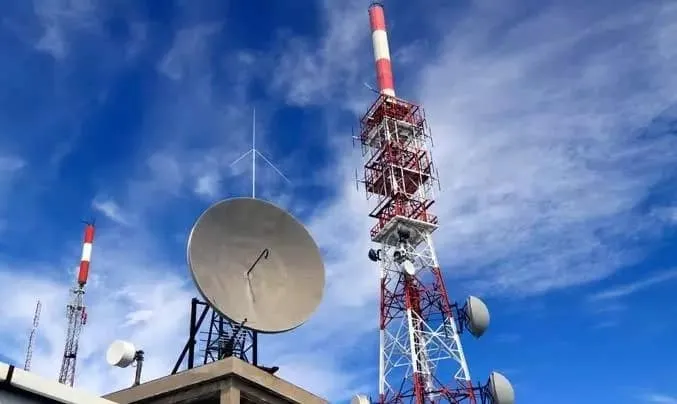
The Association of Licensed Telecommunications Operators of Nigeria, ALTON, has backed the Central Bank of Nigeria’s directive requiring banks and fintechs to host payment transaction data locally.
ALTON Chairman, Gbenga Adebayo, said this in an interview with the News Agency of Nigeria in Lagos on Saturday.
NAN reports that his position follows a recent CBN directive mandating banks, fintechs and other payment service providers to store payment transaction data generated in Nigeria on local servers from Jan. 1, 2027.
The directive forms part of measures aimed at strengthening oversight of the country’s rapidly growing digital payments ecosystem.
Mr Adebayo said data sovereignty required countries to take responsibility for their entire data value chain.
According to him, this covers data collection, management, storage and integrity assurance.
“We cannot continue to outsource that to other jurisdictions.
“The more we host our data locally, the better for us,” he said.
Adebayo said local hosting would enable Nigeria to manage data end-to-end and guarantee the integrity of critical information.
He noted that hosting payment data outside the country increased communication requirements, latency and retrieval costs.
“For every transaction involving data hosted outside our shores, communication has to take place from your location to the host and back.
“It increases latency and also increases the cost of data retrieval,” he said.
The ALTON chairman described the directive as an important first step toward achieving national data sovereignty.
He also dismissed concerns over infrastructure readiness, saying Nigeria already possessed significant data centre capacity.
According to him, several Nigerian-owned facilities currently host data for organisations operating from other jurisdictions.
“I’m happy to say that we have a lot of data centres owned and managed by Nigerians that are hosting data from other jurisdictions.
“If people overseas can host their data here, why can’t we host our own data here?” he asked.
Adebayo argued that local hosting would reduce dependence on foreign infrastructure while improving national control over data security.
He said concerns about security and reliability should not justify continued reliance on foreign hosting providers.
“No one can protect your house better than yourself.
“You have more at stake in terms of security and safety than somebody else hosting your data,” he said.
The telecom industry leader also highlighted the cost implications of local hosting.
He said organisations hosting data locally would pay in local currency rather than foreign exchange.
According to him, this would help reduce exposure to exchange rate pressures and lower long-term operating costs.
Adebayo said Nigeria currently had about six Tier III data centres, with additional facilities under development.
He, however, stressed that capacity was more important than the number of facilities.
“It’s not just about the numbers; it’s about the capacity of what they are able to host.
“So far, we are able to,” he said.
He urged stakeholders to accelerate efforts toward domestic data hosting and management.
“The earlier we begin to domesticate our data hosting and data management, the better for us,” Mr Adebayo said.
NAN


Asylum seeker jailed after torturing and raping prisoners

18-year-old stabbed to death, dumped outside UK's Poole Hospital after being driven from attack scene

Brazilian legend Ronaldinho ‘comes out of retirement’ at the age of 46 to sign for Italian football club

World Cup 2026: You’re never going to be Messi – Ex-England striker Bothroyd tells Ronaldo

Most Nigerian women, their affection is for sale – Canada based man sparks controversy

Police detain TikToker following boyfriendâs death in Kano

The Northern Gaze on Nuhu Ribadu: Security, Politics, and the Weight of Expectation, by Crispin Oduobuk

 News2 days ago
Bandits Strike Under Rain Cover, Kill 2 and Make Shocking Abductions in Sokoto
- Investigation3 days ago
Actor IK Ogbonna leads mourners as Alex Ekubo’s body arrives his hometown Arochukwu ahead of his funeral (videos)
- World1 day ago
Horror as woman gang raped by 5 men – piece of wood inserted into victim's body
 News2 days ago
Viral Slap Video Sparks Debate Over Staging, Consent and Online Clout
 Investigation2 days ago
Teacher accused of having s£x with her adopted sons was turned in by disgusted ex who found twisted texts
- News3 days ago
Abdulsalami Says Nigeria Could Have Been Better Off If Buhari and Idiagbon Stayed Longer
- World2 days ago
Iran's Supreme Leader breaks silence as he claims Trump struck deal 'out of desperation'
- Investigation21 hours ago
FIFA ban England fanâs flag from World Cup