Investigation
Cardoso blames declining purchasing power and digital payment adoption for scarcity of N100 and N200 notes

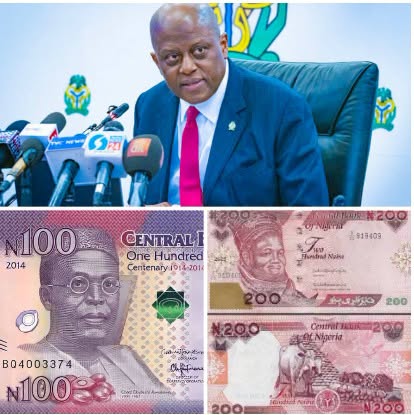

The Central Bank of Nigeria (CBN) has attributed the scarcity of lower-denomination naira notes to the growing use of digital payment channels and changing demand for physical cash.
Speaking after the Monetary Policy Committee (MPC) meeting in Abuja, CBN Governor Olayemi Cardoso said the reduced circulation of lower-value notes does not mean they have been withdrawn, stressing that the N100 and N200 notes remain legal tender. “Yes, they remain legal tender. Unless the central bank states otherwise, Nigerians should assume that all existing denominations remain legal tender.”
Cardoso explained that as more Nigerians embrace electronic payments, the demand for coins and lower-denomination notes has naturally declined, reducing the need for the apex bank to print and circulate them in large quantities. “As more people adopt digital payment channels, the demand for coins and lower-denomination notes naturally declines. If there is less demand for them, there is less need to print and circulate them in large quantities.”
He also noted that inflation and the declining purchasing power of lower-value notes have contributed to their reduced use in everyday transactions. “Of course, we must also acknowledge that currency devaluation has affected the purchasing power of lower-value notes. That is a reality.”
On inflation, Cardoso said the CBN remains committed to achieving single-digit inflation despite external economic shocks that have delayed progress. “We recorded 11 consecutive months of disinflation… Unfortunately, we have experienced external shocks that were not anticipated… As for our single-digit inflation target, we remain committed to it.”
Responding to the International Monetary Fund’s (IMF) assessment that the naira is undervalued, Cardoso reiterated that the exchange rate should be determined by market forces rather than a fixed target. “We will continue to ensure that Nigeria has a foreign exchange market that is transparent, liquid and based on a willing-buyer, willing-seller framework.”
He added that the CBN is satisfied with the current state of the foreign exchange market, noting that daily turnover has exceeded $1 billion on some occasions, reflecting improving investor confidence.


Democrats are hoping for a Nebraska or Montana Senate surprise

Senate demands audit of licensed miners
Senate demands audit of licensed miners

N12.8tn Service-Wide Vote: APC’s reaction exposes guilty conscience — Atiku camp

12,000 Edo Farmers To Benefit From Federal Government Free Fertilizer Initiative To Boost Agricultural Products

Father and daughter d!e after falling into an abandoned well

Power Minister Seeks Police Crackdown on Energy Thieves and Vandals

 Society2 days ago
Pepper Seller Caught On Camera Applying Pepper On Newborn Baby As Rituals To Usher Her Into The Business
- Society2 days ago
2026 Ballon d’Or: Top 4 players to win award after World Cup final revealed
- Investigation1 day ago
65-year-old married female teacher blindfolded and tied 10-year-old schoolboy to bed before having s3x with him
- World3 days ago
Spain earns $51 million for World Cup win and runner-up Argentina gets $34 million as total payout for all 48 teams hits record-high $871 million
- Investigation1 day ago
"I ‘m fine and healthy" – Video of late Mary Habila debunking her d3ath rumours 3 days before she d!ed at Umahi’s residence
- Investigation24 hours ago
âBusinesses are dy!ng in South Africa. Nobody is making money – South African man decries low patronage days after anti-immigrant protest
- Investigation2 days ago
âResurrection of the Christâ writer reveals actor Mel Gibsonâs dark spiritual warning about âPassionâ sequel
- Investigation3 days ago
Choirmaster sentenced to 25 years imprisonment for r@ping 16-year-old girl during âdeliveranceâ in Anambra