National
FG Speaks on Borrowing N80tn, Reveals Reason for Increase in Debt Figures

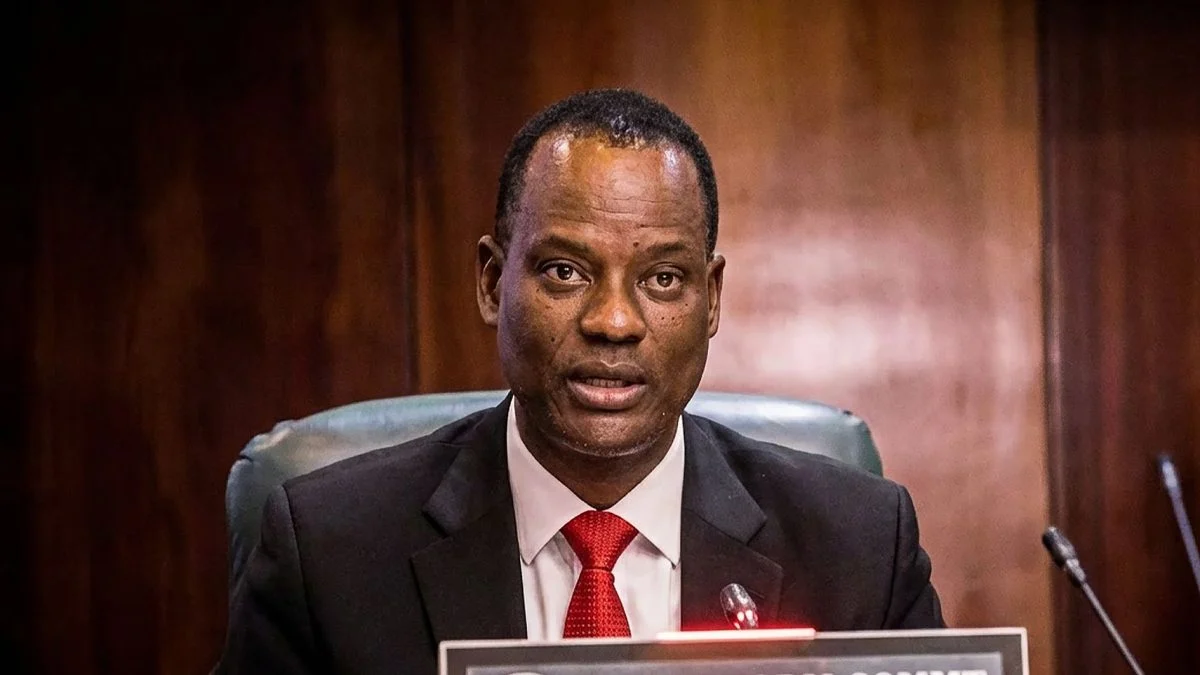
The Federal Government has dismissed reports that the administration of President Bola Tinubu borrowed about N80 trillion in fresh loans, explaining that the sharp increase in Nigeria’s public debt was mainly caused by accounting adjustments, exchange rate changes and the recognition of old obligations rather than new borrowing.
The clarification was made by the Minister of Finance and Coordinating Minister of the Economy, Wale Edun, during his appearance before the Senate Committee on Finance to defend the state of the nation’s economy on Monday.
He was responding to concerns raised by Senator Adamu Aliero (Kebbi Central), who referred to reports claiming that the current administration had added about N80 trillion to the N75 trillion debt it inherited from the previous government.
According to the minister, many Nigerians had compared the country’s current debt stock with the figure inherited in 2023 without taking into account major financial adjustments that significantly changed the value of the debt.
He said, “When this administration came into office, public debt was around N75tn. Many people simply compare that figure with today’s debt stock and conclude that this government has borrowed massively.”
Edun explained that one of the biggest reasons for the increase in the debt figure was the depreciation of the naira, which affected the valuation of Nigeria’s foreign debt because the country reports all its public debt in naira.
“Following the reforms and the depreciation of the naira, the foreign currency component of our public debt had to be revalued because Nigeria reports its debt in naira. That accounting adjustment alone added more than N40tn to the public debt figure,” he stated.
The minister also said another major factor was the securitisation of the Ways and Means advances obtained by the previous administration from the Central Bank of Nigeria. He explained that after the National Assembly approved the process, about N33 trillion was added to the official public debt records.
“About N33tn was added to the public debt through that process. It was not new borrowing; it was simply bringing previously existing obligations onto the official debt books,” he said.
According to him, these two developments have created the impression that the Tinubu administration embarked on massive borrowing when that was not the case.
“These factors have not always been properly explained, which is why the reported public debt appears much larger. The actual amount this administration has borrowed is nowhere near what many people believe. Even for domestic borrowing, much of it is refinancing. Debt that was borrowed previously matures, and the government raises new debt to refinance it. That is not new borrowing,” the minister added.
Edun maintained that the current administration had adopted a responsible borrowing policy, insisting that loans were being channelled towards infrastructure and other productive sectors capable of supporting economic growth instead of financing recurrent expenditure.
“This administration has been very responsible in its borrowing. We understand the concerns of Nigerians and of the distinguished senators, but we remain fully committed to debt sustainability. We see debt as leverage. Every naira and every dollar borrowed should generate more value than the amount borrowed,” he said.
Despite the explanation, some lawmakers expressed concern over the implementation of the 2026 budget, particularly the slow release of funds for capital projects. Senate Chief Whip Tahir Monguno and Senator Aliero warned that delays in implementing the capital component of the budget could affect the achievement of government development targets.
Monguno reportedly described the non-implementation of the capital component of the budget as a serious constitutional issue.
Responding to the concerns, Chairman of the Senate Committee on Finance, Senator Sani Musa, defended the government’s economic team and assured lawmakers that progress on capital projects would soon become visible across the country.
After a closed-door meeting with the minister and members of the economic management team, Musa disclosed that discussions were ongoing to improve budget implementation.
“A performance- and priority-based budgeting system is being looked at to replace the envelope system and also revert to the old system of payments for contractors,” he said.
The debate over Nigeria’s debt profile has continued in recent months amid concerns about rising debt servicing costs and the country’s fiscal sustainability.
In May, President Bola Tinubu asked the National Assembly to approve external borrowing of $21.5 million and ¥15 billion, alongside a €65 million grant, as part of the Federal Government’s 2025-2026 external borrowing plan.
According to the President, the proposed facilities are intended to finance projects in infrastructure, agriculture, health, education, water supply, security, employment generation and financial management reforms across the country.
The government has consistently maintained that its borrowing strategy is aimed at supporting economic growth while ensuring long-term debt sustainability.


INEC 2026 recruitment begins, how to apply

Why ‘Queening’ Is the Sex Act Women Keep Coming Back To, According to Experts

Former DSS Officer Reveals New Details About Abacha’s Final Moments

FG says highest bidder wonât automatically get oil blocks

English FA names referees for Arsenal, City Community Shield clash

Wema Bank Wins Euromoney’s Nigeria’s Best Digital Bank for Consumers 2026 Award

Patek Philippe’s Nautilus at 50

 Society1 day ago
2026 Ballon d’Or: Top 4 players to win award after World Cup final revealed
- Society1 day ago
Pepper Seller Caught On Camera Applying Pepper On Newborn Baby As Rituals To Usher Her Into The Business
- Investigation3 days ago
âI canât date a man who earns less than me. Iâve supported men financially before, and Iâm done with thatâ â Mercy Eke
- World2 days ago
Spain earns $51 million for World Cup win and runner-up Argentina gets $34 million as total payout for all 48 teams hits record-high $871 million
- Society3 days ago
Man Finds Beautiful Lady Stripped Totally ‘Nɛkɛd’ In Deep Forest, Says She Doesn’t Know How She Got There
- Investigation3 days ago
US President Trump questions Thomas Tuchelâs tactics in England World Cup loss to Argentina
- Society3 days ago
Prosecution Presents Evidence Against Adu-Boahene in GH¢49.1 Million Trial-Deputy AG Says
- Investigation3 days ago
Iâll retire and get a tattoo of our manager if Spain win World Cup 2026 – Spanish defender, Cucurella