Breaking
IMF report exposes institutional corruption under Tinubu, Atiku alleges

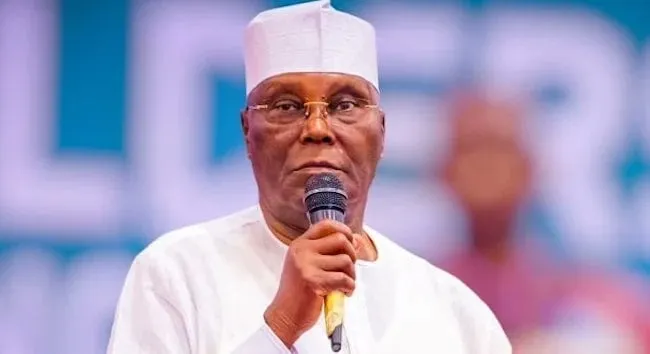
Former Vice President and presidential candidate of the African Democratic Congress, ADC, Atiku Abubakar, has challenged the Federal Government to account for what he described as the omission of public expenditure equivalent to two per cent of Nigeria’s Gross Domestic Product, GDP, from recent national budgets, following a disclosure by the International Monetary Fund, IMF.
Mr Atiku, in a statement issued on Saturday by his Senior Special Assistant on Public Communication, Phrank Shaibu, alleged that the IMF’s findings, coming shortly after the controversy surrounding the purported Presidential Foreign Intervention Promotion Council, PFIPC, pointed to what he termed a pattern of institutional corruption under President Bola Tinubu’s administration.
He argued that the IMF’s disclosure raised serious constitutional and fiscal accountability concerns, insisting that Nigerians deserved to know how expenditure equivalent to two per cent of the country’s GDP could have been excluded from the budget process.
According to him, public funds cannot legally be spent outside the appropriation process provided for under Section 80 of the Constitution, stressing that every expenditure from the Consolidated Revenue Fund must be authorised by the National Assembly.
“If, as the IMF has revealed, expenditure amounting to two per cent of Nigeria’s GDP was omitted from the budget process, then Nigerians are entitled to one simple question: Who stole the missing two per cent of our GDP?” Mr Atiku said.
He maintained that the issue was beyond an accounting error, describing it as a constitutional, legal and moral scandal that required full disclosure of those responsible for authorising, approving and spending the funds.
The former vice president further linked the IMF disclosure to the controversy surrounding the PFIPC, describing both incidents as evidence of systemic weaknesses in public financial management.
According to him, the alleged recognition of a “fictitious” government agency and reports that it received budgetary allocations, while critical sectors such as healthcare suffered poor releases, reflected misplaced priorities.
Atiku claimed that while the Federal Ministry of Health reportedly received only ₦36 million in releases despite a budgetary provision exceeding ₦218 billion, the PFIPC allegedly secured about ₦1.3 billion in allocations.
He described the situation as an illustration of “institutionalised corruption,” arguing that no government agency could receive official recognition or resources without approval from the highest levels of government.
The ADC presidential candidate therefore called on the Secretary to the Government of the Federation, Senator George Akume, to explain the circumstances surrounding the recognition of the PFIPC and identify those who authorised its operations.
He also referenced allegations by Prince Adeniyi Adeyemi, identified as a principal figure in the PFIPC controversy, who reportedly claimed that the dispute escalated after he refused to pay a 48 per cent kickback allegedly demanded by the Office of the Chief of Staff from the agency’s proposed ₦27.3 billion take-off grant.
Atiku described the allegation as grave and urged the Federal Government to institute an independent and transparent investigation.
He said if the allegation was false, the government should clear the air through an open probe, but if established as true, all officials connected to the matter should be removed from office and prosecuted.
The former vice president also criticised the Tinubu administration’s economic policies, saying Nigerians were facing severe hardship following the removal of fuel subsidy, rising taxes, increased electricity tariffs, high inflation and continued borrowing, while questions remained over accountability in public spending.
According to him, fiscal credibility cannot coexist with secret spending, warning that public confidence in government would continue to erode if concerns over transparency were left unresolved.
Atiku called on the National Assembly, the Auditor-General of the Federation, the Public Accounts Committees of both chambers, the Economic and Financial Crimes Commission (EFCC) and the Independent Corrupt Practices and Other Related Offences Commission (ICPC) to investigate the IMF’s findings and establish the facts.
He maintained that the issue transcended partisan politics and touched on constitutional governance, insisting that every naira of public expenditure must be traced and justified.
“The books must be opened. Every naira must be traced. Every expenditure must be justified. Every official found culpable must be held accountable,” he said.
Atiku concluded by accusing the Tinubu administration of replacing its promise of “Renewed Hope” with what he described as renewed secrecy, impunity and fiscal abuse, reiterating his demand for answers over the alleged missing two per cent of Nigeria’s GDP.


US summer heat: 5 cooling tricks people around world have used for generations

Police arrest suspected Eiye cultist, recover pistol in Lagos

Analyst hails IGP Disu for promoting peaceful, secure election processes

2027: Pick Christian deputy or risk losing votes – Vatsa tells Bago

Plateau senator slams NIPSS DG over ‘Berom militia’ comment

Trump to mark US 250th anniversary with campaign-style rally on National Mall
Trump to mark US 250th anniversary with campaign-style rally on National Mall

 Society2 days ago
Iyabo Obasanjo clarifies father’s real age
- Society3 days ago
Outrage As Video Of Primary Schoolgirls Smoking And Drinking Surfaces Online
- Breaking3 days ago
Nigerian nun in tears as she’s released after being arrested by ICE while walking to Mass in the US (video)
- Investigation2 days ago
Eight de@d and 13 injured after being hit by truck ‘being driven by child’
- Breaking3 days ago
"I would have contacted HIV or Hepatitis B if I had stayed" – Nigerian woman says as she reflects on her failed marriage
- Breaking2 days ago
Panelists and guests on a podcast burst into laughter after 54-year-old US woman âmarriedâ to a 36-year-old Nigeria-based man, who she sends money to every month, laments about lack of love from him
- World2 days ago
Monaco bombing: Ukrainian oligarch's alleged mistress loses both legs as wife speaks out
- World2 days ago
WW3 fears explode as Cuba warns Donald Trump it's 'preparing for war'