World
Jensen Huang made his $172 billion fortune on AI chips. His family’s $75 million gift to Vanderbilt argues art decides what technology is for

This Video Is Trending Right Now
Jensen Huang has been on a bit of a philanthropic streak, having donated one of his iconic leather jackets to raise nearly $1 million for the Edge Institute, a nonprofit that brings together people working in tech, science, culture, and society to live together in pop-up villages and work on experiments.
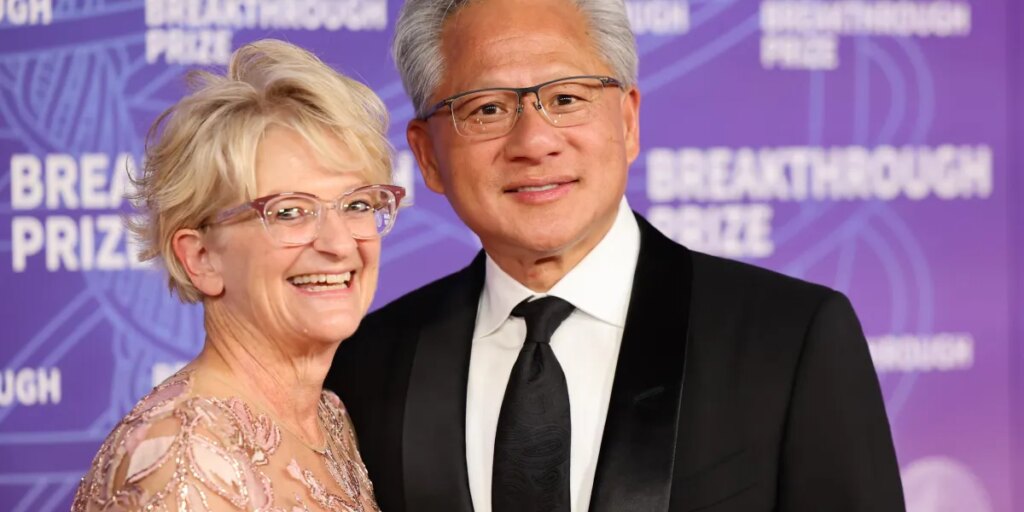
Now the Nvidia CEO and his wife, Lori, are making a somewhat unexpected turn, donating $75 million to Vanderbilt University for its art, architecture, and design San Francisco campus. It might seem odd for one of the world’s most prominent technology leaders to donate to an art school, but the Huangs have interesting reasoning.
“Technology expands what we can build. Art and design determine why we build it,” Huang said in a statement. “Together they shape civilization.”
Pending approval, the gift will establish the Jen-Hsun and Lori Huang College of Art, Architecture and Design, which is “envisioned as a hub” for creatives, according to Vanderbilt. The goal is to establish a school focused on advanced tech breakthroughs, art and architecture, developing technical and visual mastery through studio practice and design labs, and also to help students build both business and tech fluency. The gift has already spurred more than $25 million in additional donations, for a total investment topping $100 million so far.
With that context, it makes a little more sense why Huang, CEO of a $5 trillion AI chips company would be invested in the future of art and tech convergence. And it isn’t his first move here. The San Francisco campus is taking over the site of the California College of the Arts, the 119-year-old institution that will graduate its final class in 2027 after struggling with falling enrollment and a roughly $20 million deficit. Huang had backed CCA before its collapse, according to the San Francisco Standard. His combined giving to CCA and Vanderbilt now approaches $97.5 million, according to the Standard, making the Vanderbilt gift his largest ever to a university, topping the more than $50 million he has given his alma mater, Oregon State.
San Francisco is also the logical home for the school, as opposed to Nashville, where its flagship university sits, because it puts students at the epicenter of new technology development.
“This college, together with additional academic programming under development, will prepare creative leaders to shape culture, industries and communities in San Francisco’s thriving economy, nationally and around the world,” Chancellor Daniel Diermeier said in a statement.
Vanderbilt is also having a major spotlight moment. The gift is the latest step in an aggressive national expansion that has the 153-year-old university opening a New York City campus this fall, planning a graduate campus in West Palm Beach, and building a quantum-computing institute in Chattanooga. This diverges from other higher education institutions that are cost-cutting.
“I think Vanderbilt sees this as its moment,” Brendan Cantwell, a professor of educational administration at Michigan State University, told The Chronicle of Higher Education. “There’s a constant pressure at the top of the institutional hierarchy to continue to differentiate yourself and to fight against the gravity regressing you to the mean.”
To be sure, not everyone is celebrating. The takeover means CCA’s current faculty and staff aren’t guaranteed positions at Vanderbilt, and continuing students aren’t guaranteed admission, local NPR station KQED reported.
While Diermeier told CBS News there would be “an opportunity for students who may want to transfer to Vanderbilt,” he said they’re “not absorbing CCA in any way.”
Vanderbilt has pledged to preserve CCA’s legacy through a “CCA Institute” within the new college, keeping its Wattis Institute gallery running and managing the school’s archives. Still, for a city that has watched its arts scene contract—CCA is the last remaining private art and design school in the Bay Area—the deal reads to some as another loss.
Axios framed the deal as a “huge blow to an arts community that continues to face funding cuts and displacement due to the AI boom.” That’s the same boom that made Huang rich.


Photos from the traditional wedding of music executive, Sososoberekon

2026 budget: Atiku, APC trade words over N12.8tn allocation

Reps probe mining marshals over N2bn allegation

Five members of one family found de@d at home in Abia

Nasarawa Governor Sacks Six Commissioners in Cabinet Shakeup

“No More Pet Bottles, Alcohol In Sachets” — NAFDAC Raids Markets, Parks And Retail Outlets, Launches Nationwide Enforcement

Beverly Naya Speaks Out on Colorism and Beauty Pressure

 Investigation2 days ago
65-year-old married female teacher blindfolded and tied 10-year-old schoolboy to bed before having s3x with him
- Investigation3 days ago
âResurrection of the Christâ writer reveals actor Mel Gibsonâs dark spiritual warning about âPassionâ sequel
- Investigation2 days ago
âBusinesses are dy!ng in South Africa. Nobody is making money – South African man decries low patronage days after anti-immigrant protest
- Investigation2 days ago
"I ‘m fine and healthy" – Video of late Mary Habila debunking her d3ath rumours 3 days before she d!ed at Umahi’s residence
- Society3 days ago
“My ₦5 Million Is Gone!” — Destiny Etiko Vows Never to Bet Again After First Football Wager
- World2 days ago
Trump Is Caught in the Trap He Set
 News3 days ago
Alleged fraud: Court grants ex-Warri refinery MD, Jimoh Yisawu ₦500m bail
- Investigation3 days ago
Nigerian midfielder Suliat Abideen signed by Fenerbahçe