World
Mali’s government does not rule out U.S. military intervention

This Video Is Trending Right Now
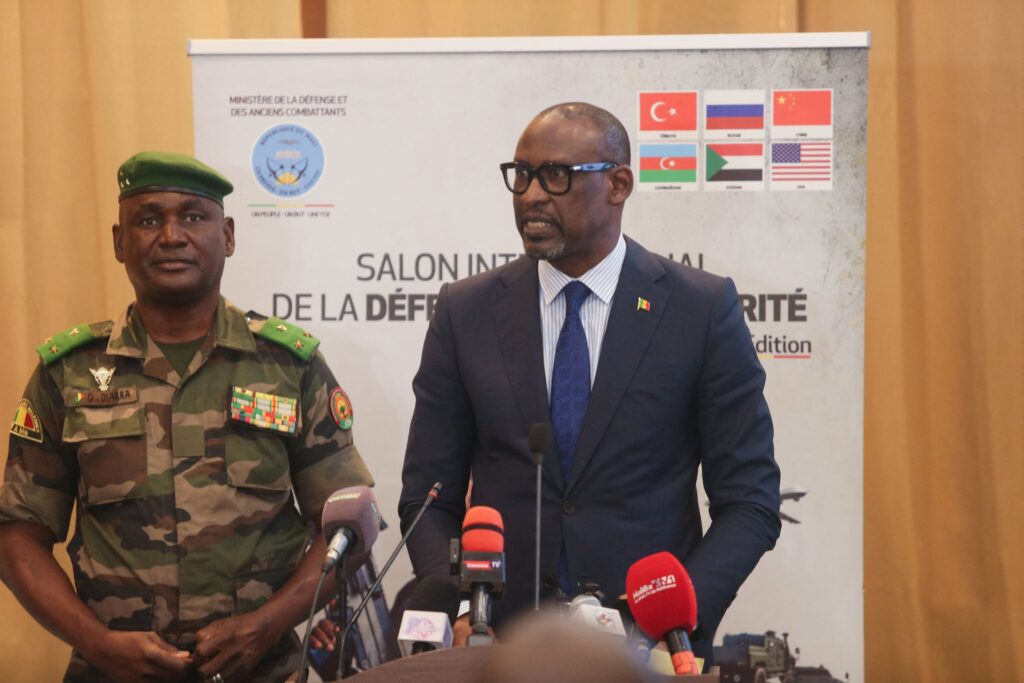
DAKAR, Senegal — Mali’s government on Thursday acknowledged a report indicating that the Trump administration is weighing military action against Islamist militants in the West African country, saying any nation that works with Mali “must respect” its sovereignty.
The statement by Mali’s foreign minister, Abdoulaye Diop, followed publication of a Washington Post report revealing that the administration is contemplating whether to attack an al-Qaeda-affiliated group known as JNIM. If approved, Mali would become the eighth nation where President Donald Trump has ordered military strikes since the start of his second term.
Speaking to local press following a military conference in Bamako, Mali’s capital, Diop did not rule out the possibility of military cooperation with the United States, but said that, to date, government officials had only seen news reports and had received “no confirmation and no official statement from the United States.” Mali’s government, he said, is waiting to see “what stance the U.S. government will take.”
“I can assure you that Mali is not sitting and waiting for others to come and solve our problems,” Diop said, to applause from the audience, adding later that “Mali counts on itself — on its ingenuity, its resources, its defense and security forces, and its own capabilities — to solve its problems.”
Diop also said there are “three principles, which are absolutely very clear, when it comes to working with Mali: we must respect Mali’s sovereignty, we must respect Mali’s sovereign decisions and we must take into account the interests of the people.”
When the White House was asked for comment, a senior U.S. official declined to say if the U.S. was considering military options but said Washington continues to “reach out to the government of Mali to assess their needs and offer our assistance where appropriate.” The official spoke on the condition of anonymity to discuss a sensitive matter.
Mali’s Foreign Ministry did not immediately respond to requests for further clarification.
Since 2020, Mali has been run by military officers who ousted the democratically elected president in a coup. The military junta cut security ties with France, Mali’s ex-colonizer, and turned to Russia for help combating the al-Qaeda and Islamic State affiliates responsible for deadly violence in the region, as has been the case in neighboring Burkina Faso and Niger.
But despite Russia’s often brutal intervention — first by Wagner mercenaries and now Africa Corps personnel more closely tied to the Russian state — the Islamist militants have only grown more powerful.
In his appeal for the respect of Mali’s sovereignty, Diop said Thursday: “The very least one could expect from a partner is to come and ask Malian authorities what they really need.”
The Post’s reporting showed there is disagreement among American officials about attacking the militant group, whose full name is Jama’at Nusrat al-Islam wal-Muslimin.
When the White House was asked for comment for that report, an administration official would not disclose whether Trump intended to move forward with military strikes but said the U.S. has been urging governments in North and West Africa “to purchase U.S. equipment and services to support their war efforts against the terrorists.”
In Bamako, where local newspapers picked up The Post’s reporting and Diop’s response, some residents said they were so fed up with the violence that they welcomed U.S. intervention.
JNIM successfully paralyzed much of the country with a fuel blockade late last year, and in April launched nationwide attacks, including a suicide bombing that killed the country’s defense minister.
Baba Cissé, a 29-year-old electrician, said that the Americans coming to help “would be a good thing.”
“Today, we just want peace because the Russians who are currently in Mali have completely failed,” he said, adding that he hoped the Americans could “do better than others.”
“Because we are suffering too much in this country,” he said.
Ibrahim Diawara, a 22-year-old student, said he also supported American intervention because “the terrorists have been preventing us from living our lives for years now.”
But some were more skeptical. Aliou Dolo, a teacher, worried that if the Americans do intervene, they will start a war they are not prepared to finish.
“We have experienced several military interventions that have not brought good solutions,” he said. “For me, today we need dialogue to bring peace.”
Moussa Ag Acharatoumane, a member of Mali’s transitional government, said in a statement to The Post that terrorism in the Sahel, the vast semiarid region south of the Sahara, “must concern the entire international community.”
Every country — including the U.S. and Russia — have a “crucial role to play,” he said, adding that each country must ultimately “assume its responsibility as the primary guarantor of security within its territory.”
Mohamed Ag Hamaleck in Bamako, Mali, contributed to this report.


There is Nowhere Like Home – Tinubu Speaks on Experiences in America

Magic: The Gathering – All Magic Arena The Hobbit Set Rewards

Court stops impeachment hearing against South Africa president over $580,000 scandal

India’s Student Protesters Win Some Concessions from Government

Why my mother manages my wealth, assets — Hakimi

NYSC Speaks on Alleged Deal to Influence Osun Election

Court grants Blessing CEO N20m bail in alleged N69m fraud case

 Investigation2 days ago
Married woman humiliated after allegedly being caught cheating on her husband with another man in Kogi community
- Investigation3 days ago
âThe court should marry her offââ Father of 11 begs Sharia Court to compel 27-Year-Old daughter to marry
- Investigation3 days ago
âHe bargained the car from â¦15m to â¦13.5m and asked for a test driveâ â Car dealer recounts how suspected car thief allegedly stole vehicle before being caught
- Society3 days ago
Outgoing British High Commissioner praises Tinubu’s economic reforms
 Breaking21 hours ago
âFailed nation, failed parenting and lack of home training’- Lawyer, Deji Adeyanju blasts podcast host for saying a poor man has no place in her heart’
- Investigation3 days ago
Frustrated human being – Nigerian lady publicly calls out her married ex-boyfriend for âtexting her ex-husband to gossip about their past breakupâ
- Investigation3 days ago
Tell my ex-wife to leave, I want to bring my sick mother home â Man begs court
- Society2 days ago
FULL TEXT: Trump’s letter to Tinubu