Society
ECOWAS seeks accelerated reforms to raise women’s representation in politics

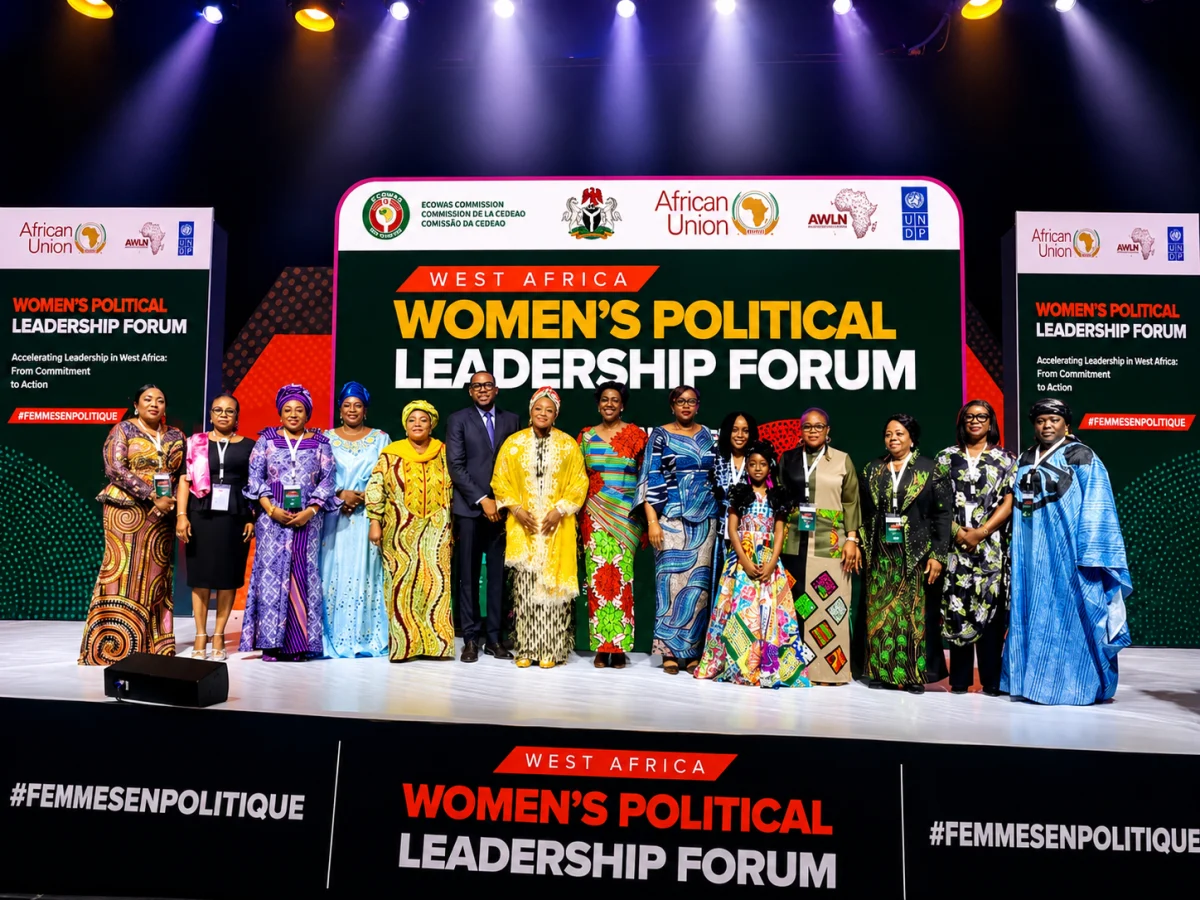
The Economic Community of West African States (ECOWAS) has called for accelerated political, legal and institutional reforms across member states to increase women’s representation in governance, saying the region must move beyond declarations to concrete action if it is to achieve gender parity in political leadership.
The call was made on Thursday at the opening of the West Africa Women’s Political Leadership Forum, themed “Accelerating Gender Parity in Political Leadership in West Africa: From Commitment to Action,” where regional leaders, ministers, parliamentarians, development partners and civil society organisations agreed that existing commitments must now translate into measurable reforms that remove barriers preventing women from participating fully in politics.
The two-day forum is expected to adopt the Abuja Regional Action Plan, providing a roadmap for member states to implement reforms aimed at increasing women’s political participation and achieving ECOWAS’ gender parity objectives by 2035.
Vice-President of the ECOWAS Commission, Damtien Tchintchibidja, said the initiative was conceived as part of the legacy of ECOWAS’ 50th anniversary celebration to ensure that the next phase of regional integration reflects the aspirations and talents of all citizens.
She said the adoption of the Presidential Declaration on Gender Parity in Political Representation and the Pact for the Future of Regional Integration demonstrated the determination of West African leaders to pursue a more inclusive, people-centred regional agenda.
“The strength of our democracies, the quality of our governance and the future of our development depend on the ability of all citizens, women and men alike, to participate fully in shaping the destiny of our region,” she said.
Tchintchibidja noted that despite women’s contributions to peacebuilding, economic growth and community development, they remain significantly underrepresented in political leadership.
According to her, women currently occupy only 18.5 per cent of parliamentary seats across West Africa, below the African average of 25 per cent and the global average of 26.5 per cent.
She said while several ECOWAS member states had introduced gender quotas and parity laws, progress remained uneven, necessitating accelerated reforms.
“The declaration calls on member states to strengthen constitutional, legal and policy frameworks, encourage political parties to reform their nomination processes, invest in women’s leadership development, improve access to political financing and tackle restrictive social norms through education, advocacy and engagement with civil society and the media,” she said.
She added that ECOWAS would support implementation through regional coordination, technical assistance, peer learning, exchange of best practices and monitoring mechanisms.
United Nations Assistant Secretary-General and UNDP Assistant Administrator, Ahunna Eziakonwa, said women continued to face entrenched financial, institutional, cultural and social barriers limiting both their entry into politics and their effectiveness once elected.
She disclosed that women currently hold only 27 per cent of parliamentary seats across Africa, nine per cent of political party leadership positions, 13 per cent of senior executive positions and 24 per cent of cabinet posts.
“This exclusion has consequences for society as a whole. Greater representation of women in political leadership is associated with stronger democratic legitimacy, more inclusive policies, improved peace and better development outcomes,” she said.
Eziakonwa announced that UNDP, in partnership with the African Women Leaders Network (AWLN) and the African Union, would launch the African Academy for Women’s Political Leadership in Kigali, bringing together 40 women from 28 African countries and the Caribbean.
She also said UNDP would support the African Union Commission in developing continental guidelines to address financial barriers confronting women seeking political office.
“Our objective is concrete. By the close of this dialogue, we must have an actionable plan to address the financial, institutional, social, cultural and digital barriers to women’s political participation,” she said, adding that achieving gender parity also requires men to become active allies in dismantling discrimination.
Director of the UNDP Regional Programme for Africa, Jide Okeke, described West Africa’s 18.5 per cent female parliamentary representation as the lowest on the continent.
“If you don’t remember anything from this conference, remember this number — 18.5 per cent. It is the share of parliamentary seats held by women across West Africa, and it is the lowest in Africa,” he said.
Okeke warned that at the current pace, West Africa was unlikely to attain gender parity before 2131, well beyond the region’s target of 2035.
“This is not about numbers. When women are represented in politics, states function better and democratic institutions gain greater legitimacy,” he said.
He disclosed that UNDP had invested $2 million in the African Facility for Women in Political Leadership and would next week launch the African Academy for Women in Politics in Kigali.
He added that UNDP had graduated 140 young women from 31 African countries through its Young Women Leaders Programme and supported more than 200 women-led civil society organisations in Burkina Faso, Mali and Niger to strengthen inclusive democratic transitions.
President of the ECOWAS Female Parliamentarians Association (ECOFEPA), Chantal Fanny, described the adoption of the Presidential Declaration on Gender Parity as the beginning of a new chapter for the region.
“A declaration is never an end in itself. It is a starting point. It is now up to us to translate political commitments into laws, laws into public policies, public policies into concrete actions and actions into tangible results,” she said.
Fanny said ECOFEPA would intensify advocacy for legislative reforms while expanding mentorship programmes to prepare the next generation of women leaders.
Delivering remarks on behalf of AWLN Global Co-Chair, Bineta Diop, former Congolese minister Marie-Louise Mwange said West Africa was at a defining moment as it navigates constitutional reforms, democratic transitions and elections.
She noted that women continued to face obstacles including political violence, rising campaign costs, discriminatory party structures and online harassment.
“The question is no longer whether women should lead. Africa has already answered that question. The real question is whether our political systems are prepared to create the conditions that allow women not only to participate, but to compete, influence and lead,” she said.
Mwange said deliberations at the forum would culminate in the adoption of an Abuja Regional Action Plan to accelerate implementation of ECOWAS Vision 2035 on gender parity.
Nigeria’s Minister of Women Affairs, Imaan Sulaiman-Ibrahim, said women’s political leadership should be viewed as a strategic imperative for democratic consolidation, peace, security and sustainable development rather than an issue of representation alone.
She said Nigeria was reviewing its National Gender Policy while maintaining its commitment to a 35 per cent affirmative action benchmark for women’s participation in governance and political party structures.
Sulaiman-Ibrahim said the country’s third National Action Plan on United Nations Security Council Resolution 1325 had already been domesticated in 16 states to strengthen women’s participation in peacebuilding and security governance.
She added that women currently make up between 17 and 20 per cent of Nigeria’s Federal Executive Council, occupy more than 30 per cent of senior federal civil service positions, and account for about 33 per cent of the country’s judiciary.
“These landmark appointments provide compelling evidence that women continue to excel when entrusted with leadership responsibilities, serving as a powerful reminder that merit, when allowed, prevails regardless of gender,” she said.


For The Fashionistas: ComplexCon Announces ThriftCon Live at ComplexCon, The Largest Vintage Experience In The Festival’s History

Ododo urges Nigerians in UK to support Tinubu’s reforms, invest in Kogi

‘I’m just stuck’: Meet the former OpenAI researcher sitting on $700K of equity that he says is overvalued

We have achieved 80% of our interventions — Alkali, NDC MD

Families cry out as terrorists reject N155m ransom for 176 Kwara abductees

Trump’s own judge flags ‘shortcomings’ in ruling on ‘mandatory detention’

Court Orders Runtown to Return to Eric Many Record Label, Restrains Performances Without Label’s Consent

 Investigation3 days ago
Bandits abduct 13 passengers on JosâKano highway, police rescue 9
- Society3 days ago
H1 2026: FCMB Group sustains performance, Reports 99% growth in profit before tax to ₦157.3 billion
- Society3 days ago
“We Have Done Everything Possible for Peace, But Adwoa Safo Wants GH¢3.7 Million Before Releasing Our Father’s Body” — Nana Kwadwo Safo Akofena
- Investigation3 days ago
Tinubu will run for third term if Good keeps him alive â Babachir Lawal claims
- News3 days ago
I prayed my grave wouldn’t be in the forest — Oyo school principal
- Investigation2 days ago
âNothing we can doâ- INEC rules out extension of voter registration
- Politics3 days ago
Okpebholo charges newly trained forest guards to secure Edo forest areas
- News3 days ago
Group says expansion of Army divisions will enhance security