News
Quality healthcare can curb African medical tourism – Kenyan hospital chief

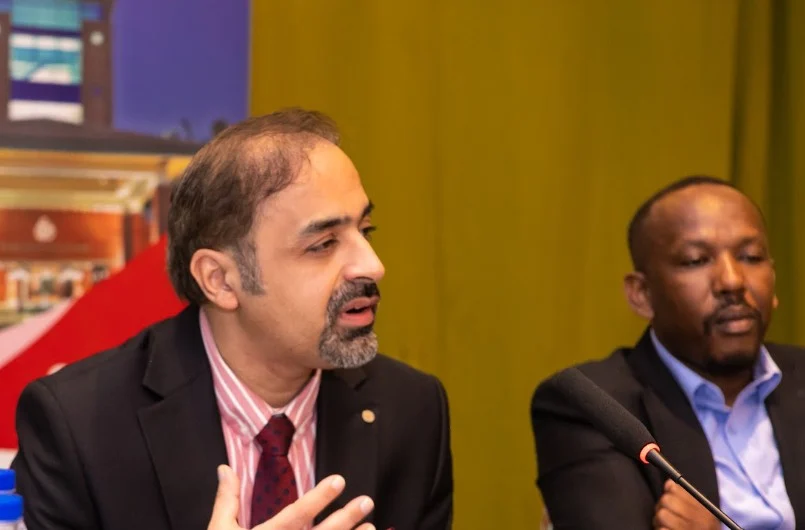
The Aga Khan University Hospital, Nairobi, has said that to curb medical tourism in Africa, stakeholders must build health systems that Africans can trust.
To achieve this, the teaching hospital said healthcare stakeholders on the continent must adopt a comprehensive strategy to tackle Africa’s pressing healthcare challenges.
Addressing a media roundtable meeting in Lagos on Wednesday, AKHU’s Chief Operating Officer, Khurram Jamal, explained that the strategy must be centred on improving the quality of care, training more healthcare professionals, strengthening research, and making access to specialist care easier across the continent.
According to him, Africa has the expertise and opportunity to build health systems that people can trust, reducing the need for patients to seek treatment outside the continent.
“Every year, billions of dollars and hundreds of thousands of patients leave our continent in search of healthcare.
“Our responsibility is to change that by investing in quality, people, research, and partnerships that keep both patients and healthcare investment in Africa.
“True shared prosperity means building health systems that Africans can trust, access, and rely on right here at home,” said Jamal.
AKHU’s COO said restoring confidence in African healthcare begins with consistently delivering internationally benchmarked quality.
“We cannot expect patients to stay simply out of patriotism. We must earn their trust by delivering internationally benchmarked quality, embedding safety into every process and proving that world-class healthcare is available right here in Africa,” Jamal said.
According to him, Africa carries a quarter of the world’s disease burden but contributes only a small fraction of global clinical research.
Jamal said that with the burden of non-communicable diseases in Africa, it had become imperative that African-led is important for the future of healthcare on the continent.
“Because the genome of Africans is so much different from the populations where most clinical trials are conducted in the West, whether in European countries or North American countries.
“Those trials are being performed on Caucasian populations, and the solutions provided, based on which medications and treatments are developed, may end up being irrelevant to the African genome and the genetics that Africans have.
“Building our own research capacity is essential if we are to develop solutions that reflect Africa’s unique health realities,” he said.
Jamal explained that reducing outbound medical travel would require collaboration among governments, healthcare providers, airlines, regulators, and policymakers.
“Africa has the talent, the patience and the opportunity. By investing in people, quality, research, and regional partnerships, we can keep African patients, African talent, and African healthcare investment where they belong — here in Africa,” he said.
Jamal said the continent must move beyond investing mainly in physical infrastructure and place greater emphasis on developing and retaining healthcare professionals.
“A building cannot heal a patient. A state-of-the-art operating theatre is simply an expensive room without a trained specialist inside it.
“Infrastructure can be built in months, but a specialist takes more than a decade to train.
“If Africa is to close its healthcare gap, we must invest as heavily in people as we do in buildings. Our mission is not only to treat patients, but to train the next generation of specialists who will strengthen healthcare systems across the continent,” he said.
Also speaking, AKUH’s Strategic Communications Lead, Anthony Kagiri, explained that AKUH’s brand awareness in Nigeria represents a strategic move to position AKUH Nairobi as the top medical tourism alternative for Africans seeking high-quality treatment abroad without travelling to Europe, Asia, or the Americas.
He said that during the visit, the delegation would compare notes with physicians in Nigeria, conduct CMEs, build relationships, and bridge gaps in knowledge sharing.
The partnerships, he said, would eventually catalyse the needed collaboration to curb medical tourism by Africans.
To help curb medical tourism, Kagiri said AKUH has built one of the region’s leading teaching hospitals, offering undergraduate medical and nursing programmes, residency training, and multiple clinical fellowship programmes that are producing the next generation of African specialists.
According to him, the hospital employs about 200 full-time specialists who combine patient care with teaching and research. It also runs 16 clinical fellowship programmes and residency training across nine medical specialisations.
He noted that the hospital has invested heavily in internationally accredited systems and advanced clinical technologies while adopting global standards that embed patient safety into every stage of care.
“The hospital was the first in the region to achieve Joint Commission International accreditation and has maintained this through continuous reaccreditation.
“It has also earned internationally recognised certifications in pathology, laboratory medicine and specialised cardiac and stroke care,” he said.




IPC Director To NUJ: Stop giving awards to serving public officials

Bauchi govt dissolves Wikki Tourist management after relegation, appoints sole administrator

APC accuses Adeleke’s ‘thugs’ of killing, injuring its supporters

2027: INEC considers full systems audit, mock presidential poll

Neptune Prime unveils Institute of Journalism

Adamawa varsity lecturer collapses and d!es on Kaduna road after visiting his construction site

2026 World Cup: Why Argentina beat England 2-1 – Tuchel

 Society2 days ago
35-Year-Old Man Breaks Down In Tears Like A Baby At Roadside After Wife Reportedly Goes Missing At Kasoa Market
- Investigation2 days ago
Suspected ISWAP logistics supplier arrested with food items bound for terrorists in Borno
- National2 days ago
JUST IN: Senate to give N10million each to families of security operatives, teachers killed in Oriire rescue
- Investigation1 day ago
R Kelly officially asks President Trump to end his 30-year prison sentence for s 3x crimes
- Investigation3 days ago
Veterans demand â¦250,000 Minimum Wage for soldiers
- National23 hours ago
2026 Ballon d’Or: Top 4 players to win award ahead of World Cup final
- Investigation3 days ago
Court remands man for impregnating own daughter in Adamawa
- Investigation2 days ago
âThereâs nothing more absurd than the âEmi Lokanâ sloganâ â Falz knocks slogan of current administration