National
South Africa Mandates 21-Day Fuel Stockpiles to Bolster Supply Chain Resilience

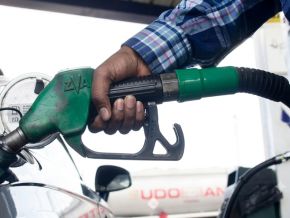
South Africa is poised to implement a significant regulatory shift, mandating petroleum wholesalers and importers to maintain fuel inventories equivalent to 21 days of supply. This proactive measure aims to mitigate the growing risk of shortages as the nation’s reliance on imported fuels escalates. Concurrently, the government will bolster its strategic petroleum reserves, targeting a buffer of 60 days of net fuel imports.
Details emerging from a draft policy released by the Department of Mineral and Petroleum Resources, as reported by Reuters, indicate that these government reserves will comprise approximately 70% crude oil and 30% refined petroleum products. The strategic reserves are intended to be deployed during periods of substantial supply chain disruption. The policy is currently open for public consultation, signalling a crucial phase for industry stakeholders to engage with the proposed framework.
This initiative seeks to establish a unified national strategy for petroleum stockholding, a domain that has lacked uniform regulation since the apartheid era. While existing storage facilities, such as those in Saldanha and Milnerton, are operational, the proposed policy aims to integrate them into a comprehensive national system. This framework will define mandatory stock levels, delineate responsibilities among industry participants, and stipulate the conditions under which strategic reserves can be released. If enacted, this would represent the most substantial reform to South Africa’s petroleum stockholding regime since the 1970s.
The impetus for this reform stems from South Africa’s increasing vulnerability to external supply shocks. The country has experienced a significant reduction in its domestic refining capacity, with several refineries ceasing operations. This has led to a greater dependence on imported refined fuels to meet an annual demand estimated at 27 billion litres. Consequently, any prolonged disruption to international fuel shipments poses a direct threat to domestic availability, a concern amplified by current geopolitical tensions affecting key shipping routes. The proposed policy, however, addresses a more fundamental structural issue by enhancing the nation’s capacity to sustain fuel supplies amidst import challenges.
While the policy framework is being developed, several critical aspects remain to be defined. The financial implications, including the cost of acquiring and maintaining public reserves, the timeline for building these reserves, and the mechanisms for monitoring private company inventories, have not yet been disclosed.
… South Africa Mandates 21-Day Fuel Stockpiles to Bolster Supply Chain Resilience … Naijaonpoint.


Sports Minister Reveals Carlos Queiroz’s Mouth Watering Monthly Salary

Teenage girl, 15, k!ll five members of her family with the help of her 16-year-old boyfriend

Dollar to Naira Exchange Rate Today, July 14, 2026: Nigerian Naira continues depreciation

Rescued Oyo pupils reunite with their families (video)

Egypt Boosts Export Support by 55% to EGP 28 Billion Amidst Structural Reforms

Watch video: 'Native' Canadian woman blames Indians for throwing trash during Canada Day celebrations, says 'you should be ashamed'

This is embarrassing! Jordan Ayew and Antoine Semenyo Exchanged Just Five Passes at 2026 World Cup

 Investigation1 day ago
Each and every one of you is guilty РDanish aid worker Anja Ringgren Lov̩n slams Nigerians filming malnourished child accused of being a witch in viral video
- National3 days ago
At Last, Fresh Video Showing How Some Of The Terrorists Was Arrested During Rescue Of Oyo Schoolchildren Emerged [WATCH HERE]
- News2 days ago
Army officer killed during rescue of kidnapped Oyo pupils, teachers buried
- National1 day ago
Gbajabiamila: I borrowed N400 million to buy appointment in Tinubu’s government, says Adeyemi
- Society3 days ago
Yoruba elders alert of plot by Fulani to conquer South-West, rally eminent Nigerians
- Investigation1 day ago
Female teacher admits to having s£x with boy, 16, as she splits from husband who first exposed her misconduct.
- Breaking2 days ago
âBomb them at levelsâ never seen before – President Trump leaves instructionsâ should Iran ass@ss!nate him
- News2 days ago
Atiku: ₦50,000 WAEC, NECO fee will exclude poor students from education