Society
‘Talent exists everywhere’: How I secured PhD opportunity, bagged US varsity honour — Nigeria’s Abdulmalik Salman

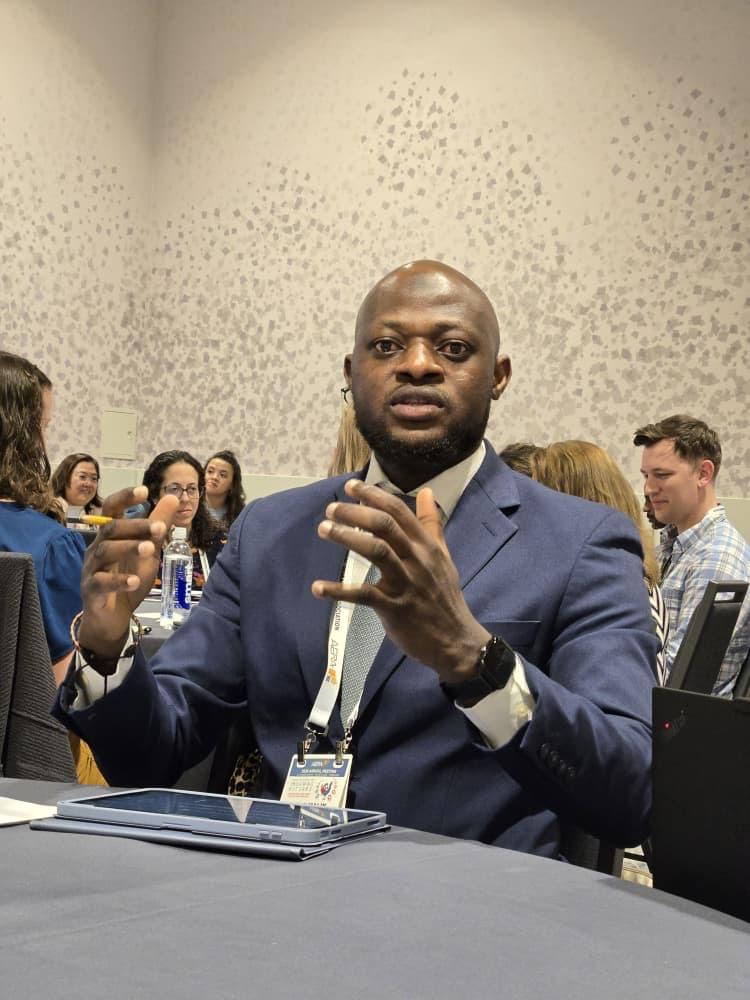
Abdulmalik Salman, a Nigerian scholar and doctoral student, was recently recognised as the Most Outstanding Graduate in Secondary English Language Arts in the Department of Curriculum and Instruction, College of Education, University of Alabama, United States, during the institution’s 2026 Honors Day, an annual event celebrating exceptional academic achievement. Originally from Ejigbo, Osun State, Salman has built a career spanning classroom teaching, language education, educational leadership, and research, with a focus on literacy, culturally relevant teaching, and linguistic justice.
In this interview with ADAM MOSADIOLUWA, he reflects on his journey from the University of Ibadan to the United States, the significance of the award, his research on equitable language education, the future of artificial intelligence in classrooms, and his advice for young Nigerians aspiring to careers in education and academia.
Congratulations on being recognised as the Most Outstanding Graduate Student in Secondary English Language Arts at the University of Alabama’s 2026 Honors Day. How did you receive the news, and what did the award mean to you personally?
Thank you very much. I received the news through an email inviting me to the College of Education’s 2026 Honors Day Convocation. At first, I wasn’t sure what it was about because the email didn’t specify the award category. I remember having mixed feelings and wondering why I had been invited. After speaking with some of my professors and mentors, I realized they had nominated me for the award. Honestly, I was speechless.
Receiving the award was both humbling and encouraging. More than anything, I saw it as a vote of confidence in my journey as a scholar and educator. It reminded me that the work we do, even when it feels challenging or unnoticed, can make an impact.
I am sincerely grateful to my PhD advisor, Dr. Latrise P. Johnson, and to Dr. Karen Spector for believing in me, supporting my growth, and encouraging me in my doctoral journey. Their mentorship has shaped me in profound ways, and this recognition means more to me than I can fully express.

The award recognises exceptional performance among graduate students in your area of study. Looking back on your academic journey, what does attaining this milestone represent for you?
When I reflect on my academic journey, I see this recognition as a testament to the value of commitment, perseverance, and continuous learning. It reminds me that academic success is not simply about individual achievement but about consistently striving to grow, remaining open to new ideas, and learning from the people around you.
For me, this milestone also comes with a greater sense of responsibility. It challenges me to be even more intentional in my research, my teaching, and my service to the profession. As an emerging scholar, I want my work to contribute meaningfully to improving educational opportunities for learners from diverse backgrounds. So, while I am grateful for this recognition, I also see it as motivation to keep learning, keep serving, and keep pursuing work that can make a positive difference.
Can you take us through your journey from Ejigbo, Osun State, to becoming an award-winning doctoral student at the University of Alabama? What were some of the defining moments that shaped your academic path?
Hmmmnn! That’s a question I always enjoy reflecting on because it reminds me how every stage of my journey has shaped who I am today.
I was born and raised in Ejigbo, Osun State, Nigeria, where I completed my primary and secondary education. Looking back, my academic journey began long before I entered graduate school. As a secondary school student, I already knew I wanted to work in the humanities and education because I genuinely enjoyed teaching, connecting with people, and listening to their stories. I believed education could be a powerful tool for transforming lives.
Growing up in Nigeria also exposed me to experiences that would later become central to my research. My schooling was characterized by strict English-only policies, and speaking Yoruba, which is my first language, was often discouraged and even punished. At the time, I accepted those practices as normal because they were part of the educational system I knew. It was only years later that I began asking deeper questions about what those policies meant for students’ identities, learning, and sense of belonging.
I owe a great deal to my parents, especially my father, whose encouragement and belief in education inspired me to pursue this path. With their support, I enrolled at the University of Ibadan, where I earned my bachelor’s degree in Teacher Education and English with a minor in Communication and Language Arts. I also completed my master’s degree in Language Education at the same institution.
After graduation, I taught English Language and Literature to students at various levels of education before moving into education program management and language assessment. Those professional experiences gave me opportunities to work with learners from diverse linguistic and cultural backgrounds. They helped me realize that language education is about much more than grammar or vocabulary. It is deeply connected to identity, culture, power, and educational opportunity.
Coming to the University of Alabama for my doctoral studies was another defining moment. The experience transformed how I think about language, literacy, and education. Through courses in critical literacy, second language acquisition, multicultural education, qualitative inquiry, and language teacher education, I encountered scholars whose work gave me the language to understand questions I had been carrying for many years. Reading the works of Gloria Ladson-Billings, Bell Hooks, Ngũgĩ wa Thiong’o, Paulo Freire, Ofelia García, and many others fundamentally reshaped my thinking as both a teacher and a researcher.
Today, my research focuses on critical pedagogy, English language teacher education, culturally relevant teaching, and linguistic justice. I am particularly interested in understanding how teachers can create classrooms where students’ cultural and linguistic identities are valued as strengths.
When I look back, I realize that every stage of my journey – from growing up in Ejigbo, to studying at the University of Ibadan, to teaching, working in education, and now pursuing doctoral research in the United States has been preparing me to explore one central question, which is: How can language education become more humanizing, equitable, and responsive to the diverse realities of learners? That question continues to guide both my research and my teaching, and I hope it will continue to shape my contributions throughout my career.
You earned both your bachelor’s and master’s degrees from the University of Ibadan before pursuing your PhD in the United States. What motivated your decision to continue your academic journey abroad, and how challenging was that transition?
First, I would like to acknowledge the University of Ibadan because the academic foundation I received there has been invaluable. It equipped me with the knowledge, discipline, and confidence that prepared me for doctoral studies.
My decision to pursue a PhD in the United States was motivated by a desire to broaden my academic horizons. I wanted to learn within a different educational system, engage with diverse perspectives, and expose myself to new ways of thinking about teaching, research, and language education. I believed that studying in a different cultural and academic environment would help me grow both professionally and personally.
Of course, the transition was not easy. Moving to a new country meant adjusting to different academic expectations, cultural norms, social systems, and even everyday ways of life. Like many international students, I had to learn how to navigate a new environment while balancing the demands of rigorous doctoral study.
But those challenges also became opportunities for growth. They taught me resilience, adaptability, and the importance of building meaningful relationships with mentors, colleagues, and the wider community. Even after three years in the United States, I continue to learn something new every day. I meet people from different backgrounds, encounter new ideas, and gain fresh perspectives. To me, that is one of the greatest values of education; it is a lifelong process of learning, unlearning, and growing.
Your research focuses on literacy, language education, culturally relevant teaching, and critical pedagogy. For readers unfamiliar with these concepts, what do they mean, and why are they important in today’s classrooms?
At the heart of my research is a very simple question: How can schools help every student succeed while honoring who they are?
Literacy is much more than learning to read and write. It is about helping people understand the world, communicate effectively, and think critically. Language education is about supporting people as they learn and use languages to connect with others and participate fully in society.
Culturally relevant teaching means recognizing that students come to school with different languages, cultures, experiences, and ways of knowing. Rather than asking students to leave those parts of themselves at the classroom door, effective teaching builds on those strengths to support learning. Critical pedagogy, on the other hand, is the idea that education should help students think critically about the world around them, ask thoughtful questions, and become active participants in creating positive change in their communities.
These ideas are relevant because today’s classrooms are more diverse than ever before. When students feel that their identities, languages, and lived experiences are respected, they are more likely to participate, engage with learning, and reach their full potential. Therefore, good and quality education is about giving every student the opportunity to succeed.
A significant part of your work explores how culturally and linguistically diverse students experience literacy and language learning. What inspired this research interest, and what impact do you hope it will have on education?
My interest in this area is personal as well as professional. As I said earlier, I experienced educational practices that placed a strong emphasis on English while often discouraging the use of students’ home languages. At the time, I accepted those experiences as normal, but over the years I began asking what those policies meant for students’ identities, sense of belonging, and opportunities to learn.
Later, as an English teacher, I worked with students from many different linguistic and cultural backgrounds. Those experiences showed me that every learner brings valuable knowledge, experiences, and perspectives into the classroom. The challenge is whether our educational systems recognize and build upon those strengths.
My hope is that my research encourages educators to see cultural and linguistic diversity as an asset rather than a barrier. I want to contribute to language teacher education and classroom practices that create more inclusive, equitable, and humanizing learning environments, where every student feels seen, respected, and capable of succeeding.
You often speak about equity, identity, and justice in education. In practical terms, how can teachers create classrooms where students from different cultural and linguistic backgrounds feel valued and included?
I believe inclusion begins with listening. Every student enters the classroom with a unique story, and teachers make a tremendous difference when they take time to learn about those stories rather than making assumptions. Students want to know that their voices matter and that their experiences are valued.
Practically, this can happen in many ways. Teachers can include books and learning materials that reflect different cultures and perspectives. They can encourage students to share their experiences and connect lessons to their own lives. They can also recognize multilingualism as a strength by creating opportunities for students to draw on the languages they already know while learning new ones.
Just as importantly, teachers should hold high expectations for every student while providing the support each learner needs to succeed. Equity does not mean lowering standards; it means ensuring that every student has meaningful opportunities to meet those standards.
When students feel respected, represented, and supported, they are more likely to develop confidence, engage actively in learning, and believe that they truly belong in the classroom.
You were previously elected to the board of the Alabama-Mississippi Teachers of English to Speakers of Other Languages (AMTESOL) and now serve as Co-Chair of the Proposal Committee for its 2027 conference. What has that experience taught you about educational leadership and professional service?
Serving in AMTESOL has been one of the most rewarding parts of my professional journey. It has given me the opportunity to work alongside dedicated educators who are truly committed to improving English language education and advocating for multilingual learners.
One of the biggest lessons I have learned is that leadership is fundamentally about service. It is not about holding a title; it is about creating opportunities for others to learn, collaborate, and grow. Whether serving on the board or helping coordinate proposals for our annual conference, my focus has been on supporting educators and creating spaces where innovative ideas and diverse voices can be shared.
These experiences have also shown me the importance of collaboration. The most meaningful progress in education happens when teachers, researchers, school leaders, and communities work together toward common goals.
Having studied and worked in both Nigeria and the United States, what are the biggest differences you’ve observed between the two education systems, particularly in literacy and language education? Are there lessons each country can learn from the other?
Both systems have unique strengths. Nigeria has dedicated teachers, resilient students, and a strong emphasis on foundational knowledge despite limited resources. The U.S. education system, in many contexts, places greater emphasis on student-centered learning, critical thinking, classroom discussion, and supporting diverse learners.
In literacy and language education, I believe Nigeria can benefit from giving greater value to students’ home languages and creating more learner-centered classrooms. At the same time, the U.S. can continue learning from countries like Nigeria, where multilingualism is a natural part of everyday life. Both countries can learn from one another by creating educational systems that are both academically rigorous and culturally relevant and sustaining.
Artificial intelligence is rapidly changing how students read, write, and learn. As someone researching literacy and language education, how do you see AI shaping the future of education, and what opportunities and risks should educators be aware of?
AI has enormous potential to make learning more personalized, improve access to educational resources, and support both teachers and students. If used well and ethically, it can enhance learning and create new opportunities for creativity and collaboration.
At the same time, nothing can effectively replace authentic human interaction in teaching and learning. I believe AI should complement human thinking, meaningful classroom interactions, and good teaching. Educators also need to help students use AI responsibly by developing critical thinking, ethical awareness, and the ability to evaluate information. The future of education is not AI versus teachers; it is teachers using AI thoughtfully to improve learning.
Many Nigerian students dream of securing fully funded postgraduate opportunities abroad. What practical steps helped you prepare for your PhD journey, and what advice would you offer to those hoping to follow a similar path?
I prepared by building a strong academic foundation, gaining teaching and professional experience, participating in research, and seeking guidance from colleagues and mentors. I also invested time in developing my research interests and preparing competitive application materials.
My advice is to be intentional and not be discouraged by temporary setbacks. Read widely, seek mentorship, build meaningful experiences beyond the classroom, and apply to opportunities that align with your goals. Most importantly, believe in your potential. Persistence, preparation, and consistency often make the difference.
Research can be intellectually demanding, especially at doctoral level. Were there moments when you questioned yourself or considered giving up? If so, how did you overcome those periods?
Absolutely. I think this is true of any worthwhile endeavor. Every journey has its highs and lows, and doctoral research is no exception. There are certainly moments when the work becomes overwhelming, but I have never seriously considered giving up.
Whenever I feel challenged, I remind myself why I started this journey in the first place. I also lean on my support system: my mentors, colleagues, friends, and family. Sometimes, the best thing I can do is take a short break, rest, and return with a fresh perspective. I’ve learned that taking care of yourself is part of doing the work well.
As a Nigerian scholar making an impact in the United States, how do you think your achievements reflect the potential of Nigerian students and researchers on the global stage?
I believe my journey reflects what many people already know about Nigeria and Nigerians. Nigerians are exceptionally talented, resilient, and hardworking. Given the right opportunities and supportive environments, we can thrive anywhere in the world.
I see my achievements not only as personal milestones but also as a reminder that talent exists everywhere. What many young Nigerians need is access to quality education, mentorship, and opportunities to demonstrate their abilities. I hope my story encourages others to believe that they, too, can make meaningful contributions on the global stage.

If you had the opportunity to redesign one aspect of Nigeria’s education system overnight, what would be the first thing you would change, and why?
I would make instruction in children’s home or first language a central part of education throughout the primary school years, alongside English. Research consistently shows that children learn best when they build strong literacy and thinking skills in a language they understand well. This approach would strengthen learning and help children value their own languages and cultures while also developing proficiency in English.
Many Nigerians believe the country’s greatest resource is its young people. Based on your experience working with students, what is one quality among Nigerian youths that gives you the greatest hope for the future?
What gives me the greatest hope is their resilience and determination. Nigerian young people have an incredible “can-do” spirit. Even in the face of challenges, many remain eager to learn, improve themselves, and pursue their goals.
Our generation also has access to technology and information in ways that previous generations did not. I see many young Nigerians using these opportunities to acquire new skills, build businesses, conduct research, and connect with the world. That willingness to keep learning gives me great confidence in the future.
Beyond your research and academic responsibilities, what do you enjoy doing in your free time, and how do you maintain a healthy work-life balance while pursuing a PhD?
I enjoy spending time outdoors, exploring nature, traveling, connecting with friends and family, and playing football both in person and on my PlayStation. Those activities help me recharge and maintain perspective.
Pursuing a PhD is demanding, but I’ve learned that maintaining a healthy balance is important. Taking time to rest, spend time with loved ones, and enjoy simple hobbies helps me return to my work with renewed energy and focus.
Finally, what advice would you give to young Nigerians who aspire to build successful careers in education, research, and academia, whether at home or abroad?
My biggest advice is to be intentional and purposeful in everything you do. Whether you are a teacher, a researcher, or a student, always know why you are doing what you are doing. Let your work be driven by purpose, integrity, and a genuine desire to make a difference.
I would also encourage young people like me to keep learning, seek mentors, collaborate with others, and never be afraid to ask questions. Most importantly, don’t let setbacks define you. Every challenge is an opportunity to grow. If you remain committed to excellence and continue investing in yourself, opportunities will come, and your work can make an impact far beyond your immediate community.


Why a plan to filter bacteria from the Arroyo Seco is facing fierce opposition

Lagos trader arrested over cocaine concealed in food cartons bound for UK

Men’s coach, Gehgeh warns men insulting his wife’s physical appearance

No, Miami isn’t more expensive than New York. But it may be less ‘affordable’

APC candidate offsets ₦4.8m medical bills in Kwara

Obasanjo Behind Obi-Kwankwaso Ticket – Former Adviser Reveals

‘Desperate’ Don Jr.’s ‘shameless corruption’ pursuit is doomed to fail: Analyst

 Breaking3 days ago
âFailed nation, failed parenting and lack of home training’- Lawyer, Deji Adeyanju blasts podcast host for saying a poor man has no place in her heart’
 News3 days ago
Court rejects Bello Bodejo's request to review ₦2 billion bail conditions
- News3 days ago
Court Rejects Bello Bodejo Request to Review ₦2 Billion Bail Conditions
 News3 days ago
Court Delays Trial Of Alleged Abuja Land Grabbers Over ₦500m Fraud Case
- Society3 days ago
Mid-Year Budget Review: Government Allocates GH¢400 Million For New Buses To Boost Public Transport Fleet
- Investigation3 days ago
Chelseaâs Garnacho joins Aston Villa on loan
- Investigation3 days ago
Update: Wife drags husbandâs side chic to police over damning voice note, alleges threat to life
- National3 days ago
“Court Declines To Review Miyetti Allah leader’s ₦2bn Bail Terms” — Directs Him To Vacation Judge