National
Telecom operators seek stronger government policy to sustain Nigeria’s digital growth

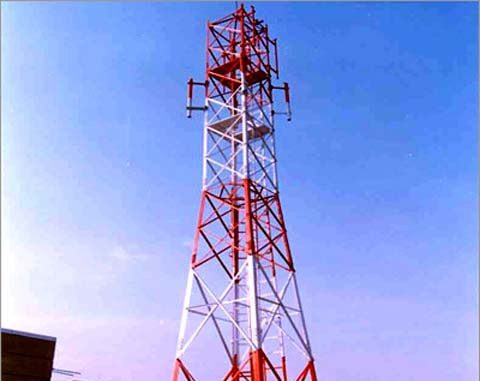
Nigeria’s telecommunications operators have urgently called for stronger government support, consistent policies and state-enforced protection of network infrastructure to sustain the industry’s contribution to the country’s digital economy.
This was as they chronicled the remarkable transformation of Nigeria’s telecommunications industry over the past 25 years, describing it as the backbone of the country’s digital economy.
Chairman of the Association of Licensed Telecommunications Operators of Nigeria (ALTON), Engr. Gbenga Adebayo, made the submission in a paper prepared for presentation at the Nigeria Information Technology Reporters Association (NITRA) Innovative Conference 2026, themed “Bridging Nigeria’s Digital Divide with Scientific Innovation.”
Adebayo described the telecom industry as one of Africa’s biggest digital transformation success stories.
According to him, Nigeria’s telecom sector has grown from fewer than 500,000 telephone lines before the liberalisation of the industry in 2001 to more than 200 million active subscriptions today.
He said the transformation had reshaped communication, banking, education, healthcare, agriculture, governance, commerce and entertainment, making telecommunications critical national infrastructure
Adebayo noted that operators had invested billions of dollars in mobile networks, fibre-optic infrastructure, data centres, cloud platforms, renewable energy systems and emerging technologies, including Fifth Generation (5G) networks.
He explained that the sector evolved through successive phases, beginning with nationwide GSM deployment, followed by mobile internet services using GPRS, EDGE and 3G technologies, before expanding into 4G, fibre-to-the-home and 5G broadband infrastructure.
Despite the achievements, Adebayo identified multiple taxation, inconsistent Right-of-Way policies, infrastructure vandalism, rising energy costs, foreign exchange volatility and insecurity as major threats to future investment.
He said: “Quality of Service cannot be improved through fines and penalties alone. Network performance is directly affected by unreliable electricity supply, fibre cuts arising from road construction, vandalism, theft, Right-of-Way delays and multiple taxation.”
Calling for stronger infrastructure protection, he added: “Telecommunications is no longer simply an industry; it is the foundation upon which Nigeria’s digital future is being built.
“Every investment in resilient telecommunications infrastructure is an investment in economic growth, innovation, national security and inclusive development.”
Adebayo commended President Bola Tinubu’s administration for recognising digital infrastructure as critical to economic growth and praised the Nigerian Communications Commission (NCC), under Executive Vice Chairman, Dr. Aminu Maida, for its transparent and consultative regulatory approach.
He also welcomed the implementation of the Critical National Information Infrastructure (CNII) framework and the resolution of the long-standing USSD debt dispute between telecom operators and banks.
Addressing reports that the NCC’s ongoing Mobile Termination Rate (MTR) cost study could lead to another tariff increase, Adebayo dismissed the speculation.
“There is currently no industry proposal before the NCC seeking a review of retail tariffs arising from this exercise.
“Our focus today is on improving customer experience, expanding coverage, increasing network resilience and delivering greater value to subscribers,” he said.
Earlier, President of NITRA, Chike Onwuegbuchi, said the conference was organised to stimulate conversations around policies and innovations capable of accelerating digital inclusion.
He said: “Bridging Nigeria’s digital divide requires collaboration among government, regulators, the private sector and civil society.
“We must encourage innovation from the grassroots by investing in digital infrastructure, quality education and enabling policies that will prepare Nigerians for the digital economy.”
Onwuegbuchi expressed optimism that recommendations from the conference would support efforts to expand broadband access, strengthen scientific innovation and position Nigeria as a globally competitive digital economy.


Davido and Mayorkun Reunite for New Song After Four Years

Who is Pavel Durov, CEO of messaging app Telegram?
Who is Pavel Durov, CEO of messaging app Telegram?

Don’t approach me for release of suspects, Kano anti-drug committee chair warns politicians

Edo community denies allegations linking it to kidnapping

Myles Smith cancels show due to ‘major family health issue’

Husband and wife found d£ad in remote cottage in suspected murd£r-su!cide

 Investigation3 days ago
âThe Olodo uprising term was not coined by meâ â Nigerian musician Ycee
- Investigation3 days ago
Actress Lizzy Anjorin slams Iyabo Ojo for attending Soso Soberekonâs wedding with her daughter
- Society3 days ago
AAUA students give Ondo govt ultimatum over ASUU strike
- Breaking3 days ago
âI am in the era of overcoming my fear" – Nigerian acid attack survivor writes as she reveals her amazing transformation after getting a beauty makeover
- Investigation3 days ago
Jay Jay Okocha’s daughter Daniella shares photos from her bachelorette party in Greece ahead of wedding
- Investigation3 days ago
The war will expand geographically if the Americans once again fall for the Zionistsâ deception – Iran warns
- News3 days ago
SERAP sues NNPCL over ‘failure to account for ₦211trn oil money’
- Investigation3 days ago
New Black Panther revealed in surprise announcement