National
Less than 300 psychiatrists serve over 200m Nigerians — Psychiatrist

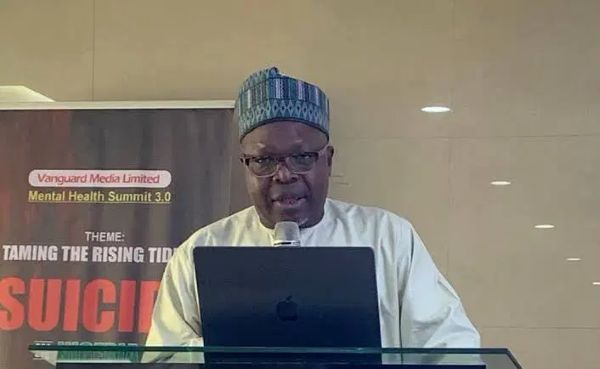
A Professor of Psychiatry at Ahmadu Bello University, Zaria, Prof. Taiwo Lateef Sheikh, has urged the Federal Government to immediately implement the National Mental Health Act to address Nigeria’s widening mental healthcare gap and improve access to treatment for millions of people living with mental health conditions.
Sheikh is a member of the Advisory Committee to the Africa Centre for Disease Control and Prevention (Africa CDC).
He raised the alarm that Nigeria is facing a deepening mental health crisis, with fewer than 300 psychiatrists available to serve a population of over 200 million people.
According to him, the severe shortage of mental health professionals, inadequate funding and poor access to community-based services were widening the gap between Nigerians who need mental healthcare and those who receive it.
He spoke at the Mental Health Leadership and Advocacy Public Lecture, where he called for urgent implementation of the Mental Health Act and stronger policy, financing and legislative reforms to strengthen Nigeria’s mental health system.
Sheikh lamented that mental health remains one of the most neglected areas of healthcare, particularly in Africa, despite its enormous impact on individuals, families, communities and national economies.
“Legislation provides the skeleton, policy provides the direction, and financing provides the muscle. Closing the mental health systems gap requires all three to move together,” he said.
The psychiatrist said Nigeria’s Mental Health Act, signed into law in December 2022, represented a major milestone but warned that the law would have limited impact without adequate funding, trained personnel, functional services and effective implementation.
“Without legislation, policy is just paper. Without policy, legislation has no direction,” he stated.
Sheikh said mental health services in Nigeria remained concentrated largely in federally owned tertiary psychiatric hospitals, most of which are located in state capitals and therefore out of reach of many people requiring care.
He noted that although mental health had been recognised as a component of primary healthcare in Nigeria, mental health services remained largely unavailable at the primary healthcare level.
The psychiatrist said the country’s shortage of specialists was compounded by inadequate numbers of psychologists, psychiatric nurses and other mental health professionals.
He said trained psychiatric nurses were sometimes deployed to other duties because of the absence of functional mental health units and inadequate commitment to mental healthcare.
Sheikh also expressed concern over poor financing, noting that mental health receives less than 3.5 per cent of the health budget, with more than 90 per cent of available mental health resources going to hospitals.
He argued that such an arrangement was unsustainable and inconsistent with the goal of universal health coverage.
“The treatment gap is about demand versus supply. Demand is all over, but barriers restrict access,” he said.
To bridge the gap, Sheikh advocated a decentralised mental health system in which most people receive care at the lowest appropriate level, including self-care, community services and primary healthcare, while patients requiring specialised intervention are referred to higher levels of care.
He called for greater integration of mental healthcare into primary healthcare and the adoption of task-shifting, whereby trained nurses, community health workers and other non-specialist health workers provide mental health services under appropriate supervision.
“Treat at the lowest level. Integrate into primary healthcare. Task-shift. No discharge to nowhere,” he said.
According to him, the “no discharge to nowhere” principle requires patients leaving psychiatric hospitals to be linked to community-based follow-up services rather than being discharged without continuing care.
He said common conditions such as depression could be managed at the primary healthcare level through appropriate training and the World Health Organisation’s Mental Health Gap Action Programme, mhGAP.
“Seventy per cent of mental health problems can be treated by trained doctors, nurses and primary health workers with adequate supervision and support,” Sheikh said.
The professor warned that neglecting mental health could undermine Nigeria’s economic and social development, stressing that untreated mental health conditions impose significant costs on individuals, families, workplaces and governments.
“Africa needs to invest in mental health as mental health is not only a key part of healthcare but also of education and labour. If ignored, the economic development of the countries in Africa will be compromised,” he said.
“The message is clear for policymakers: invest in mental health and get good returns.”


Woman Arrested in Imo Over Alleged Assault on 13-Year-Old Helper

How I want to be remembered in Nasarawa — Gov. Sule + Video

Police Rescue Four Kidnap Victims After Edo Forest Ambush

Davido Fires Back at Edo Governor Over Adeleke Remarks

Ubi Franklin Reveals Food Vendor Investment Idea He Says Could Generate Billions

Dele Bashiru-Kaka Takes Charge of Nigerian Community in Greater Manchester

‘Another whopper!’ Conservative CNBC host loses his mind over new Trump job losses

 Society4 hours ago
Two Ladies Subjected To Public Humiliation, Forced To Remove Their Drɔss, Clothes And Dance After Being Caught Stealing Bone-Straight Wig
- Investigation3 days ago
âWhat kind of brother talks like this?â- Designer, Toyin Lawani slams Jude Okoye over comments about brother Peter’s solo career
- Investigation2 days ago
Japa: Canadaâs Ontario opens new permanent residence programme for foreign workers
- Investigation3 days ago
US firm initiates moves to stop Tinubuâs meeting with Trump at UN General Assembly
- Breaking3 days ago
"Iâm the mother of a one-year-old, I’m flying her to London for her birthday partyâ â Toke Makinwa says in video
- Society3 days ago
Man Claims He Lost ₦1 Million After Using Roadside POS
- Investigation3 days ago
2027: Weâll do whatever Tinubu wants us to do at the field â Rotimi Amaechi
- Politics3 days ago
Maintain political neutrality, Wike urges religious leaders