Investigation
Neurosurgeons in London perform first successful AI-assisted operation to remove brain tumour

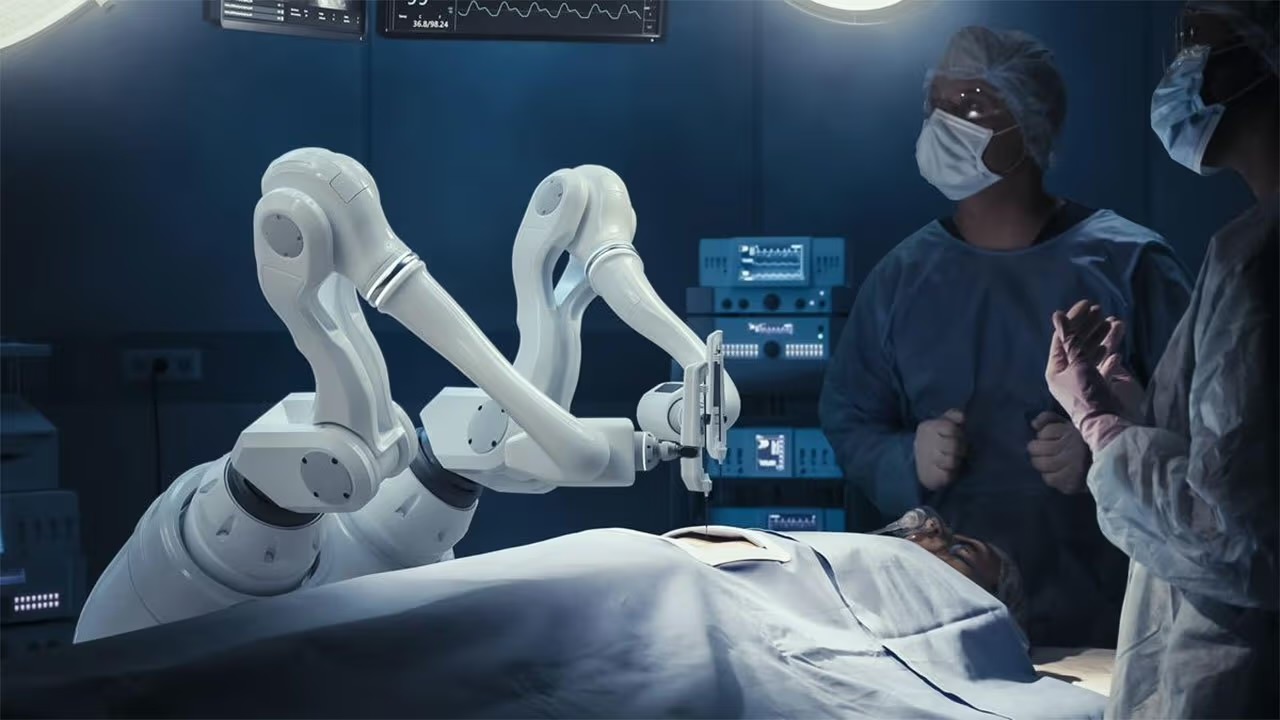

Neurosurgeons in London, UK have performed the world’s first successful AI-assisted operation to remove a brain tumour, saving the sight of a 48-year-old man, health officials have said.
The surgery was performed in May at the National Hospital for Neurology and Neurosurgery (NHNN), part of University College London hospitals NHS foundation trust, but details were kept secret until Thursday while the patient, Rhys Hibbert, recovered.
While the surgical team remained in full control, the AI system analysed live camera footage during the operation, helping identify key structures such as nerves and blood vessels that should be avoided near the 11mm (0.4in) tumour on Hibbert’s pituitary gland.
“When I came round … I could see everything in the room clearly,” said Hibbert, who was able to walk independently without glasses or sticks within a week of the surgery.
He has since returned to work as a customer service manager. “It feels like I’ve got a 360‑degree panoramic view of everything around me,” he said.
The surgeons operated on Hibbert using new AI technology which helps to identify tiny anatomy in the brain by colour-coding important structures to help surgeons recognise them safely.
The hospital had previously used the technology as a research tool but the operation was the first time it had been used on a patient.
The pituitary gland, blood vessels and nerves controlling vision are tightly packed together, and “going a millimetre wrong can make a critical difference”, health officials said, potentially leading to blindness, stroke or death.
Dr Sophia Bano, an associate professor in robotics and AI at UCL and the technical lead for the AI system, said: “By learning from hundreds of surgical videos, [the system] has been exposed to a breadth of surgical examples that would take a surgeon many years to encounter.
“It is designed to help recognise critical anatomy, surgical instruments and tissue interactions in real time, supporting the surgeon during highly delicate procedures.”
Initially managed without surgery, Hibbert’s symptoms had worsened since his diagnosis in 2024, and included severe hormone imbalance and vision problems. Without the operation, he faced going blind, health officials said.
Prof Mike Lewis, the scientific director for innovation at the National Institute for Health and Care Research (NIHR), which funded the operation as part of a clinical trial, said the “pioneering surgery” highlighted the potential of advanced AI to support surgeons and improve patient care.


Kano water rehabilitation projects to be completed by December — Commissioner

Ex-Bosnian Serb warlord, Ratko Mladic d!es in prison at 84

UEFA threaten legal action against FIFA president Gianni Infantino over World Cup sell-off plan

Gov. Sani approves N810m startup grants for 4,050 Kaduna skills graduates

Abducted 2-year-old boy rescued in Cross River

Neurosurgeons in London perform first successful AI-assisted operation to remove brain tumour

Three k!lled as tricycle rider clashes with touts over N200 in Lagos

 Investigation2 days ago
Former BBNaija star Ike Onyema issues warning amid photographer David Martins and wife Alicia Daniellaâs drama; claims that gospel singer Neon Adejo flirted with Alicia
- Investigation2 days ago
K!ller Robots could target humans â UN and Red Cross warn
- Investigation2 days ago
Kano man opens fire at neighbourâs wedding ceremony over loud music, k!lls one guest and injures four others
- Investigation2 days ago
Judge rejects Ghislaine Maxwellâs bid to throw out conviction for aiding Jeffrey Epstein s3xually abuse teenage girls
- Society1 day ago
Government Of Ghana Declines MTN’s GH¢20 Million Donation For Victims Of South African Xenophobic Attacks
- Investigation3 days ago
âNot every relationship needs to be revisited. Learn your lesson and move onâ â Actress Ireti Doyle advises
- National3 days ago
Nigeria’s envoy to India presents letters of credence
- National3 days ago
Lagos gives ultimatum to occupants of public setbacks