National
Nigeria’s counterfeit medicine problem is not going away, but getting harder to see, by Mercy Aransiola

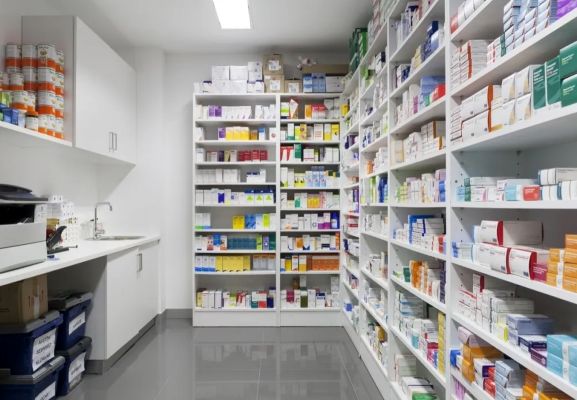
Imagine a mother who sells her last belongings to buy medicine for her sick child. She walks into a medicine shop believing she has made the right decision. What she cannot see is that the tablets she has bought may contain little or none of the active ingredients needed to treat her child.
For many Nigerians, this is not just a hypothetical situation. It is a reality that pharmacists and healthcare workers continue to encounter.
As a pharmacist practising in Nigeria, I have had difficult conversations with patients about medicines that appear suspicious or products obtained from questionable sources. The challenge is not only explaining why a cheaper medicine may be unsafe. It is also managing the fear and uncertainty that comes when people realise that the medicine they trusted may not have been what it claimed to be.A medicine is supposed to represent hope. When it fails because it is poor quality or falsified, the consequences can be devastating.
Counterfeit and substandard medicines remain a major public health concern in Nigeria. The exact scale of the problem is difficult to determine because nationwide surveillance remains limited, but available evidence shows that unsafe medicines continue to enter the supply chain.
The danger is particularly serious for medicines used to treat malaria, bacterial infections, and other conditions where treatment failure can quickly become life threatening. When a medicine contains the wrong ingredient, insufficient active ingredient, or no active ingredient at all, the patient may become sicker while believing they are receiving treatment.
There is also another hidden consequence: antimicrobial resistance. When antibiotics and other antimicrobial medicines fail because they are poor quality or incorrectly used, microorganisms are given an opportunity to survive and adapt. Over time, medicines that once worked effectively become less reliable.
The term “fake drugs” is often used to describe this problem, but there is an important difference. Substandard medicines fail to meet quality standards because of issues such as poor manufacturing, storage problems, or supply chain weaknesses. Falsified medicines are deliberately created to deceive patients and healthcare providers.Both can harm patients.
Nigeria has made important progress in addressing medicine safety. The National Agency for Food and Drug Administration and Control (NAFDAC) has strengthened enforcement, removed unsafe products from circulation, and introduced tools such as the Mobile Authentication Service to help consumers verify some medicines. However, enforcement alone cannot solve the problem.
Medicine safety must be protected throughout the entire supply chain, from manufacturing and importation to distribution, storage, and dispensing. A medicine that leaves a factory safely can still become unsafe through poor storage or handling before reaching a patient.
Another major driver of counterfeit medicines is affordability. When patients struggle to access quality medicines at prices they can afford, they become more vulnerable to cheaper alternatives from unregulated sources. Counterfeiters exploit this gap.
The solution therefore requires more than removing fake products from markets. Nigeria needs stronger surveillance systems, better regulatory capacity, improved access to affordable quality medicines, and greater public awareness about safe medicine sources.
Every unsafe medicine that reaches a patient does more than cause treatment failure. It damages trust in healthcare systems. Patients should not have to wonder whether the medicine they bought will help them recover or put their lives at greater risk.
The fight against counterfeit medicines is ultimately about protecting one of the most basic promises of healthcare: that when people seek treatment, the medicines they receive will be safe, effective, and worthy of their trust.
Pharmacist Mercy Aransiola is a public health advocate with a strong interest in antimicrobial resistance, the responsible use of medicines, and evidence-based healthcare.
[email protected]
08141319738

Abuja woman faces backlash after seeking N1m for private school fees months after Nigerians donated money to her

Ogogo was cultural ambassador who elevated Yoruba traditions, values – Gani Adams

2027: Group seeks dissolution of APC SWC in Abia amid internal crisis

Ndume to opposition: Focus on issues, not Tinubu’s certificate

Nigerian woman born without fingerprints recounts struggles with JAMB, NYSC, banks over biometric verification

Ekiti moves to expand reproductive healthcare access

Minister to Makinde: Join APC, align Oyo with Tinubu’s agenda at centre

 Investigation3 days ago
FBI explains why Tinubuâs record canât be released
- Investigation3 days ago
Real Madrid retain title as Worldâs Most Valuable football brand at â¬2.4 Billion
- Investigation3 days ago
New York Times loses defamation suit for first time in 50 years, ordered to pay $9.25 Million to college basketball player Kai Spears
- News3 days ago
Pastor Komaiya Says His Followers Can Become Millionaires in Just 90 Days
 News3 days ago
Davido Banned From Performing in Edo as Governor's Aide Fires Warning
- Investigation3 days ago
Reality star Kim Zolciakâs 15-year-old son KJ Biermann arrested for sod0my and s£xual battery
- News2 days ago
Police rescue 13 abducted passengers in Benue
 News3 days ago
FRSC Promotes 7,472 Workers and Sets New Expectations for Road Safety