World
Talks With Iran to Reopen Strait of Hormuz Make Progress, Officials Say

This Video Is Trending Right Now
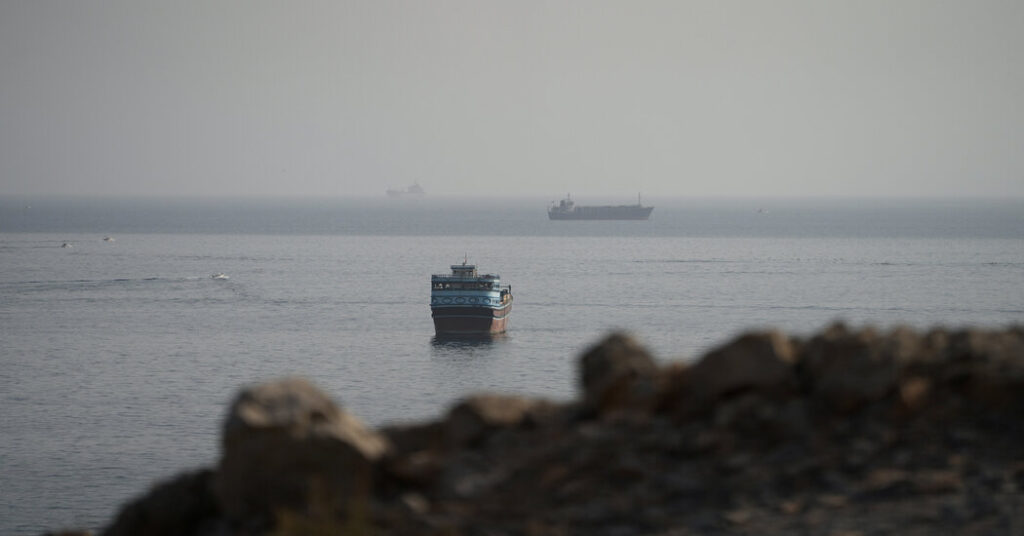
Negotiations to reopen the Strait of Hormuz are making progress, Qatari and American officials said Tuesday, but a deal with Iran has yet to be announced that could pave the way to reviving a broader cease-fire with the United States.
Majed al-Ansari, the Qatari foreign ministry spokesman, told reporters that the talks were in “very progressive stages” and that draft language of a possible agreement had been “circulated among the parties.”
It is unclear what role Qatar has played in the negotiations, but the Persian Gulf country has served as a mediator between Iran and the United States, including on the recent truce, which collapsed last month.
Iran blockaded the strait, a critical conduit for oil and gas shipments, after the U.S.-Israeli assault began in late February. The move has throttled global energy markets and raised pressure on President Trump to end the war. Now, Iran and neighboring Oman — both of which abut the strait — have been negotiating how to administer the waterway, according to Iranian officials.
U.S. Treasury Secretary Scott Bessent said in a televised interview on Tuesday that he believed an agreement could be imminent. “We are in talks with the Iranians, and I think there is a chance we may have a deal today or tomorrow,” Mr. Bessent said on CNBC.
The price of Brent crude, the global oil benchmark, fell more than 2 percent to about $82 a barrel on Tuesday, as markets appeared to respond to optimism about a potential deal.
The Trump administration had hoped that the short-lived cease-fire, agreed on in June, would reopen the Strait of Hormuz. Instead, it collapsed into renewed fighting, as Iran has sought to enforce its authority there.
Iran has enforced its claim by attacking commercial ships as they have tried to transit the strait. That has drawn American bombing runs inside Iran, as well as a U.S. blockade of Iranian ports.
On Monday, a cargo ship, the Greek-owned Minoan Pioneer, was hit near Oman and one of its crew members was missing, according to the International Maritime Organization. It was unclear who struck the vessel.
Mediators hope that restoring the flow of ships through the Strait of Hormuz will end the current cycle of attacks and counterattacks between the United States and Iran and allow the two countries to return to the June cease-fire agreement. That was supposed to pave the way for talks on the Iranian nuclear program and sanctions relief for Iran’s battered economy.
Over the weekend, Mr. Trump threatened an immense military escalation against Iran before abruptly pulling back, citing pleas for calm from regional allies.
“Our focus right now is on avoiding escalation, reopening the strait and reopening the door for diplomacy between the parties,” said Mr. al-Ansari, the Qatari official. “What we do not want to see right now is a major escalation in our region.”
An arrangement with Iran to reopen the strait could come with a geopolitical cost for the United States. Iranian officials say they are designing the accord to ratify their capacity to control the strait and retain strategic leverage that they did not employ before the war.
Officials familiar with the emerging proposal have said that, under the new framework, vessels heading into the Persian Gulf would have to transit a channel controlled by Iran, while outbound ships would travel on a channel near Oman.
Reporting was contributed by Peter Eavis, David E. Sanger, Farnaz Fassihi and Eric Schmitt.


Suspected armed herders attack Ortom’s hometown, kill four, injure many

Amotekun rescues two Fulani herders kidnapped in Ondo

Police arrest suspected armed robbers, recover gun in Lagos

Nigerian woman accused of selling her child in Ghana

Explosion kills ISWAP bomb experts, medical officer, Arab IED experts

She was sexually assaulted walking home from the gym. Police say they’ve caught her attacker

FG approves financing framework to electrify 30% of health facilities by 2027

 Investigation2 days ago
âPsychicâ IT worker sacked for telling female colleague they already met âin his dreamsâ
- Investigation2 days ago
âPeople smugglersâ arrested after Moroccan migrants were caught trying to enter Spain on jet ski
- Investigation2 days ago
Fubaraâs political mistake was that he tried to build his own structure – Wike
- Investigation2 days ago
âSopranosâ Actor Vincent Pastore found dead at his home aged 80
- Investigation2 days ago
Donât politicise insecurity – Governor Radda
- Investigation2 days ago
2026 Commonwealth Games: Team Nigeriaâs silver medal downgraded to bronze
- Investigation2 days ago
Michelle Alozie subjected to drug test after MVP performance in Super Falconsâ win over Zambia
- Investigation2 days ago
Nigerian broadcast journalist laments disappearance of title âMrsâ from official documents and business cards of married women