National
Uncle Sam’s Day in the Sun!, by Gbemiga Ogunleye

Preamble
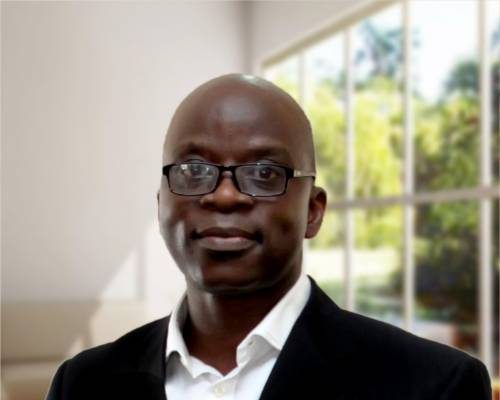
Mr. Chairman, with your kind permission, permit me to adopt the already established protocol. I thank the editors of this publication and the Vanguard alumni for this honour and privilege to undertake this task. Unknown to them, I had been a great admirer of the iconic Sam Amuka. So, when the invitation came to be a part of this book presentation, I grabbed it with both hands.
Although I did not have the good fortune of being mentored directly by Uncle Sam, he was one of those who fired my interest in journalism. As a secondary leaver in the mid-70s, I was a voracious reader of newspapers and magazines. One bright afternoon, I was reading a copy of Spear magazine, I believe when I came across an article written by
SAD SAM, Uncle Sam’s pseudonym.
The headline captured my attention and imagination. I have never forgotten it. It read: O Lord, save me from my friends; my enemy I can take care of!
I then decided not only to write like Sad Sam but also to become a journalist. The rest, as they say, is history.
When Sam Amuka teamed up with his friend, Olu Aboderin, to establish The Punch in the 70s, they probably had the New York Times style of management in mind. At the New York Times, the partnership of the two founders: Henry Javis Raymond and George Jones was collaborative and divided by expertise. Henry Javis Raymond was the Founding editor, directing the paper’s tone and content, while George Jones handled the financial, business, and administrative operations.
At The Punch, Sam Amuka who had made his name as an outstanding editor and a must-read columnist at the Daily Times publications provided editorial direction, directing the paper’s tone and content while Olu Aboderin, who was the chief accountant with the then thriving National Bank, handled the financial, business and administrative operations of the “lively paper for lively minds.”
Their partnership seemed to be made in heaven, until things fell apart between them and the centre could no longer hold!
Forced to leave The Punch, Sam Amuka , a man of the people, had faith in his talent and so went back to the proverbial drawing board. He probably remembered one of the sayings of the sage, that “a wise person has no reason for being afraid to start all over again. At least this time, he is not starting from scratch but from experience.”
Sam Amuka, therefore, decided that if he was going into the newspaper business again, there would be no doubt as to who was in charge. He must have told himself that he would never surrender his dream no matter how long the journey took. The result was the refreshingly different Vanguard which hit the newsstand in 1984.
The Review
The Vanguard Chronology: 40 years of Nigeria’s Leading Tabloid is a 220-page book of 46 chapters, all contributions from some members of the Vanguard alumni and current staff to celebrate the giant strides of the newspaper and to pay tribute to the newspaper’s founder, the redoubtable Sam Amuka, better known as Uncle Sam, who has no qualms about sharing meals and groundnut with his staff at the Canal. It boasts of seven female contributors, with legends like Helen Obviagele, Bunmi Sofola and Funmi Komolafe in the mix.
One of the editors of the book Eyobong Ita, stated the reason for putting together this book when he wrote, quoting an African proverb: “Until the Lion learns to write his own side of the story, every story will glorify the hunter.” So The Vanguard Chronology was written to ensure that a wrong story about the Vanguard is not told.
The book, which was originally meant to be presented to the public in 2024 when Vanguard clocked 40 years on the newsstand, is a fitting testament to what is possible when young men and women share the vision of a man determined to live his dreams.
Young men and women left their comfort zone, leaving certainty for uncertainty to partake in the vision of a great journalist. The Vanguard was a place where, as one of the editors, Deba Uwadiae, put it : “a place where you can get a job without knowing anybody.”
This book is a compelling account of the challenges and the tribulations of the early years of the Vanguard. Not surprising, the book begins with a Foreword by Uncle Sam’s friend of over 60 years and his colleague at the Daily Times, Chief Segun Osoba. Osoba, quite aptly, described his friend as a lucky man because “it is not often that a person has a second chance to succeed. Having gotten his fingers burnt in Punch, good fortune smiled on him with a second chance in Vanguard.”
The book began with an interview with Chief Ralph Ibiwoye, Vanguard’s first staff, the pioneer General manager. From Ibiwoye, we learnt that uncle Sam flirted with the idea of being a brief case contractor. He later set up a fishing company called the MERMAID MERCHANTS.
But the idea of starting his own newspaper kept ringing in his head. With the support of Ibiwoye, a colleague from their PidomNigeria days, the Vanguard dream began. He and Uncle Sam went to Spain to buy the printing machine and moved to a submerged land in Kirikiri. A bungalow was built, so also a warehouse for the machine. The bungalow was split into two to accommodate the editorial, the finance, and the commercial departments. Vanguard started operations with five borrowed newsprints from the Sketch newspapers in Ibadan.
Ibiwoye, who left Vanguard four years after its birth in 1988, has this to say of Uncle Sam: “Uncle Sam is a special human being created for newspapers. He knows and understands what is required in the newspaper: what the people want to read. He is very imaginative. He is very quiet but he’s very intelligent; he gives ideas, and they listen to him, and they come out well. (Page 23).
Who better to tell the story of the Vanguard than its pioneer editor, Muyiwa Adetiba! He has two articles in this collection. He titled the first one: “Vanguard at 40: How it all began!” It is the story of how he and his staff spent days and nights in the office to produce the maiden edition of the Vanguard, which hit the street on Sunday, June 3, 1984. Adetiba’s
The second article is titled: “Why I joined Vanguard.”
As if validating Ibiwoye’s statement that “the story of Vanguard cannot be told without starting from The Punch, Adetiba stated proudly that: “Punch offered me my best years in journalism.” If the paper did, the natural question to ask is, why did Adetiba, already a star with The Punch, with his famous Face-to-Face with Muyiwa Adetiba column, leave?
His answer is a tribute to the unconventional managerial prowess of Uncle Sam; his genial nature and a man who is a good advertisement to humanity. Listen to Adetiba: “When a man to whom you owe so much professionally and even personally – we play squash together on Sundays and attended private parties at his instance – needs you, it becomes payback time.” (Page 30).
This theme of payback time and gratitude to Uncle Sam dominate the book. Toye Akiyode, another ex-staff of The Punch, was the second editor of the Vanguard. He fittingly titled his contribution: “Vanguard is Samson Amuka-Pemu and Amuka is Vanguard.” For him, Uncle Sam could do no wrong!

KAI rescues baby from junkyard on Lagos-Badagry Expressway (video)

14-Year-Old Girl M+rders Mum After Chickening Out of Planned School Sh@@ting

Court remands 70-year-old Nigerian-British grandma over alleged 13kg cocaine trafficking

Babysitter allegedly shakes one-month-old baby to d3ath in attempt to "calm him down"

Your salary belongs to your husband. You donât have any right to use it without his consent – Nigerian woman tells women
âFor the first time, I felt like I wanted to Japaâ â Nigeria-based Korean lady married to a Nigerian man recounts how newborn baby was handled at NIN office
Nigerian âlesbianâ cries out for âjustice â after her girlfriendâs father allegedly forced her to end their relationship and marry a man he chose for her

 Investigation3 days ago
ISWAP leader orders Shura council memberâs execution over defiance
- Investigation3 days ago
How I survived as my husband and two children di£d after eating amala â Widow speaks
- Investigation2 days ago
Former BBNaija star Ike Onyema issues warning amid photographer David Martins and wife Alicia Daniellaâs drama; claims that gospel singer Neon Adejo flirted with Alicia
- Investigation3 days ago
Bayelsa police rescue woman after 26 days in kidnappersâ den, arrest suspect
- Society3 days ago
Truck Driver Documents How Police At Tema Harbour Entrance Demand ¢20 Bribes But “Kills” Stubborn Drivers Who Fail To Pay
- National2 days ago
Nigeria’s envoy to India presents letters of credence
- Investigation1 day ago
Kano man opens fire at neighbourâs wedding ceremony over loud music, k!lls one guest and injures four others
- Politics2 days ago
Nigeria’s latest inflation figures paradox of conflicting narratives – Ife