National
₦144.86b Safe School Fund, yet terrorists are closing classrooms under Tinubu — Atiku

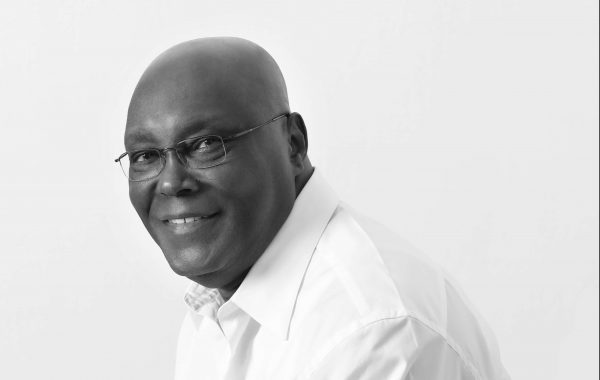
Former Vice President of Nigeria and Presidential Candidate of the African Democratic Congress (ADC), Atiku Abubakar, has described reports that schools across about 40 local government areas have been shut because of insecurity as a damning indictment of the Tinubu administration’s failure to protect Nigerian children and guarantee their right to education.
He said this in a statement issued by his Senior Special Assistant on Public Communication, Phrank Shaibu.
Atiku said the development raises serious questions about the ₦144.86 billion National Plan on Financing Safe Schools for 2023–2026, particularly when the schools the programme was designed to protect are still being forced to close because of terrorists, bandits and other armed groups.
“At a time when Nigeria is already battling a severe out-of-school crisis, insecurity is driving even more children from the classroom. If schools across about 40 local government areas cannot operate because government cannot guarantee the safety of pupils and teachers, Nigerians are entitled to ask a simple question: where is the ₦144.86 billion Safe Schools programme in all of this?
“Budgeting money is not the same thing as securing schools. Announcing programmes is not the same thing as protecting children. The true measure of a Safe Schools programme is whether our children can actually go to school safely. By that elementary test, the present approach is failing.”
Atiku demanded that the Tinubu administration publish a comprehensive account of the programme, including how much has been mobilised and released, the agencies and contractors that received funds, the schools covered, security infrastructure delivered and measurable outcomes achieved.
He warned, however, that accounting for the money alone would not solve the deeper problem.
“What Nigeria requires is a completely different security philosophy. Under my administration, school security will not be treated as another Abuja contract-awarding programme. It will be integrated into a decentralised, intelligence-led security architecture built around the communities where these schools actually exist.
“We will establish functional early-warning and rapid-response systems around vulnerable schools, strengthen intelligence sharing between schools, communities and security agencies, and ensure that identified high-risk schools have clearly defined security and emergency-response plans.
“Local communities know their terrain. They know when unfamiliar people enter their communities and often see the warning signs before Abuja does. Our security architecture will make that local intelligence part of the national response rather than leaving communities helpless until an attack has already occurred.
“We will also insist on measurable outcomes for every naira committed to school security. Nigerians will know which schools have been protected, what infrastructure has been provided, who is responsible for maintaining it and which security formations are accountable for responding when threats arise.
“Safe Schools will be measured by children in classrooms, not billions in government documents.”
Atiku said the consequences of allowing insecurity to empty classrooms extend far beyond education.
“Every school that closes creates another opening for poverty, child labour, early marriage, exploitation and radicalisation. Every child driven from the classroom becomes more vulnerable to the same criminal and extremist networks the government claims to be fighting. Protecting education is therefore itself a national security strategy.”
He said it was indefensible that Nigeria, after repeated attacks and abductions involving educational institutions, could commit enormous resources to a Safe Schools programme and still reach the end of its implementation period with armed groups determining whether schools open or close.
Atiku said the situation in Borno makes the failure even more intolerable. Reports indicate that 36 students and a staff member of Government Day Secondary School, Lassa, in Askira/Uba Local Government Area were abducted by gunmen during examinations in late June, while 42 pupils reportedly remain missing following the May 15 attack in Mussa.
“When terrorists can decide whether Nigerian children go to school, they are exercising authority that belongs to the Nigerian state. That is not merely an education crisis. It is a surrender of state authority.
“And since Mr President says his government knows the forests where these kidnappers and terrorists operate, Nigerians are entitled to ask: what exactly are they still doing there?
“Mr President should detail his security forces to those forests, rescue these children, and bring their abductors to justice. Intelligence that tells the government where terrorists are hiding but does not result in their capture or the rescue of their victims is of little comfort to parents whose children remain in captivity.
“These are not statistics. They are Nigerian children who should be sitting in classrooms, writing examinations, and planning their futures—not names on an endless list of the missing. Every additional day they remain in captivity is another indictment of a government that claims to know where the criminals are but has yet to bring the children home.
“Nigerians do not need another assurance that the government knows where the terrorists are. They want to know why the terrorists are still there—and why our children are still with them.”
Atiku said his approach would be fundamentally different: school security would be connected to a broader decentralisation of Nigeria’s security architecture, with communities incorporated into intelligence gathering and clearly defined rapid-response mechanisms activated when threats are detected.
“Our alternative is straightforward: secure the communities, empower local intelligence, protect vulnerable schools, respond rapidly to threats, measure results, and account for every naira.
“President Tinubu must also account for the ₦144.86 billion and explain why, after all the announcements and appropriations, Nigerian parents are still being forced to choose between educating their children and keeping them alive.
“A government can not announce billions for Safe Schools and expect Nigerians to applaud their failure while terrorists are shutting the schools. Budgetary allocations are not achievements. Press conferences do not protect children. The only result that matters is that a Nigerian child can leave home for school and return safely.


Domestic crude must be available and commercially viable, says Dangote Refinery
Domestic crude must be available and commercially viable, says Dangote Refinery

ONSA unveils monthly newsletter on Nigeria’s national security

₦144.86b Safe School Fund, yet terrorists are closing classrooms under Tinubu — Atiku
Jigawa govt approves N8bn for education, other projects

Tears flow as Popular Ghanaian TikToker Sexy Vida dies days after losing baby

Adeleke: Oyinlola asked me for car, I gave him, he declared support for APC + Video
- Society3 days ago
Drama at Elubo as Assembly Pulls Down GH¢4m Building Over Permit Dispute
- Investigation3 days ago
âHarry Potterâ actress reveals life-changing amount of money sheâs made from 0nlyF@ns
- Investigation1 day ago
âTribalism is one of Nigeriaâs problems. Voting for someone solely because of their tribe doesnât exempt you from the consequences of that b@d choiceâ â Solomon Buchi
- Investigation1 day ago
âPeople who arenât financially stable should legally not be allowed to have childrenâ â TikToker Shirin doubles down amid backlash
- Society3 days ago
Ghana’s Deputy Head of Mission to Saudi Arabia Sanni Jajah Passes Away
- Investigation2 days ago
Kano court remands woman accused of cutting off boyfriendâs genital
- Investigation1 day ago
AFC, UEFA, CONCACAF demand review of Infantinoâs failed FIFA deal
- Investigation1 day ago
Police arrest alleged fake âpastorâ over Jerusalem pilgrimage scam

