News
FG, farmers partner to unveil 10-year coffee revival plan

The Federal Government has partnered with farmers, state governments, research institutes, and private sector stakeholders to launch a 10-year national coffee revival plan aimed at repositioning Nigeria as a competitive player in the global coffee market.
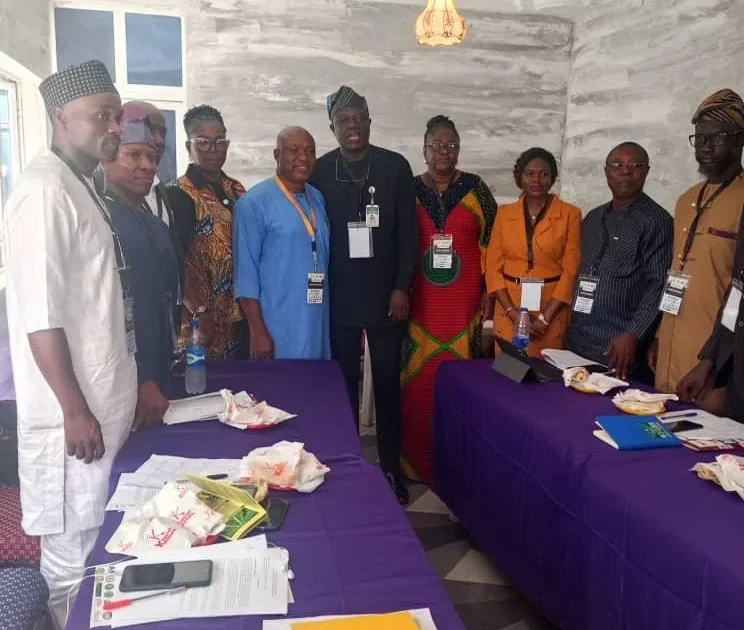
The initiative was formally unveiled at the inauguration of the Nigeria Coffee Revival Initiative Steering Committee held at the Cocoa Research Institute of Nigeria, Ibadan, Oyo State, on Thursday.
The programme brings together actors across 14 coffee-producing states, including Ondo, Cross River, Plateau, Ekiti, Oyo, Ogun, Osun, Edo, Abia, Imo, Kogi, Kwara, Taraba, and Delta, with a shared goal of rebuilding Nigeria’s declining coffee industry through coordinated policy, investment, and technical reforms.
The Minister of Agriculture and Food Security, Senator Abubakar Kyari, represented by the Oyo State Coordinator, FMAFS, Engr. Adetunji said the ministry described the coffee revival plan as a key pillar of Nigeria’s economic diversification strategy.
“Revitalising Nigeria’s coffee industry is a strategic imperative for sustainable economic growth, export development and climate resilience,” the minister said.
He stressed the need for value addition within Nigeria, noting that the country must move beyond exporting raw beans.
“We must incentivise local roasting, processing, and branding. Let the world drink coffee that is grown, processed, and packaged in Nigeria,” he said.
He pointed out that the global coffee market is experiencing unprecedented dynamics. Specialty and organic coffee sectors are booming, with projections showing our own domestic specialty market alone has the potential to scale significantly over the next decade.
“Yet, while global demand surges, Nigeria’s historical coffee production has remained quite hindered by aging trees, underinvestment, and a lack of structured marketing channels,” he said.
He pointed out that revitalisation of Nigeria’s coffee industry is not just a nostalgic pursuit of old agricultural glories, saying that it is a strategic, non-negotiable imperative for sustainable economic growth, aggressive export development, and climate resilience.
“Coffee is not just a crop; it is a massive value chain. By investing heavily in both Arabica and Robusta production, we can create millions of jobs. I am talking about jobs for our youth as modern agronomists, jobs for women in post-harvest processing, and opportunities for innovative tech entrepreneurs building digital supply chains,” he added.
The Cocoa Research Institute of Nigeria said it would provide the technical foundation for the programme through research, seedling development, and farmer training.
CRIN’s Acting Executive Director, Dr. A.R. Adedeji, said improved varieties and extension services would be central to restoring productivity across coffee-producing regions.
“Our responsibility is to supply the science, seedlings, and training that make state-level coffee revival possible,” he said.
The Nigerian Export Promotion Council also pledged support for improving export competitiveness, certification, and access to international markets.
On his part, the Global President of the Cocoa and Coffee Farmers Alliance Association of Africa and National Coordinator, NCRI, Comrade Adeola Adegoke, said the revival effort was driven by the urgent need to correct decades of neglect in the sector.
“Nigeria’s coffee farmers have faced aged tree stock, absent extension services, volatile pricing, and lack of structured market access,” he said. “What we are building is an institutional framework that gives farmers a voice and a pathway from farm to global markets.”
He added that the initiative is not merely symbolic, but designed to create a structured system linking farmers, policymakers, researchers, and buyers.
He said Nigeria is one of the few coffee-producing countries in the world without a dedicated national coffee policy, stressing that there is no sector-specific investment incentive, no coordinated government extension programme, and no institutional mechanism to protect domestic farmers from the displacement caused by cheap imports.
“Even large Nigerian beverage processors import green coffee from Côte d’Ivoire and neighbouring countries to manufacture the instant coffee sold on Nigerian shelves. Based on the data released by the Observatory of Economic Complexity (2024), Nigeria’s coffee importation was recorded at $3.48 million. Essentially, Nigeria’s coffee trade balance remains deeply negative, importing millions of dollars in processed coffee while raw domestic export values sit well under $200,000 annually.
“This gap underscores the massive, untapped potential for expanding local processing, boosting domestic production, and developing robust regional supply chains right across West Africa.
“We will engage the Federal Ministry of Agriculture and Food Security, Federal Ministry of Industry, Trade and Investment, Cocoa Research Institute of Nigeria, Nigerian Export Promotion Council, International Institute for Tropical Agriculture, National Coffee and Tea Association of Nigeria, and fourteen coffee-producing partnering states under the NCRI to advocate for and co-draft a Nigeria Coffee Sector Development Policy – one that incentivises local production, regulates import substitution, and creates an enabling environment for private investment,” he added.
Represented at the event, NEPC leadership said Nigeria could regain relevance in the global coffee trade if quality standards, traceability systems, and market access structures are strengthened.
International partners, including AGNIMBLE (USA), urged Nigeria to focus on system-wide reforms beyond production increases.
“Coffee revival is not only about growing more coffee. It is about building systems that allow farmers to compete globally,” said its CEO, Nsidibe Etim.
State representatives at the inauguration expressed optimism about the plan, highlighting ongoing efforts to rehabilitate farms, distribute improved seedlings, and attract private investment into processing and export infrastructure.
Ondo State recalled its historical position as one of Nigeria’s leading coffee producers, while Cross River State outlined its seedling expansion programme targeting millions of plants. Plateau State, meanwhile, said it is positioning itself as a specialty coffee hub following recent international recognition of its coffee quality.
Despite the optimism, stakeholders acknowledged persistent challenges, including aging plantations, weak processing capacity, limited access to finance, and the absence of a national coffee policy framework.
Osun State representatives noted that over 90 percent of smallholder farmers have reduced or abandoned coffee cultivation due to poor pricing and lack of market information, while Oyo State described the sector as largely non-commercial at present.
The 10-year roadmap is expected to focus on farm rehabilitation, improved seedlings, traceability systems, processing infrastructure, export expansion, and stronger coordination between federal and state institutions.
As implementation begins, stakeholders say the success of the initiative will depend on sustained collaboration across government, research bodies, private investors and farming communities.
“Nigeria has the land, the farmers, and the potential,” Comrade Adegoke said. “What has been missing is the organised institutional will to make it happen.”







Nigerian Govt renews call for permanent seat for Africa in UN Security Council

FG boosts CNG usage with 1,100 vehicles capacity station in Abuja

Kenyan court blocks opening of U.S. Ebola quarantine center on air base

Five people dead after bus collides with cars in Virginia
Five people dead after bus collides with cars in Virginia

PDP is still one, united party – says guber candidate

Laos miner emerges from cave where group has been trapped, organization says

 Breaking1 day ago
Last-minute power game deepens as Kwankwaso plans to unveil Comrade Abdussalam as Kano NDC governorship candidate
- News1 day ago
Full list of Samsung phones that will get the Android 17 update
- News1 day ago
Your phone has an expiry date – here’s how to find it
- Breaking2 days ago
A prayerful man who doesn’t cheat and lie – Nigerian acid attack survivor reveals what she wants in a partner
- Politics2 days ago
Governor Okpebholo Reaffirms Commitment to Child Protection at 2026 Children’s Day Celebration
- News3 days ago
Atiku wins Edo ADC presidential primary
 Politics2 days ago
Omo-Agege quits APC amid Delta crisis
- Breaking2 days ago
Matthew Perryâs assistant who is accused of concealing evidence allegedly drove the late actorâs car at 4AM shortly after his de@th