National
FG, EU, International IDEA train frontline actors to end gender violence in schools

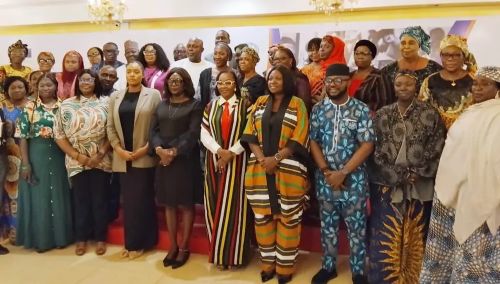
Nearly half of female students in Nigerian schools experience gender-based violence during their education, a crisis stakeholders say is pushing girls out of classrooms and denying survivors justice.
The alarming statistic is driving a renewed push to equip teachers, police officers, and counsellors with tools to identify abuse, document cases, and prosecute offenders.
The intervention formed the focus of a three-day capacity-building training that opened on Tuesday in Abuja under the European Union Support to End Sexual and Gender-Based Violence in Nigeria, ESGBV Programme. It is implemented by the International Institute for Democracy and Electoral Assistance ( IDEA), in collaboration with the Federal Ministry of Justice’s Sexual and Gender-Based Violence Response Unit and the Federal Ministry of Education, with support from UNESCO.
Participants included school administrators, teachers, counsellors, law enforcement personnel, civil society groups, and education stakeholders.
The training centred on the Standard Operating Procedure, SOP, for the Legal Pathway for Prosecution of Perpetrators of School-Related Gender-Based Violence, 2024.
Delivering the welcome address, Head of the SGBV Response Unit at the Federal Ministry of Justice, Yewande Gbola-Awopetu, described school-related violence as one of the gravest threats to child protection and learning outcomes.
Citing a systematic review, she said 42.3 percent of female students in Nigerian schools face some form of gender-based violence. A 2025 PLOS Global Public Health study, she added, found that 69.4% of adolescents in South-West Nigeria had experienced sexual violence.
“Every girl who leaves school because she was assaulted or felt unsafe is not just a personal tragedy. It is a permanent loss to Nigeria’s human capital,” Gbola-Awopetu said, noting that girls make up 60 percent of Nigeria’s out-of-school children.
She lamented weak institutional responses and poor documentation.
“Too many cases go undocumented. Too many survivors are denied justice. Too many institutions lack the procedural clarity required to respond effectively,” she said. The SOP, she stressed, is “a coordinated accountability framework” to strengthen reporting, evidence preservation, and prosecution.
Charging participants, she added: “You are the institutional actors who will determine whether the next child who discloses abuse encounters a system that protects or a system that fails.”
Also speaking, the International IDEA’s GBV Policy and Strategy Development Specialist, Melissa Omene, said 18 percent of sexual violence incidents occur in schools, while 25 percent of children report corporal punishment by teachers.
“Children who experience violence are more likely to drop out, perform poorly, and suffer psychosocial harm. Girls and other vulnerable groups are disproportionately affected,” Omene said.
“As frontline actors, you are often the first point of contact. Your actions, or inaction, can determine whether a child receives protection and justice, or remains silent,” she added. Responding, she said, is “not simply compliance. It is a duty of care.”
The ESGBV Programme is a four-year EU-funded initiative implemented by International IDEA at the federal level, including the FCT and selected states. It aims to reduce violence through stronger institutions, better access to services, and positive social norms.
In the same vein, Head of the Gender Unit at the Federal Ministry of Education, Augustina Apakasa, urged participants to share knowledge beyond the training hall. “Every child in Nigeria deserves to learn in an environment free from fear, discrimination, and violence,” she said.
The Executive Director of the Protect the Child Foundation, Elizabeth Achimugu, said that teachers are critical first responders. “Securing justice for one child requires teamwork, knowledge, and coordination,” Achimugu said. She noted that participants from Unity Colleges in the FCT would replicate the training and influence school policies to ensure perpetrators, whether students, teachers, or adults, do not go unpunished.
Participants are expected to strengthen school-based response mechanisms as part of wider efforts to build safer learning spaces and reduce impunity for violence against children.
See Complete Details,Videos Here..

Angola’s Data Protection Authority Levies $617,000 in Fines for Regulatory Breaches

DR Congo’s iconic ‘Lumumba’ fan returns to World Cup after Ebola quarantine

Woman allegedly pour boiling water on her son in Delta (video)

BPSR rallies stakeholders on public service reforms, building stronger institutions

Bill Gates says he didnât witness crimes but may have been in presence of Epstein Victims
Lavrov says Russia won't bend again on Ukraine, cites talks with Trump in Alaska

Nigerian govt inaugurates roadmap for achieving gender equality by 2030

 Investigation2 days ago
He said he wanted to sleep with me, but I told him I am a married woman – Lady in viral video being ass@ulted by a man in Abia speaks
- World3 days ago
Russia burning as Ukraine launches massive attack on key waterway 160 miles from frontline
- World1 day ago
Russia launches nuclear drill in UK's backyard as Kremlin 'advocates use of atomic bomb'
- Breaking2 days ago
He said he wanted to sleep with me, but I told him I am a married woman – Lady in viral video being ass@ulted by a man in Abia speaks
- Investigation2 days ago
âSeek help from usâ â NDLEA tells Nigerians battling Drug addiction
- Investigation2 days ago
Actress, Angela Okorie responds after facing backlash for burning outfit she wore to late colleague, Alexx Ekuboâs funeral
- Investigation2 days ago
"Please. It will look as if it’s my fault. His family doesnât like me" Young wife, 18, assaulted by husband begs for him not to be arrested and reveals she regrets marriage (videos)
- Investigation1 day ago
Those who called Jonathan clueless are now in Power â Pastor Ayo Oritsejafor