News
India Moves to Restrict River Flows to Pakistan as Indus Water Tensions Escalate

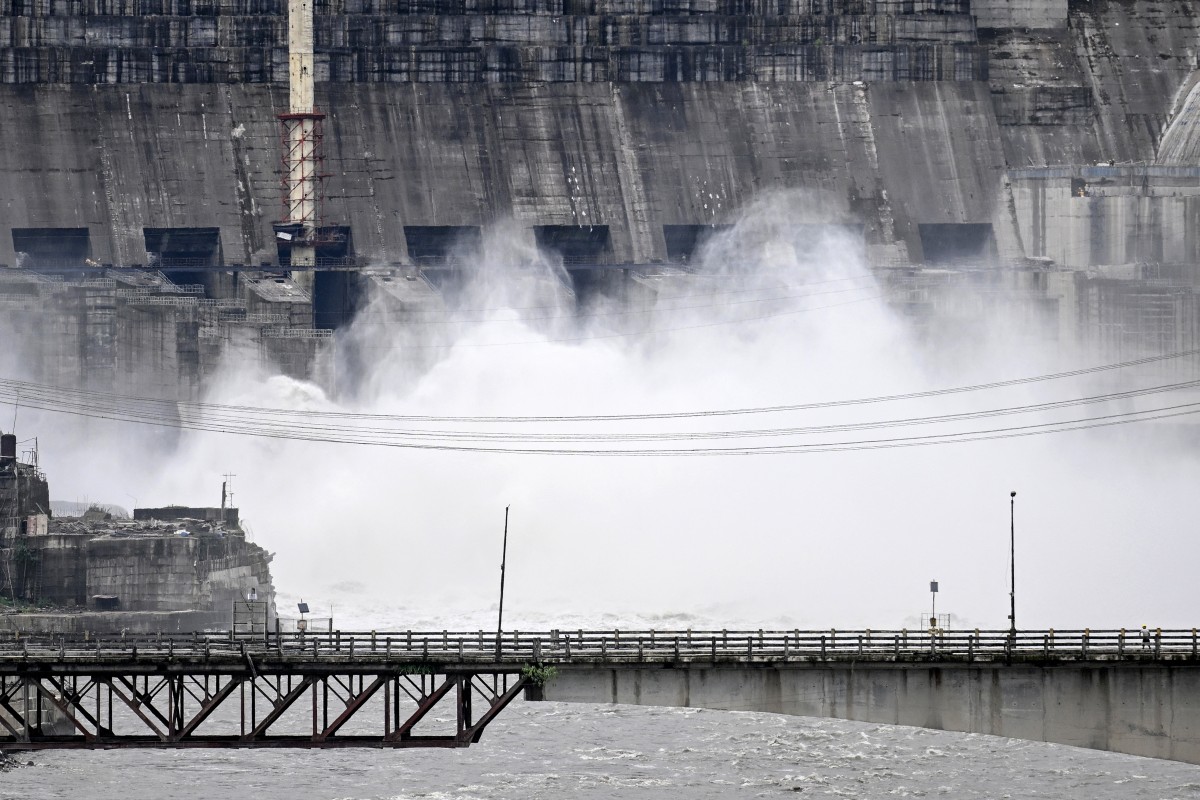
(Subansiri River, at the border of the northeastern states of Assam and Arunachal Pradesh. Photo by Vhannels Tv)
Pakistan has previously said it would consider any attempt to change the flow of cross-border waterways as an “act of war.”
India is working to ensure that not a single drop of water flows into neighbouring Pakistan, the country’s water minister has said, following New Delhi’s suspension of a major treaty last year.
Pakistan maintains that the 1960 Indus Water Treaty, IWT, remains in force, arguing there is no mechanism for unilateral withdrawal from it.
“It is certain, not a single drop of water will go (to Pakistan) in the coming years,” Minister of Water C.R. Patil told an online news platform late Tuesday, adding that India was “actively working on it” following directives from Prime Minister Narendra Modi.
The treaty governs the use of water from six rivers whose headwaters originate in India but flow into Pakistan as part of the Indus basin a resource relied upon by hundreds of millions of people.
The Indus cuts through ultra-sensitive demarcation lines between the two countries in contested, Muslim-majority Kashmir, a Himalayan territory both nations claim in full.
India announced in May 2025 that it was suspending its IWT membership after accusing Islamabad of backing a deadly att@ck on tourists on the Indian side of Kashmir charges Pakistan denied.
The nuclear-armed neighbours subsequently fought a four-day conflict involving intense drone, missile, and artillery exchanges, which claimed nearly 70 lives on both sides.
The issue of water has remained a bitter point of contention since the conflict.
Earlier this month, Pakistan accused India of seeking to “weaponise” water after New Delhi announced two initiatives on the section of the Chenab River it controls.
In May, India’s government-owned National Hydroelectric Power Corporation issued a tender notice for a proposed tunnel project that would transfer water from the Chenab River to the Beas Basin.
India’s power ministry had also said in January that it was undertaking sediment removal at Salal Power Station on the Chenab River, citing the termination of the Indus Waters Treaty.
Experts, however, note that India’s existing dams lack the capacity to block or divert water outright and can only regulate the timing of flow releases.
Any new project would also take several years before having a tangible impact an official in Indian-controlled Kashmir indicated that work could not begin before mid-2027 and would require at least five years to complete.
Cutting flows would nonetheless carry serious implications for Pakistan’s agriculture and broader economy.







Peter Obi never told me to pay N10m – Ohaegbu dismisses Kenneth Okonkwo’s allegations

HabariPay launches maiden ‘HabariPay Impact Report 2025’, showcasing journey, business evolution

UK-based woman leaves husband of 4 years, says 50-50 marriage became a problem when he wanted part of her money

Who is Mahender Makhijani? Indian-origin man accused of hosting sex parties and blackmailing attendees

Fox News halted for major Donald Trump announcement

Shock as Ruth Kadiri Raises Alarm Over Soaring Food Prices in Nigeria

Deadly Pakistani airstrikes in Afghanistan end month of calm

 National2 days ago
Exclusive: Inside Union Bank’s Boardroom Storm And Crumbling Bank, MD Yetunde Oni Acquires N1.9 Billion US Home Barely One year in Office
- World2 days ago
Russia burning as Ukraine launches massive attack with 'more than 50 explosions'
- World2 days ago
Horror as woman gang raped in field after being knocked unconscious
- Breaking3 days ago
I was forced to sleep with 20 men daily – 18-year-old Benue girl recounts escape from s3x traffickers in Mali
- Breaking2 days ago
"Before HIV vs living with HIV" – Man writes as he shares his photos before and after HIV diagnosis
- World2 days ago
Pope Leo denounces what he calls "scourge" of sexual abuse by Catholic clergy
- Breaking3 days ago
Netizen claims newly wedded woman declared missing in Abuja left her matrimonial home after discovering her husband has two children with different women
- Breaking2 days ago
35-year-old woman who has been divorced twice responds to those telling her not to remarry