Breaking
NPA, police begin crackdown on illegal checkpoints along Lagos port corridors

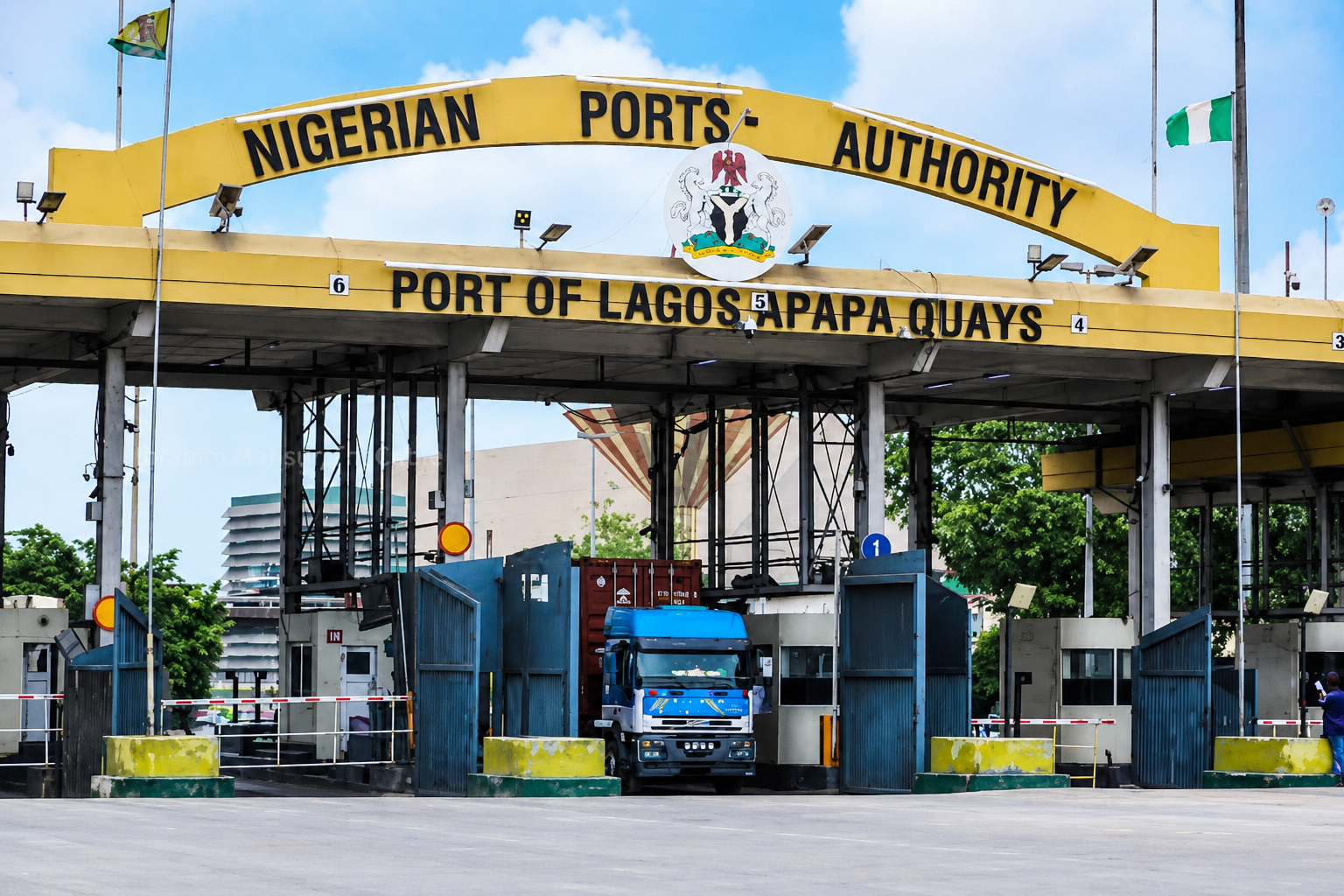
The Nigerian Ports Authority, NPA, and the Nigeria Police Force have launched a crackdown on illegal checkpoints and roadblocks along the Apapa and Tin Can Island port corridors as part of efforts to ease traffic congestion and improve cargo movement on the country’s busiest logistics routes.
The Managing Director of the NPA, Dr. Abubakar Dantsoho, disclosed this after a high-level stakeholders’ meeting in Lagos involving security agencies, freight forwarders, transport unions and government officials.
Mr Dantsoho said investigations had uncovered several challenges along the corridors, including illegal extortion points, overlapping security responsibilities and operational distortions that continue to hamper the smooth movement of goods.
“We have problems along the port corridor in Apapa and Tin Can Island. We have established that there are issues around extortion along the corridor, which is outside the port environment,” he said.
According to him, some of the disruptions extend beyond the immediate port area to locations such as Berger and Mile 2, which form part of the wider logistics network serving the ports.
The NPA boss identified jurisdictional conflicts among security agencies as another major challenge.
“In our system, there is the Maritime Police Command and the Lagos State Police Command. In some instances, there are clashes and overlaps in responsibilities,” he stated.
Mr Dantsoho said the meeting produced key resolutions aimed at improving coordination among stakeholders and eliminating bottlenecks along the port access roads.
He revealed that both the Maritime Police and the Lagos State Police Command denied authorising the establishment of checkpoints on the corridors.
“The AIG Maritime Police has clearly stated that they do not send anybody to mount roadblocks or checkpoints along the corridor. Equally, the Lagos State Police Command has said the same thing,” he said.
He described the development as a significant step towards addressing delays that have long frustrated importers, exporters and transport operators.
According to him, all relevant stakeholders, including security agencies, freight forwarders and government institutions, have pledged stronger collaboration to improve efficiency and strengthen the competitiveness of Nigeria’s ports.
“Our emphasis is that we must function better in our operations so that we can outperform neighbouring countries,” Dantsoho said.
He further noted that recent reforms had earned Nigeria’s ports international recognition.
“Our port system has recently been recognised by the World Bank as one of the most improved in the world,” he added.
Dantsoho expressed optimism that the agreements reached at the meeting would significantly reduce congestion and improve cargo flow along the Apapa and Tin Can Island corridors.
Earlier, the Assistant Inspector-General of Police in charge of Maritime Operations, AIG Ronke Okunade, dismissed claims that police personnel were officially deployed to checkpoints along the port access roads.
She warned that any officer engaging in extortion under the guise of police deployment was acting illegally and should be reported.
“We have never posted officers to any checkpoint around the port environment,” she said.
Okunade disclosed that stakeholders agreed to establish a joint task force involving the Lagos State Government, the NPA, the Police and other relevant agencies to improve operations around the port corridors, eliminate extortion and enhance traffic management.
She stressed that officers claiming to have been deployed from Zone 2 Command or the Maritime Police to operate checkpoints were acting fraudulently and would face disciplinary action if identified.
The AIG noted that the collaborative framework would also help address jurisdictional conflicts that have complicated enforcement activities in the area.
Stakeholders, including representatives of the Association of Maritime Truck Owners (AMATO), welcomed the initiative, describing it as a major step towards tackling long-standing complaints of extortion, harassment and disruption of cargo movement.
Participants also agreed to establish a broader committee comprising government agencies, freight forwarders and transport operators to develop a framework for continuous monitoring and enforcement.
The Lagos State Commissioner for Transportation underscored the importance of inter-agency cooperation, noting that the challenges on the port corridors involve transportation, security and regulatory enforcement.
He said that while illegal operators are periodically arrested and prosecuted, sustained collaboration among stakeholders remains essential to achieving a lasting solution.
At the end of the meeting, participants expressed confidence that the coordinated effort would improve security, reduce congestion and enhance operational efficiency along the Apapa and Tin Can Island port corridors.


Police dismiss viral Katsina video, say armed men are vigilantes and hunters

H1-B row: University of Michigan hiring software developers on $75,000 salary sparks backlash

Nigerian govt announces discovery of platinum, lithium, rare earth deposits in Kaduna

Exclusive: Ex-Delta Governor On Life Support And At Point of Death – Source

Police foil cattle rustling attempt in Bauchi, recover six cows

Kano gov rallies support for Tinubu’s 2027 re-election bid

Katsina denies sponsoring bandits for Hajj, demands evidence

 Investigation2 days ago
He said he wanted to sleep with me, but I told him I am a married woman – Lady in viral video being ass@ulted by a man in Abia speaks
- Breaking2 days ago
He said he wanted to sleep with me, but I told him I am a married woman – Lady in viral video being ass@ulted by a man in Abia speaks
- World2 days ago
Russia launches nuclear drill in UK's backyard as Kremlin 'advocates use of atomic bomb'
- Investigation1 day ago
New photo of 10-year-old boy severely b@ttered by his guardian in Anambra
- Investigation2 days ago
Actress, Angela Okorie responds after facing backlash for burning outfit she wore to late colleague, Alexx Ekuboâs funeral
- Investigation2 days ago
"Please. It will look as if it’s my fault. His family doesnât like me" Young wife, 18, assaulted by husband begs for him not to be arrested and reveals she regrets marriage (videos)
- Investigation2 days ago
âSeek help from usâ â NDLEA tells Nigerians battling Drug addiction
- Breaking3 days ago
Trafficked Nigerian girl d!es in Mali