News
Saving lives keeps us coming back, say regular blood donors

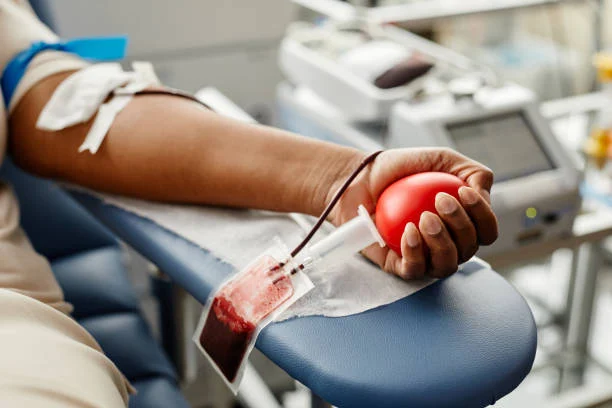
As the world marks World Blood Donor Day today, voluntary blood donors, haematologists, and blood transfusion experts say donating blood gives others another chance at life. They urged Nigerians to overcome fear and embrace voluntary blood donation. JANET OGUNDEPO reports
A health insurance desk officer and Ibadan resident, David Ikediashi, still remembers his first voluntary blood donation in 2015 as a freshman at the University of Ibadan, Oyo State.
At the time, the hall of residence executives had organised a week of activities and a blood donation drive was included in the schedule.
On that day, sometime in April 2015, Ikediashi said the hall residents were given a quick lecture on the benefits of blood donation and what the process involves.
That event marked the beginning of the health insurance officer’s journey to becoming a regular voluntary blood donor.
However, his mind had been made up a year earlier, when he discovered his blood group and genotype.
“What motivated me to begin to donate was, I think, back in 2014, for the first time, I had my genotype and blood group test done, and the results came out to be AA and O positive, which makes me a universal donor. When I saw the result, I felt like a walking blood bank. I just felt like I would be giving out blood part-time to anybody that needs it,” Ikediashi recalled.
Since then, the communications graduate said he has donated blood about five or six times, with every donation leaving him with a sense of fulfilment.
“I usually feel great. I feel like I am part of a solution, and I feel like I have tried my own quota, my own capacity to ease the person’s medical expenses and the person’s chances at life. So I really feel fulfilled,” he said.
While Ikediashi says he voluntarily donates blood without knowing the recipient, he recalled a time when he donated for someone he knew.
The recipient’s response at any time they met would always leave him emotional.
“She was really appreciative, and every time she sees me, she would say, ‘Aje mi ni yen,’ which means ‘that’s my blood,’” he said.
To the Ibadan resident, voluntary blood donation has become a way of giving back, helping others and sharing with those in need without expecting a reward or appreciation.
Ikediashi believes blood is priceless and sees blood donation as an invaluable gift to humans.
“To me, blood donation simply means sharing life. Since I cannot give life, I can share life. You share what you have, and you give it out.
“Helping people can go beyond material things. Helping people can go beyond finances. Blood donation has helped me reinforce my perspective that you can give more than material things,” he stated.
To persons hesitant and afraid of the procedure, Ikediashi said eligibility checks before donation exist to protect donors.
The health insurance officer encouraged, “If anybody is eligible to donate, please donate, because you are sharing a part of your life with somebody and you are basically giving life from what you have, and it takes almost nothing from you,” he said.
Donated to save a pregnant woman
A middle-aged man, Okunola Otubambo, was quietly cleaning the surroundings of the emergency unit someday in October 2022 when an ambulance drove into the entrance.
The hurried staccato steps of health workers swinging into action made him pause the swish of his mop to observe what was happening.
The patient turned out to be a pregnant woman in labour with an SS blood group, who would need a blood transfusion.
The cleaner, now a refrigerator and air conditioning technician, realised that the pregnant woman’s relatives were unavailable to donate blood; he quickly volunteered to be a donor.
“The first time I donated blood, I was a hospital staff member, working as a cleaner, in October 2022. What actually motivated me was that the blood would be used for a pregnant woman who was in the labour room. She was in the SS blood group, and I was told she would need blood,” he said.
Though Otubambo fainted during the process, he said he felt fulfilled knowing the blood was used to save the life of a pregnant woman and her baby.
The Port Harcourt-based technician described blood donation as “saving a life by giving what God has deposited into you. I was told that the donation of blood is good because when you give blood, a fresh one will be produced. It is like you are renewed. I will continue to help others who need blood by donating mine.”
He urged Nigerians, “Don’t be scared of blood donation. We are now in an advanced age, so take the right steps to save the life of an individual.”
For a Lagos State resident, Muyiwa Oyedele, the birth of his child became his first encounter with donating blood.
“The first time I donated was when my wife got pregnant. It was one of the prerequisites for antenatal. I was motivated because of the baby I was expecting,” he said.
While Oyedele said he has not donated blood since then, he described the feeling as good and pleasant, giving others life.”
He encouraged Nigerians who have never donated to consider doing so, saying, “Take it as a responsibility because it saves life.”
June 14, World Blood Donor Day
On June 14 every year, the global body observes World Blood Donor Day to thank voluntary, unpaid blood donors for their life-saving contributions.
The theme for this year is “One Drop of Humanity. Give Blood. Save Lives.”
‘Nigeria has less than 10% voluntary blood donors’
Despite the benefit of blood donation to the donor and the recipient, Nigeria has less than 10 per cent of voluntary blood donors, a figure far below the World Health Organisation’s recommended target.
Leading professors of Haematology and Blood Transfusion, who spoke with PidomNigeria Healthwise, said that the situation has forced many hospitals and patients to rely on family replacement donors and, in some cases, commercial donors to meet transfusion needs.
The experts explained that donated blood is indispensable in the treatment of accident victims, women with severe bleeding after childbirth, children with severe malaria, sickle cell patients and individuals with blood disorders.
They stressed that animal blood cannot be transfused into humans, adding that since blood has no substitute, persons in need of blood transfusion could only get it from other humans, preferably voluntary donors.
The haematologists also reassured Nigerians that blood donation is safe and beneficial to donors, explaining that donated blood is naturally replaced by the body and that the process often serves as an opportunity to detect underlying health conditions.
Providing expert insight into the matter, a Professor of Haematology and Blood Transfusion at Lagos State University, Ojo, Abduljaleel Akinbami, said blood donation remains one of the most effective ways of saving lives.
He stressed that blood can only come from human donors and cannot be replaced by animal blood or artificial alternatives.
“One of the most important benefits of blood donation is that it saves the lives of those in need because it is only human blood that can be transfused to the recipients in need of it. Animal blood cannot be used for humans, and it is when one donates blood that it will be made available for use for those in need. You will be saving a lot of lives by donating voluntarily as recommended by the World Health Organisation,” he said.
The donor added that many misconceptions surrounding blood donation were unfounded, noting that the body naturally replenishes donated blood with no cost to the donor.
Akinbami stated that blood donation, unlike other organ donation, does not impair the lifestyle or organs of the donor, stressing, “It’s unlike other organ donation, like the kidney, that if you donate one kidney, you’re left with one kidney. But blood will be replaced after donation.”
Listing other benefits of blood, the haematologist said, “It makes you healthier than before. Once you donate, you’ll be lighter, and then before you donate, you are confirmed to be fit for donation because you have to have more than enough blood. So if you are not fit for donation, you will not be allowed to donate.”
Akinbami decried the country’s voluntary blood donation rate, stating that it was still far from meeting global recommendations.
“For example, the World Health Organisation stated that one per cent of the population should voluntarily donate blood. We are over 200 million, but from the last record I have, we don’t have up to 10 per cent of that number.
“So there still needs to be a lot of public enlightenment, public advertisements to create awareness to discourage people from replacement donors,” the donor said.
Akinbami described the theme of this year’s World Blood Donor Day as a timely reminder of the importance of voluntary blood donation.
“You need to give blood to save lives. Like I’ve said, it’s important that we donate blood voluntarily, and then you’ll be able to save a lot of lives by doing that,” he said.
Commenting on the matter, a Professor of Haematology and Blood Transfusion with special interest in Haemato-oncology, Kaladada Korubo, described blood donation as one of the greatest gifts a person can offer another human being.
“Well, the number one benefit is that when you donate blood, you are saving someone’s life. I mean, there is no monetary value; there is no way to place a value on life.
“So the fact that if you give blood voluntarily and freely, you are saving a life or more. Because blood can be separated into components. So one unit of blood can actually save up to two or three people’s lives.
“So if you give blood, you are saving lives. That is the number one benefit. There is no greater gift that you can give to somebody,” Korubo said.
She noted that donors also benefit from routine health assessments carried out before blood collection.
“Inasmuch as the donor is gifting someone blood, as we are saying blood is a gift, there is also a benefit to the donor.
“So sometimes when we go for blood drives, you’ll find out that it’s when someone comes to donate blood that they find out that they have hypertension. Sometimes, it is then that some people know that they have a transfusion-transmitted infection, like hepatitis or HIV.
Also, it’s when someone comes to donate blood that they find out that they don’t even have enough blood in the first place for themselves,” Korubo said.
The professor of blood transfusion added that regular voluntary blood donation encourages healthier lifestyles among donors.
She said, “If you are in the act of donating blood and you make it a regular thing, you find out it influences your lifestyle in a positive way. You wouldn’t want to do things that would make you ineligible to donate blood, for example, like getting tattoos.”
The haematologist said Nigeria’s blood transfusion system was still evolving, with many hospitals unable to rely solely on supplies from the National Blood Service Agency.
“Blood is still a scarce commodity. And in that situation, most hospitals have to help patients arrange for blood themselves. And that’s why we have a high rate of commercial blood donors and replacement blood donors, which is not ideal.
“The best blood comes from voluntary non-remunerated blood donors. Those are the best donors, and unfortunately, in Nigeria, these voluntary non-paid donors still make up just about less than 10 per cent, in some states, less than five per cent of blood donated,” she said.
Korubo called for sustained public awareness campaigns and regular donor recruitment drives to improve the country’s blood supply.
“We still have a long way to go in terms of creating awareness, making people understand the benefits of donating blood and that those who have donated voluntarily before, it shouldn’t be a one-time thing.
“Each person who donates is eligible to donate blood up to three to four times maximum in a year, with a space of at least three months from the last blood donation,” she added.
Korubo further said that this year’s theme perfectly captured the essence of blood donation, stating, “When you give blood, you are saving lives. And that is humanity. That is the best gift. So, in fact, it’s still just a summary of why you should give blood.”







Trump to celebrate becoming the oldest US president ever elected with UFC cage fight

Kwankwaso never threatened to leave us – NDC

President Tinubu expresses shock over de@th of retired Army General in bandits’ den

Times Square: New York City panic after 'shooting' amid Knicks celebrations

Kwankwaso never threatened to leave NDC, says party spokesman
Who was Gurbhej Singh? Punjab man killed in London stabbing had moved to UK in 2022

Femi Osofisan @80

 World2 days ago
Horror as girl, 12, 'gang raped by 5 classmates' at birthday party
- World2 days ago
Horror as bodies of 29 unborn babies discovered buried at a family home
- Breaking3 days ago
Two brothers beat each other to de@th after satanism accusation sparks de@dly fight
 News3 days ago
Benue Youths Rescue Kidnapped Victims, Detain Suspects in Community Operation
- World2 days ago
Escalation in attacks between U.S. and Iran
- Breaking1 day ago
Fight breaks out between student, hostel staff and Rev. Sister at Coal City University
- Business19 hours ago
Wema Bank’s 5 for 5 Rewards Delivers ₦17.96 Million to 273 Customers in One Month
- News3 days ago
Serena Williams’ comeback ends after Mboko injury withdrawal