Society
FG backs youth-led digital innovation to drive circular economy

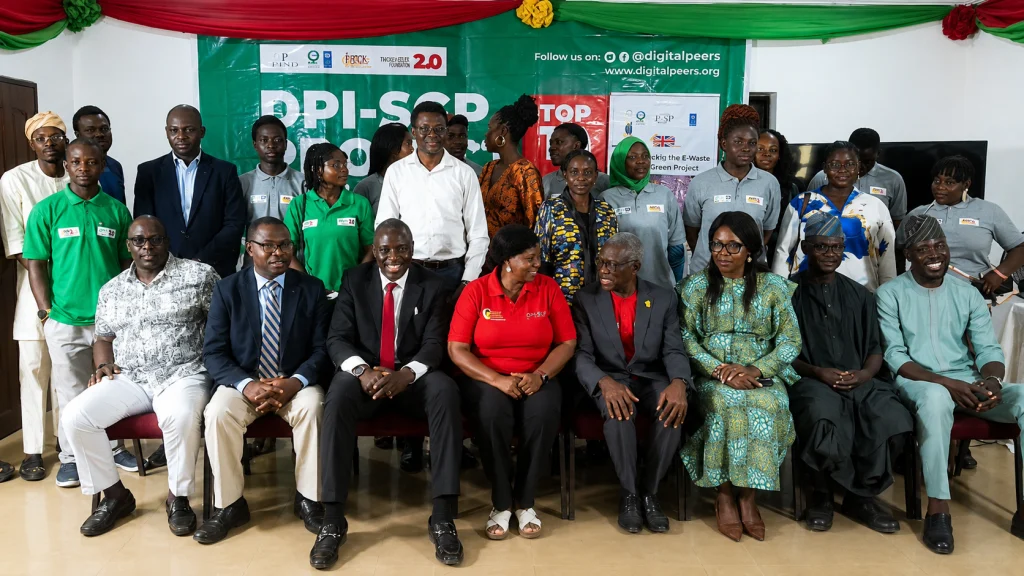
The Federal Government has reaffirmed its support for youth-led digital innovation as a key strategy for tackling plastic pollution and advancing Nigeria’s circular economy, saying technology-driven solutions developed by young Nigerians are already transforming waste into economic opportunities.
The commitment was reaffirmed on Monday by the Federal Ministry of Environment at the Digital Peers International (DPI) Knowledge Management and Lessons Learned event in Abuja, marking the conclusion of the “Deploying the Power of IT in Enhancing Effective Plastic Use and Plastic Waste Management” project, supported by the United Nations Development Programme (UNDP) Global Environment Facility (GEF) Small Grants Programme.
Speaking on behalf of the ministry, Scientific Officer in the Department of Pollution Control and Environmental Health, Murtala Umaru, said the ministry had partnered with DPI from the inception of the project, providing technical support, policy guidance and institutional collaboration to ensure its success.
ALSO READ: Food security: Oyebanji approves installation of three agro-meteorological stations in Ekiti
“The ministry has supported DPI technically, morally and through relevant policy documents from the beginning of the project. We have worked collaboratively because the initiative aligns with what the Federal Government is doing in environmental sustainability,” Umaru said.
He described the project as a well-conceived youth-focused initiative that had significantly improved participants’ digital capacity while promoting practical solutions to plastic waste management.
“When we started, some of these young people were not even tech-savvy. Today, many of them are developing applications that will help improve plastic waste management. That shows the impact this project has made,” he said.
Umaru said the initiative also produced customised plastic collection receptacles donated to institutions, including Nasarawa State University, Keffi, while some participants benefited from knowledge exchange programmes in China to deepen their understanding of global plastic waste management practices.
He urged young Nigerians to embrace the principles of the circular economy by seeing waste as a valuable resource rather than a burden.
“What people call waste is actually a resource. There is nothing like waste in the circular economy. It can become raw materials for new products, compost or other valuable items. We now talk about waste miners or urban miners because what is considered waste has economic value,” he said.
On whether the initiative could be expanded nationally, Umaru said the ministry would study the project’s outcomes and make recommendations to the Minister of Environment and the Permanent Secretary on possible nationwide implementation.
Project Chairman of DPI, Engr. Adeolu Odusote said the project’s next phase would focus on transforming youth innovations into commercially viable enterprises capable of creating jobs and solving environmental challenges.
He said the project received 46 innovation concepts from young Nigerians, with the best ideas selected after rigorous technical evaluation.
“Our success will be measured by how these innovations move beyond ideas and prototypes into businesses that create jobs, attract investment and deliver measurable environmental and economic value,” Odusote said.
He added that DPI would continue supporting participants through mentorship, business development, prototype refinement, investment readiness, enterprise registration, and market access.
Chairman of the DPI Board of Trustees, Dr. Akin Fapohunda, urged participants to convert knowledge acquired during the project into profitable ventures, stressing that artificial intelligence had become central to innovation and knowledge management.
“Knowledge has no value unless it is applied. We must think about how to transform what we have learned into businesses that create value for society. We must also become AI-compliant because AI is now the foundation of almost everything,” he said.
Also speaking virtually, National Coordinator of the UNDP Global Environment Facility Small Grants Programme, Dr. Ibironke Olubamise, said the initiative demonstrated that community-driven innovation remained one of the most effective approaches to addressing environmental challenges.
She said hundreds of young people had acquired practical skills through the project, while digital platforms and research outputs produced under the initiative would strengthen environmental education and circular economy activities across Nigeria.
“The innovations demonstrated by these young people have the potential to grow into sustainable enterprises and scalable solutions. Continued partnerships and enterprise support will help these ideas reach the market and deliver lasting environmental and economic benefits,” Olubamise said.
She added that documenting lessons and best practices through the project’s knowledge management process would provide a valuable resource for future environmental programmes and strengthen collaboration among government, development partners, the private sector and local communities.


My wife is super homely despite meeting her in club – Rapper, Vector

Police Crackdown Exposes Hidden Dangers Behind Fake Number Plates

Plateau Pastor Mourns Nine Family Members Killed in Attack

Troops arrest four suspected illegal miners, recover equipment in Nasarawa

Nigerian Teen Star Makes Golden Boy Top 100 List

Nigerians, Zimbabwean Arrested Over India Investment Scam

EPL: Xabi Alonso confirms Chelsea captain under him

 National2 days ago
At Last, Fresh Video Showing How Some Of The Terrorists Was Arrested During Rescue Of Oyo Schoolchildren Emerged [WATCH HERE]
- News2 days ago
Army officer killed during rescue of kidnapped Oyo pupils, teachers buried
- Investigation18 hours ago
Each and every one of you is guilty РDanish aid worker Anja Ringgren Lov̩n slams Nigerians filming malnourished child accused of being a witch in viral video
- Investigation2 days ago
Please help poor Nigerians. The burden is heavy on government – First lady, Remi Tinubu appelas to Davido, Asake, Burna Boy (video)
- News3 days ago
Keyamo gives Obi 1-week to apologise, pay ₦25,000 airport parking fine
- Investigation3 days ago
Taylor Swift paid $160,000 for New York Wedding permit â New York Mayor
- Investigation2 days ago
Become a presidential candidate before you challenge me to a debate – Peter Obi replies Minister of Works, Dave Umahi (video)
- Society2 days ago
Yoruba elders alert of plot by Fulani to conquer South-West, rally eminent Nigerians