News
LASBCA and the fight against building collapse

Imagine a state boasting over three million houses where a major safety meeting draws roughly 60,000 attendees. On paper, this sounds like a massive success in the fight against building collapses. But looking closely at the crowd shows a highly unbalanced picture. The seats are mostly filled with artisans in the built industry, while the landlords and house owners are largely underrepresented. The Lagos State Building Control Agency has spent vast resources hosting stakeholders’ engagements to stop the issue of collapse, structural failure, and other hazards in the state. Yet, the majority of the people present at these programmes are the artisans in the building sector, while the property owners who hold the purse strings and should be the first stakeholders are underrepresented at large.
On paper, LASBCA invites everybody. A former General Manager of LASBCA, Arc. Gbolahan Oki publicly announced plans to bring together a wide range of groups for these engagements, including professional bodies, regulatory agencies, property developers, local council chairmen, community leaders, market men and women, technocrats, and even students. But in reality, the artisans are the major people present. At recent LASBCA engagements, such as the one held in Oregun, the audience were majorly bricklayers, carpenters, plumbers, electricians, welders, and painters. During these interactive sessions, the government appealed directly to these manual workers, with Governor Babajide Sanwo-Olu telling artisans that they are positioned to checkmate site infractions. Adding to this, the former General Manager of LASBCA, Arc. Gbolahan Oki highlighted that property developers who want to cut corners typically use these artisans, arguing that bad business cannot happen unless the artisans agree to it. Consequently, the government has placed a massive burden on these tradespeople, urging them to reject shoddy construction and report on-site corruption. However, it is an undeniable fact that while artisans physically mix the cement and lay the blocks, it is the building owner who dictates the budget and makes the fatal decision to buy cheap, substandard materials.
Due to this misplaced focus, there is a huge gap in public knowledge regarding what the government actually does. Today, the issue of demolition is rampant in Lagos State simply because people are not aware of LASBCA’s real responsibilities apart from bringing down houses. When the agency pulls down a distressed building or non-conforming structures, residents often fight back, and according to the Commissioner for Information and Strategy, Gbenga Omotoso, people constantly complain about human rights and ask why the government is destroying homes instead of building them. If LASBCA engaged the landlords properly from the start, the public would know that the agency is actually meant to inspect construction at every phase, demand proper soil tests, issue stage certifications, provide green stickers, and issue a certificate of completion and fitness for habitation to confirm that a building is safe to live in. Instead, buildings continue to collapse because people choose to ignore the law and prioritise their commercial business over human life, sometimes even trading inside properties that the government has already marked as distressed.
To bridge this massive gap in public awareness, LASBCA needs a new approach. The agency should have a dedicated research body or employ external research bodies to conduct detailed studies on people’s perception and awareness of building codes. Gathering this necessary data will allow the government to understand exactly what the public knows and where the knowledge gaps exist. With this information, LASBCA can determine their next course of action and pinpoint exactly where those actions will be implemented for the best results, rather than relying on guesswork.
The primary responsibility of any government is the safety and well-being of its people. Therefore, LASBCA must wake up and do what is necessary to protect lives. They cannot rely on a carpenter or a welder to stop a multimillion-naira project from failing. The agency must enforce the rules by going after the property owners and employing the relevant professional bodies to do the heavy lifting for them. Governor Sanwo-Olu has openly stated that engaging certified professionals, such as structural engineers and architects, will solve 70 per cent of the building collapse problems in the state. The government recently introduced the Certified Accreditors Programme, which allows private sector professionals to help inspect and monitor building projects from the foundation stage to completion. LASBCA must heavily depend on this body and similar professional groups to do the serious checks, rather than asking artisans to police their own bosses. Building a safe Lagos is a team effort, but until LASBCA forces the real stakeholders to sit at the table and take responsibility, the tragic story of falling buildings and endless demolitions will continue.
- Ajeigbe is a postgraduate student at the University of Lagos





2027: Suspend large gatherings in Kano – Analyst tells Governor Yusuf
After renting in Dubai for 15 years, is buying now finally cheaper? The five numbers every tenant should calculate

Troops neutralise two terrorists in Kebbi, soldier reported missing

Leverage networks for business expansion, AFC tells CEOs

‘The Gathering’ on 100 arrives in Kano as MTN expands youth entrepreneurship

Brits in Australia warned phones will all go off at the same time next week

Kwara APC elders caucus shun invitation by reconciliation committee

 Investigation2 days ago
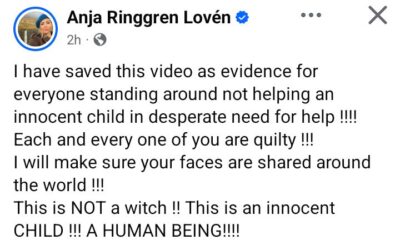
Each and every one of you is guilty РDanish aid worker Anja Ringgren Lov̩n slams Nigerians filming malnourished child accused of being a witch in viral video
- News3 days ago
Army officer killed during rescue of kidnapped Oyo pupils, teachers buried
- National1 day ago
Gbajabiamila: I borrowed N400 million to buy appointment in Tinubu’s government, says Adeyemi
- Society3 days ago
Yoruba elders alert of plot by Fulani to conquer South-West, rally eminent Nigerians
- Investigation1 day ago
Female teacher admits to having s£x with boy, 16, as she splits from husband who first exposed her misconduct.
- Society3 days ago
Gov Zulum donates additional N200m to Orthopaedic Hospital
- Investigation2 days ago
âI disagree with youâ – Isaac Fayose knocks Remi Tinubu over calls for singers Davido, Burna Boy, Asake to help poor Nigerians
- Breaking2 days ago
I will arrest you and you wonât come out – Anita Joseph replies Angela Okorie after she called her a ‘yeyebrity’