National
REVEALED: Shocking Details of How Senate Blocked Probe Into N1.3bn PFIPC Budget Scandal

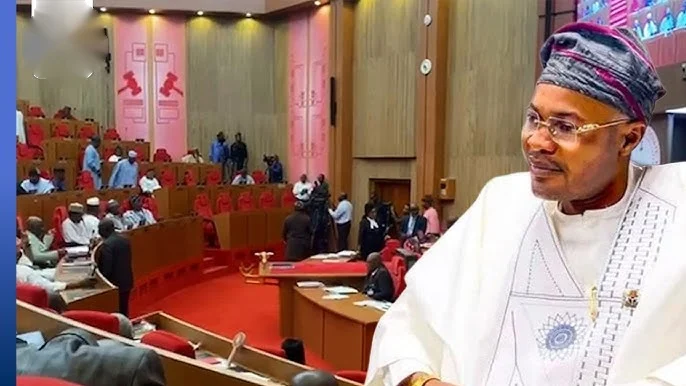
Fresh details have emerged on how the Senate declined a proposal to investigate the controversial N1.3 billion budget allocation made to the Presidential Foreign Intervention Promotion Council (PFIPC), an agency that has since been described by the Presidency as unauthorized.
The development has added a new dimension to the growing controversy surrounding the council and its self-acclaimed Director-General, Prince Adeniyi Adeyemi Matthew.
The scandal has sparked widespread concern after revelations that the PFIPC, despite questions over its legal status, secured a substantial allocation in the 2026 Appropriation Act.
According to an investigative report by Vanguard, the agency was allocated more than N1.3 billion in the approved budget. The report stated that the funds covered personnel costs, allowances, logistics, and other operational expenses.
A breakdown of the allocation showed that over N1 billion was earmarked for recurrent expenditure, while N300 million was designated for capital projects.
The controversy deepened after reports emerged that the agency allegedly operated from an office within the Federal Secretariat in Abuja and engaged with foreign diplomats and international partners despite concerns over its legitimacy.
Questions have also been raised about how the agency found its way into the national budget.
Sources familiar with the appropriation process told news that the council did not pass through the usual budget defence procedure required for government agencies.
Under established parliamentary procedures, ministries, departments, and agencies are expected to appear before relevant committees of the National Assembly to defend their budget proposals before they are approved.
However, the report claimed that PFIPC officials never appeared before the Senate Committee on Establishment and Public Service Matters, which ordinarily oversees agencies within its jurisdiction.
The alleged omission has fuelled suspicions that the budget allocation may have been inserted into the appropriation document without undergoing the normal scrutiny process.
The issue eventually reached the Senate floor following mounting public concern over the allocation.
Senator Suleiman Kawu of Kano South moved a motion seeking a comprehensive investigation into the matter. He argued that the controversy had raised serious questions about the credibility of the nation’s budgeting process and the integrity of legislative oversight.
The lawmaker told his colleagues that Nigerians deserved answers on how an agency reportedly disowned by the Presidency secured public funds through the national budget.
Kawu called for an inquiry into the circumstances surrounding the allocation. He also sought to establish whether any money had been released to the agency and identify those responsible for managing its accounts.
He warned that failure to thoroughly investigate the issue could further weaken public confidence in government institutions.
However, the proposal did not progress.
Deputy Senate President Barau Jibrin, who presided over the session, advised lawmakers against launching a separate Senate investigation at the time.
He noted that President Bola Tinubu had already directed the Independent Corrupt Practices and Other Related Offences Commission (ICPC) to investigate the matter.
Barau said it would be more appropriate for the Senate to await the outcome of the anti-corruption agency’s findings before taking further action.
His position effectively halted debate on the motion and prevented the Senate from commencing its own independent probe.
Despite the setback, Kawu later defended his decision to raise the issue, insisting that the legislature had a responsibility to examine its own processes.
The senator maintained that beyond any executive investigation, the National Assembly must determine how the disputed budget allocation was approved.
He argued that Nigerians have a right to know whether the proposal originated from the Executive or was introduced during the legislative stage of the budget process.
Kawu also stressed the need for transparency regarding any funds that may have been released and the individuals linked to the agency’s financial operations.
Recall that the Presidency had distanced itself from the PFIPC amid mounting allegations surrounding its operations, while directing anti-graft authorities to investigate the circumstances that led to its inclusion in the 2026 budget.


HURMA Commends Tinubu, Security Agents Over Oyo Kidnap Victims’ Rescue, Seeks Stronger Action Against Insecurity

Fire Service Officer Chases Down Trotro To Force Passenger To Retrieve Rubber He Threw Outside

Rep member, Agbese writes Tinubu, rejects NYSC reforms, gives reasons

Rescued Oyo School Pupils, Teachers currently receiving medical treatment – Army

Troops rescue pregnant woman, three others in Kogi, Kwara operations
Candace Owens erupts at Andrew Kolvet’s Erika Kirk defense, calls biblical comparison ‘blasphemous’ and ‘sick’

Fight drug traffickers like terrorists — Zamfara cleric urges FG

 Breaking2 days ago
Mum gives birth in her sleep and nurses don’t find her baby until minutes later under pile of blankets
- Society3 days ago
Madness!! Ghanaian Tiktoker Goes Live On Tiktok To Bath To Gain More Followers And Accumulate Gifts
- Investigation2 days ago
Disturbing comments made by men after man was caught r@ping his wife’s teenage niece in Imo
- Politics3 days ago
Standard, commemorative ₦100 notes remain legal tender, says CBN
- World2 days ago
Horror as woman, 43, abducted from bus stop and gang raped in secluded building
- News3 days ago
Senate rejects motion to probe ‘fake’ PFIPC ₦1.3bn budget
- Investigation2 days ago
Actress Nkechi Blessing Sunday clapsback at trolls âsingle shamingâ her
- News2 days ago
Northern Governors Launch ₦1bn Monthly Security Fund to Fight Insecurity