Breaking
Agric Education: Rethinking students’ research, by Aliyu Ammani

Advertisement
Advertisement
I hold a certificate in Agriculture. I also hold a certificate in Education. From not too far away, I have watched the kind of student research projects produced by Agriculture students in our Faculties of Education and Colleges of Education.
There is an issue concerning research in Nigerian universities that, in my view, deserves reflection, particularly among lecturers and supervisors in Agricultural Education. It concerns the nature and orientation of research projects undertaken by students studying Agriculture within Faculties of Education. Sometimes I conclude that the issue stems from the fact that most of those who founded Agricultural Education in our Faculties of Education were themselves products of Faculties of Agriculture, and they laid the foundation for what we see today.
Let me make my position clear from the outset: I am not suggesting that students of Agricultural Education should not conduct agricultural research. Far from it. Agriculture is the very subject matter they are being trained to teach, and a sound knowledge of agriculture is indispensable to an effective Agricultural Science teacher.
My concern is different. I believe we should occasionally pause and ask: Why is Agriculture being studied in a Faculty of Education in the first place? The question may appear simple, but its implications for students’ research are profound.
A university may have a Faculty of Agriculture where students study Crop Science, Animal Science, Soil Science, Agricultural Economics, Agricultural Extension, etc. At the same time, the university may have a Faculty of Education with a programme in Agricultural Education. Both programmes deal with Agriculture, but they do not exist for precisely the same purpose.
That distinction should therefore be reflected not only in what students learn, but also in the questions they ask when conducting research.
Consider two final-year students interested in maize production. A student in the Faculty of Agriculture may undertake a study on the effect of different fertilizer application rates on maize growth and yield. Such a study is perfectly appropriate. The student is investigating an agricultural production problem and attempting to contribute to knowledge about maize production.
Now imagine an Agricultural Education student conducting essentially the same study, with the same variables, objectives, methodology, and analytical orientation. One might reasonably ask: What makes this an Agricultural Education research project rather than an Agriculture research project?
The question is not intended to suggest that the student has done something wrong. Rather, it invites us to examine whether we are adequately expressing the distinctive purpose of Agricultural Education through the research we supervise.
The Agricultural Education student could, for instance, investigate the effectiveness of practical demonstration in teaching maize production to secondary-school students. Another might examine the effect of experiential learning on students’ acquisition of practical skills in maize production. Yet another might investigate the competence of Agricultural Science teachers in teaching modern maize production technologies. All three studies remain firmly rooted in Agriculture. But their research problem is educational. This, I believe, is the distinction we should be encouraging.
The Agriculture student may ask: How can maize production be improved? The Agricultural Education student may ask: How can knowledge and skills relating to maize production be taught and learned more effectively?
The subject matter is the same. The intellectual purpose is different. Agricultural Education is not simply Agriculture with the word “Education” added to its name. It exists because agricultural education is part of our National Education Curriculum that is expected to be transmitted, taught, learned (including practical competence) and assessed through our formal education system. That is where its distinctive identity lies.
Consequently, when an Agricultural Education student conducts research, there should ordinarily be an educational dimension to the problem being investigated. The research should contribute not merely to what we know about agriculture, but also to what we know about the teaching and learning of agriculture. This could include research on instructional methods, curriculum, teaching materials, educational technology, assessment, teacher competence, students’ learning difficulties, acquisition of practical skills, attitudes toward agriculture, agricultural entrepreneurship education, school farms, vocational competencies, and many other areas.
This is where I believe teachers and supervisors of Agricultural Education have an important role to play. A final-year student often has limited experience in research. The student may naturally choose a topic because it sounds interesting, because someone has previously conducted a similar study, or because a research instrument is readily available.
The supervisor, however, sees the bigger picture. A supervisor should therefore not merely ask whether a proposed research topic is technically feasible. It may also be useful to ask: Is this research sufficiently consistent with the identity of the programme?
If an Agricultural Education student proposes exactly the kind of research that a student in the Faculty of Agriculture could conduct without substantial modification, perhaps the supervisor should pause and ask the student to reconsider the orientation. This does not necessarily mean rejecting the subject matter. It may mean changing the research question.
A study on poultry production, for example, could investigate feed formulation and growth performance in the Faculty of Agriculture. In Agricultural Education, the same subject could provide the basis for research into the effectiveness of practical instruction in poultry production, students’ acquisition of poultry-management skills, teachers’ competence in delivering poultry-production lessons, or the effectiveness of school-based practical activities. The agriculture remains. The educational purpose becomes visible.
There is another issue worth considering. If Agricultural Education students repeatedly produce research projects that are essentially replicas of those conducted by students in Faculties of Agriculture, we may unintentionally weaken the distinctiveness of Agricultural Education as an academic discipline.
There is nothing wrong with an Agricultural Education student researching maize, poultry, livestock, soil, farm management, or agricultural entrepreneurship. The question is whether the student is approaching these subjects primarily as an agricultural scientist, or primarily as an education researcher interested in formal agricultural knowledge and skills. I use the word “formal” to distinguish Agricultural Education from Agricultural Extension. My argument is about orientation and consciousness.
Perhaps supervisors should simply encourage students to ask three questions when developing their research topics:
1. What aspect of Agriculture am I investigating?
2. What is the educational problem or question associated with it?
3. What will my research contribute to Agricultural Education that a conventional Agriculture research project would not?
If students are encouraged to think along these lines, we may begin to see research projects that are simultaneously agricultural and educational, rather than simply agricultural research carried out by students who happen to be enrolled in a Faculty of Education.
Every discipline within a university should be able to explain what distinctive contribution it makes to knowledge. Agriculture has its own contribution. Education has its own contribution. Agricultural Education should therefore have a contribution that emerges from the intersection of the two. It should stand confidently at the intersection of Agriculture and Education, drawing from both while developing its own distinctive intellectual space.
The fact that Agriculture is studied in a Faculty of Education should mean that agricultural knowledge is being examined not only from the perspective of production, but also from the perspective of education.
Perhaps, the question we should occasionally ask ourselves is not “Is this an agricultural research topic?” Rather, it should be “What makes this an Agricultural Education research topic?” That simple question could make a significant difference to the quality, relevance, and identity of research emerging from our Faculties of Education.
After all, the Agriculture student is primarily asking how agriculture can be understood, improved, or practised. The Agricultural Education student should also be asking how that agricultural knowledge and those agricultural skills can be effectively transferred to the next generation. That is not a small distinction. It may well be the very reason Agricultural Education exists.
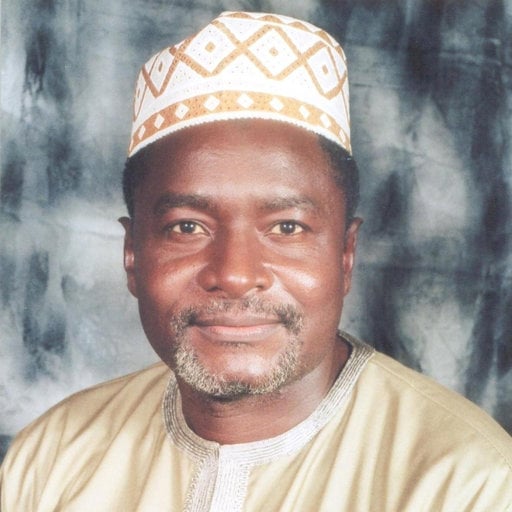
Prof Ammani writes from Ahmadu Bello University, Zaria


University soccer star Karoline Heintz stabbed to d£ath by her boyfriend and his mum helped dispose of body

Prince Harry, Elton John, and others told to pay £9,500,000 to Daily Mail

You have to set boundaries – Father charged with abusing his 3-month-old daughter says it was ‘training’

Troops arrest suspected female gunrunner, recover AK-47 rifle and magazines in Plateau

President Tinubu orders arrest, suspends three perm secs as ICPC uncovers fake agency

Family and friends celebrate as Nigerian woman welcomes her first child after 20 years of waiting

My ex-husband punched me repeatedly one month and two weeks after childbirth – Nigerian woman details her alleged ordeal in marriage

 News2 days ago
Oyedele Reveals How Reforms Generated ₦15.8tn for Nigeria
- Investigation2 days ago
MC Oluomo is the only married man I have dated. I do not snatch peoplesâ husband – Interior Designer, Ehi Ogbebor (video)
- Investigation2 days ago
Iâve gone through a lot with this woman – Ugandan man speaks from hospital bed after his allegedly wife poured hot water on him during midnight domestic dispute (video)
- News2 days ago
Lagos Declares Thursday Holiday for Ìṣẹ̀ṣe Day Celebration
- Investigation2 days ago
Poco Leeâs r@pe case, I can tell you 100% he didnât do anything. Such allegation has happened to me – Singer, Mr Real
- Investigation1 day ago
North Koreaâs leader, Kim Jong-unâs sister denies knowledge of talks with Trump
 Investigation3 days ago
Better start crying, you canât defeat Tinubu in 2027 – Wike to opposition
- Investigation1 day ago
Moment Asherkine drove off with a tout clinging to his car while begging him for money