News
Kwara unveils training to boost agricultural productivity, food security

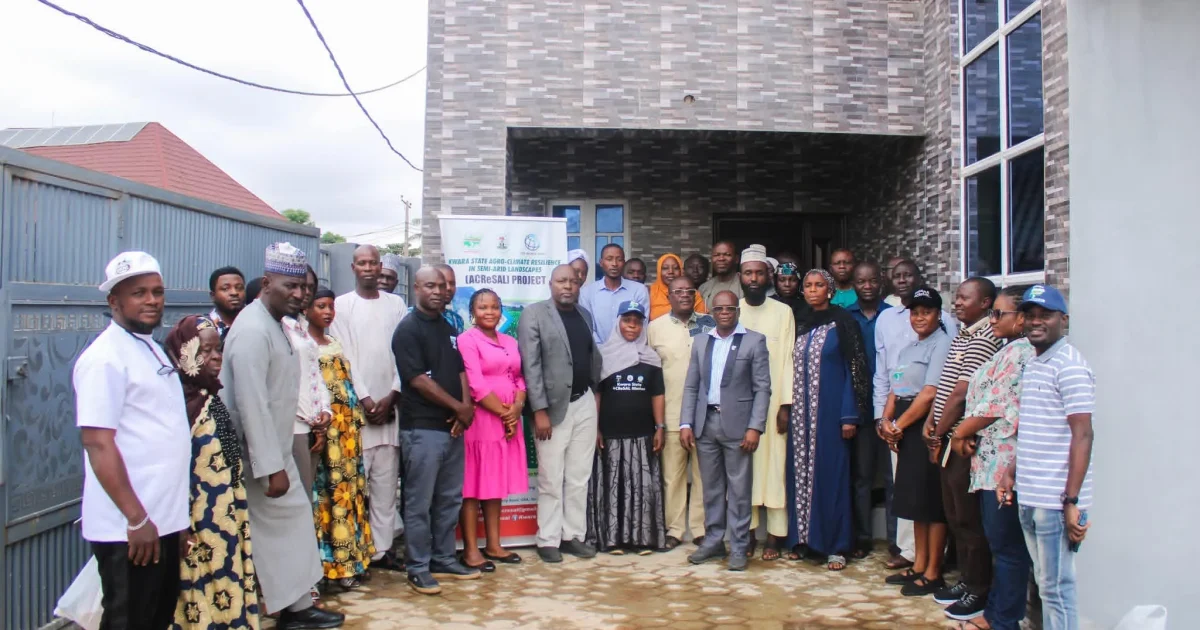
The Kwara State Government has commenced the training of agricultural extension agents and selected farmers on climate-smart agricultural practices in a renewed effort to improve agricultural productivity, strengthen food security and build farmers’ resilience to the effects of climate change across the state.
The initiative was disclosed in a statement issued on Wednesday by the spokesperson of the Kwara State Agro-Climatic Resilience in Semi-Arid Landscapes Project, Okanlawon Taiwo, in Ilorin.
The statement said the exercise was being implemented in collaboration with the National Agricultural Extension and Research Liaison Services, Ahmadu Bello University, Zaria, and the International Institute of Tropical Agriculture, Ibadan.
According to the statement, the training was preceded by a one-day technical meeting between officials of NAERLS, IITA and the KWACReSAL State Project Management Unit to review implementation strategies and fine-tune plans for the rollout of climate-smart agriculture interventions across the project’s three catchment areas.
It stated that the meeting centred on the establishment of demonstration plots, Farmer Field Schools, certified seed production, extension service delivery, digital monitoring systems and implementation timelines, with stakeholders harmonising operational strategies ahead of field activities.
The statement added that the visiting delegation later paid separate courtesy visits to the management of the Kwara State Ministries of Environment and Agriculture and Rural Development to deepen institutional collaboration and seek government support for the successful implementation of the intervention.
It noted that the engagements culminated in a Training of Trainers programme held at the KWACReSAL State Project Management Unit office in GRA, Ilorin, with participants drawn from agricultural institutions, extension services, local government councils, farming communities, the Ministries of Environment, Water Resources, Agriculture and Rural Development, the Kwara Agricultural Development Project and members of the ACReSAL technical team.
Addressing participants at the opening of the training, the State Project Coordinator of KWACReSAL, Shamsideen Aregbe, described the programme as a strategic investment aimed at transforming agriculture and improving the capacity of extension workers to support farmers with climate-smart technologies.
He said, “This programme is a strategic investment in the future of agriculture in Kwara State. The success of the ACReSAL Project depends largely on knowledgeable extension agents’ enhanced capacity to transfer climate-smart technologies to farmers across the state.
“The training is deliberately designed to expose participants to innovative agricultural technologies and best practices that would increase crop yields, improve soil health and ensure better harvests despite the growing challenges posed by changing weather patterns.
Aregbe described extension agents as the vital bridge between research institutions and farming communities, stressing that they would be responsible for providing continuous technical guidance, mentorship and follow-up support to farmers during the implementation of the project.
The project coordinator further urged participants to pay close attention to every presentation, comply with recommended agronomic practices and replicate the knowledge gained in their respective communities to ensure wider adoption of climate-smart farming techniques.
“Pay close attention to every presentation, adhere strictly to recommended agronomic practices and replicate the knowledge gained within your respective communities to achieve the desired multiplier effect,” Aregbe added.
He also expressed confidence in the expertise of the resource persons from NAERLS and IITA, saying the collaboration reflected the ACReSAL Project’s commitment to deploying science-based and climate-resilient agricultural solutions capable of transforming livelihoods and improving food security in the state.
Speaking during one of the technical sessions, an engineer with NAERLS, Luqman Durojaiye, said the increasing effects of climate change had continued to disrupt conventional farming through erratic rainfall, prolonged dry spells and declining soil productivity, making climate-smart agricultural practices more important than ever.
“Climate change has continued to alter traditional farming systems through erratic rainfall, prolonged dry spells and declining soil productivity, making the adoption of climate-smart agricultural practices imperative,” Durojaiye said.
He explained that the intervention would utilise Farmer Field Schools, Mother Demonstration Plots, Baby Demonstration Plots and Local Government Demonstration Farms as practical learning centres where farmers would observe, assess and adopt improved technologies suitable for their local environments.
According to him, the demonstration plots would enable farmers to compare improved technologies with existing practices while encouraging wider adoption of innovations capable of increasing yields and improving resilience.
“Selecting technologies based on prevailing soil and climatic conditions remains essential for achieving sustainable agricultural productivity, while collaboration among extension agents, researchers, local government authorities and farming communities is equally important to the success of the intervention,” he added.
Also speaking, an IITA resource person, Dr. Akeem Ajeigbe, unveiled the implementation framework for establishing demonstration plots across participating local government areas.
“Each local government area will have a centrally located Mother Demonstration Plot supported by twenty-five Baby Demonstration Plots to facilitate practical learning and rapid adoption of climate-smart technologies by farmers,” Ajeigbe said.
He noted designated Extension Experts would supervise the demonstration plots, provide technical guidance and monitor implementation throughout the farming season to ensure compliance with recommended agronomic practices.
Ajeigbe added that digital reporting applications and virtual training platforms would be deployed to strengthen monitoring, evaluation and communication, while extension workers would receive continuous technical support from IITA.
He reaffirmed the institute’s commitment to working with NAERLS, KWACReSAL and other technical partners to deploy improved crop varieties, promote certified community seed production, encourage microdosing fertiliser application and strengthen sustainable farming systems across the project’s catchment communities.
The IITA expert said the intervention, expected to run for an initial implementation period of 10 months, would focus on improving farmers’ resilience, increasing agricultural productivity and entrenching sustainable climate-smart farming practices capable of delivering long-term benefits to rural communities.






EFCC lacks power to freeze Osun statutory account — Attorney-General

Oyo achieves 77.5% half-year budget performance, unveils transport plan

Man arrested after Irish woman allegedly raped in Algarve holiday resort

Woman arrested after four men stabbed in Covent Garden

Donate my kidneys and eyes to persons in need â Ailing filmmaker Ola Balogun instructs in will

Court Freezes WEMPCO Accounts Over ₦61.45bn UBA Debt as Executives Face Jail

Rihanna Wows Fans With Eye-Catching Carnival Look in Barbados (Photos/Video)

 Investigation23 hours ago
âWhat kind of brother talks like this?â- Designer, Toyin Lawani slams Jude Okoye over comments about brother Peter’s solo career
- Investigation1 day ago
âI hand over everything to God. You will be in my prayersâ – Jude Okoye responds after brother Peter makes more allegations against him
- Society18 hours ago
Man Claims He Lost ₦1 Million After Using Roadside POS
- Investigation18 hours ago
US firm initiates moves to stop Tinubuâs meeting with Trump at UN General Assembly
- Investigation17 hours ago
2027: Weâll do whatever Tinubu wants us to do at the field â Rotimi Amaechi
- Breaking14 hours ago
"Iâm the mother of a one-year-old, I’m flying her to London for her birthday partyâ â Toke Makinwa says in video
- National11 hours ago
Court freezes WEMPCO accounts as executives face jail over ₦61.45 billion UBA debt
- Investigation3 days ago
Music executive, Jude Okoye responds to brother Peter Okoyeâs financial misconduct allegations video)