World
Mayor says LAPD should stop using Flock devices; concerned data is used for deportations

This Video Is Trending Right Now
Mayor Karen Bass said Thursday that the LAPD should stop working with Flock Safety, warning that the company, which operates AI-enabled license plate readers that allow authorities to monitor vehicles around the city, had lost public trust.
In her most forceful comments to date on the topic, Bass said while she supports license plate reading technology generally as a tool for law enforcement, Flock had “lost the trust of Angelenos and residents across the country, especially in immigrant communities targeted by the federal administration.”
“There are many companies that provide this technology to cities nationwide,” Bass said in a statement. “The LAPD needs to identify another company that doesn’t share data.”
LAPD officials have said Flock’s technology enables investigators to solve crimes, helping to find vehicles that have been reported stolen or linked to suspects. Last month, the department announced it was pausing its relationship with Flock, but police officials later said they were in the process of negotiating a new deal with the company that would include more data sharing and collection safeguards.
Dozens of mostly smaller cities have deactivated their Flock cameras or ended their contracts with the company over concerns that it provides data to the Trump administration that can be used to track down immigrants for deportation.
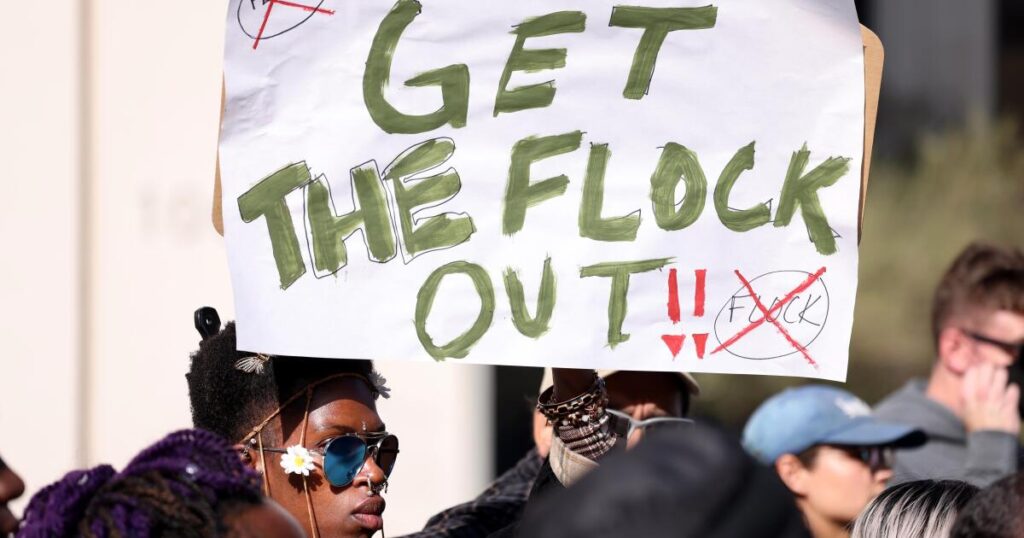
Bass joined the chorus of activists and local officials calling for the LAPD to end its relationship with the company outright.
Her opponent in the November mayoral election, Nithya Raman, said last week on the social media platform X that the city should “cut ties with Flock Safety.”
“Cities across the country are canceling their Flock contracts over the risks its license plate readers pose to privacy, civil liberties, and immigrant communities,” Raman’s post read.
Last month, Bass signed an ordinance that prohibits city personnel from providing anyone outside local government access to data that can be used to determine someone’s immigration status.
A recent Washington Post report uncovered at least 50 instances nationwide in which law enforcement officials were accused of misusing their access to the cameras, largely to stalk former romantic partners or citizens.
A report issued last month by the LAPD inspector general’s office found numerous “limitations” in the department’s existing agreements with its three plate reader vendors — Flock, Axon and Motorola — including a lack of clear language about how long the data are retained and how they are shared with third parties or other law enforcement agencies.
The inspector general recommended that the department update its current license plate reader contracts to address data security and privacy concerns, conduct regular audits and develop standardized rules for traffic stops based on plate reader hits.
Flock has said its customers decide who can access data from their cameras. The company said it doesn’t have contracts with the U.S. Immigration and Customs Enforcement, adding that has taken other steps to assuage public concern, such as barring federal agencies from its lookup tools and restricting immigration-related searches to ensure compliance with laws in California, Washington and other states.
In an interview with ABC7 last month, Flock CEO Garrett Langley said the company had to “tighten up the police and make sure everyone’s aligned and then turn it back on. He said the company retains the data from its plate readers for only 30 days and denied that its cameras employ facial recognition software as some of its critics have suggested.
During a virtual listening session hosted last week by the inspector general’s office, dozens of people sounded off on the department’s use of Flock cameras.
Some speakers, mostly from the fire-ravaged community of Pacific Palisades, supported the use of cameras to deter burglars who have repeatedly hit homes and construction sites in the area.
Jennifer Wolfe, who identified herself as a teacher in Altadena, another community devastated by the 2025 wildfires, urged Flock’s supporters to consider how “surveillance systems can grow far beyond their intended purpose.”
Locating stolen cars is important, she said, but people should be more concerned by this newfound and unchecked ability for the government to collect “vastly more information, with far less effort.”


New Zealand politician caught joining city council meeting from bathroom with underwear drying

Trump endangers immigrant children in corrupt deal

Mayor says LAPD should stop using Flock devices; concerned data is used for deportations
Mayor says LAPD should stop using Flock devices; concerned data is used for deportations

Ken Paxton attempts to save his rally by distracting the audience

Help find this missing person – Kachi Onuekwusi

I was called barren and a witch who ate all the children in her womb – Nigerian woman writes as she welcomes first child after 14 years of waiting

 Investigation2 days ago
âWhat kind of brother talks like this?â- Designer, Toyin Lawani slams Jude Okoye over comments about brother Peter’s solo career
- Investigation1 day ago
Japa: Canadaâs Ontario opens new permanent residence programme for foreign workers
- Society2 days ago
Man Claims He Lost ₦1 Million After Using Roadside POS
- Investigation2 days ago
2027: Weâll do whatever Tinubu wants us to do at the field â Rotimi Amaechi
- Investigation3 days ago
âI hand over everything to God. You will be in my prayersâ – Jude Okoye responds after brother Peter makes more allegations against him
- Politics2 days ago
Maintain political neutrality, Wike urges religious leaders
- Investigation2 days ago
US firm initiates moves to stop Tinubuâs meeting with Trump at UN General Assembly
- Breaking2 days ago
"Iâm the mother of a one-year-old, I’m flying her to London for her birthday partyâ â Toke Makinwa says in video