Investigation
Microsoft founder Bill Gates proposes âhuman reservedâ jobs and a tax on AI tokens

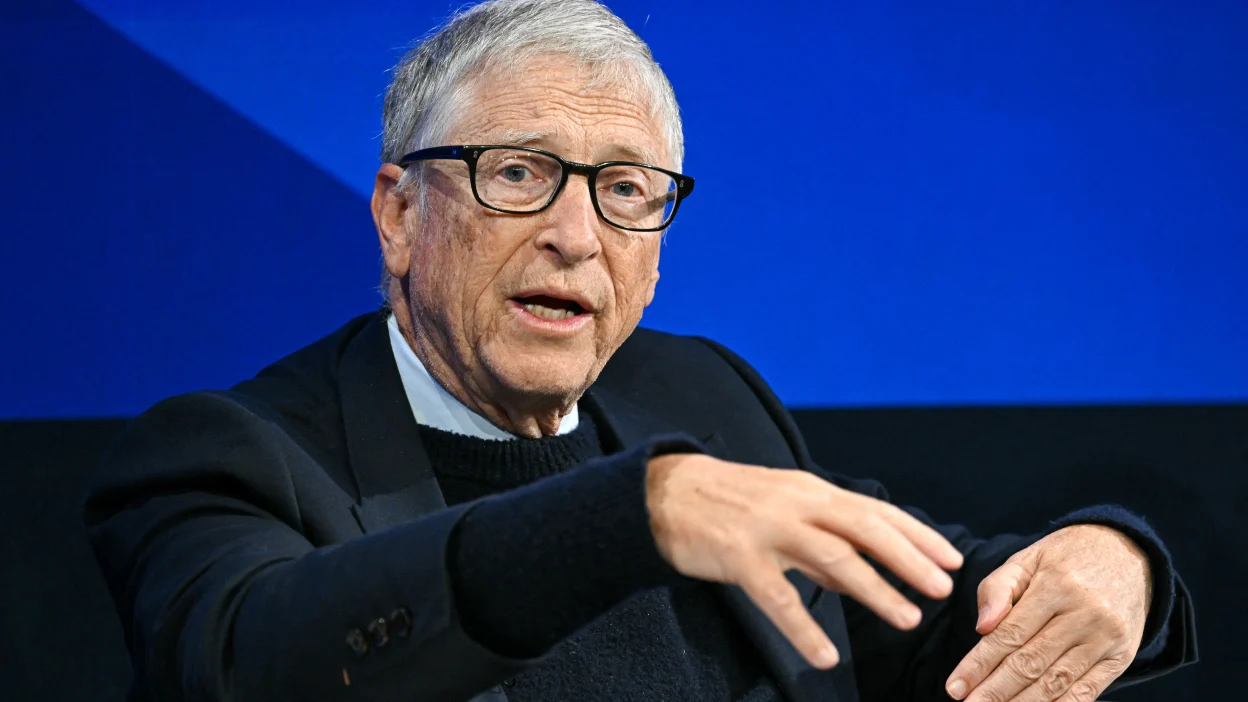

Bill Gates has called for governments to take urgent action to manage the economic and social disruption that could result from artificial intelligence, arguing that AI could either become a major force for equality or deepen existing inequalities.
In a roughly 6,000-word essay published on his Gates Notes website, the Microsoft co-founder outlined concerns about the speed at which AI could transform the labour market and proposed several measures to reduce the disruption.
One of his most notable proposals is a new tax on AI, which he calls a “token tax.” Gates argues that the current tax system can encourage companies to replace workers with machines because businesses pay payroll taxes on human employees, while AI tools and systems can instead be treated as business expenses. As Gates puts it, “The tax system nudges you toward replacing people with machines.”
He believes an AI-specific tax, alongside his previously proposed tax on robots, could slow the impact of automation on employment while generating money for retraining workers and strengthening social safety nets. Gates also argues that the system could be designed so that it does not discourage what he considers beneficial applications of AI, such as using the technology to make healthcare and education cheaper.
Another major proposal is the creation of “Human Reserved” jobs, roles that would deliberately remain reserved for people even when machines become technically capable of performing them. Gates said some jobs might need to remain human because replacing workers would create severe economic disruption, particularly for people who cannot easily transition into entirely different careers.
He explained: “We might set something aside as Human Reserved for economic reasons. For example, we may do it because allowing machines to take over a certain role will displace a large number of people who can’t easily change jobs. You can’t tell a 55-year-old who has worked in construction their whole career that they need to go work at an elder care facility and expect them to find it fulfilling.” He also believes some roles should remain human for reasons beyond economics, particularly jobs involving care and deeply personal interactions.
“Sometimes the decision to make something Human Reserved will be driven by other factors. In health, for example, imagine a robot giving you the awful news that you have an incurable disease. There’s no technical reason why it couldn’t. Yet it shouldn’t.”
Gates used caregiving as a particularly important example. He wrote that his father received 24-hour care before dying from Alzheimer’s disease in 2020 and argued that there was something about that care that technology could not reproduce. “Something in the care they gave my dad was irreplaceably human,” Gates wrote. “No robot could or should have done it.”
The proposal comes as concerns about AI-driven job losses continue to grow. AI executives themselves have previously warned that large numbers of jobs could disappear as the technology becomes more capable. OpenAI CEO Sam Altman previously said, “Entire classes of jobs will go away and not come back,” while Anthropic CEO Dario Amodei has warned that AI could eventually eliminate a substantial proportion of white-collar employment.
Gates argues that the coming disruption could be significantly faster than previous technological transformations. He contrasts AI with the personal computer, which took decades to fundamentally reshape workplaces and everyday life.
With AI, however, existing computers, phones, software platforms and business systems can potentially adopt the technology much more rapidly. Gates therefore expects many entry-level and mid-level jobs to be affected before workers and institutions have enough time to adjust. His concern is not simply whether AI itself is good or bad, but who benefits from it and who bears the costs.
Gates remains optimistic about AI’s potential in areas including healthcare, education, agriculture, scientific research, government services and small businesses. However, he fears that people and countries that already possess wealth and power could capture most of the benefits while vulnerable communities and displaced workers absorb the economic consequences.
He argues that preventing this outcome should become a major global priority because, “if the world takes the right steps, AI will be a force for good and leave everyone better off.” Gates believes governments should therefore intervene before the effects become too difficult to manage rather than leaving the transition entirely to market forces.
He proposes creating new national and international institutions specifically to manage the AI transition, establishing “Human Reserved” positions where appropriate, and changing tax rules so that companies are not financially encouraged to replace workers with AI and robots.
He also acknowledges that deciding which jobs should remain exclusively human would be difficult. Robots might eventually be capable of constructing houses, for example, but that raises questions about what happens to skilled construction workers. AI may be able to deliver information efficiently, but that does not necessarily mean it should replace teachers who provide motivation, empathy and personal support.
The underlying argument is that technical capability should not automatically determine what society chooses to automate. Gates believes the chances of a net-negative outcome from the AI transition are currently “very high”, particularly if technological development moves faster than governments, workers and institutions can adapt.
He expects significant disruption across fields including medicine, law, middle management and manufacturing over the next decade, in addition to areas such as sales, customer service and software engineering that are already being affected by AI.
He has also expressed concern about younger workers entering the labour market. If AI takes over many entry-level tasks, there could be fewer opportunities for people to gain the experience traditionally required to progress into higher-level positions. That is why Gates argues that “this unprecedented technology demands an unprecedented global response.”
He wants a domestic and international framework for managing AI’s transition, but acknowledges that developing such a framework will be difficult. He argues that the process should be democratic and involve elected officials, policymakers, educators, healthcare workers, local authorities and community leaders.

EFCC offers 5% reward for leads on stolen assets abroad

1,490 Corps Members Get Surprise Boost in Kogi

Eight travellers killed, eight abducted in Zamfara highway attack

FG pauses foreign scholarships as it redirects funds locally

Nursing mother suffers burns after stepmother allegedly poured hot water on her
I know my husband. He did not r@pe or k!ll Favour. I stand with him 100% – Wife of content creator, Odogwu Assaba breaks her silence

Microsoft founder Bill Gates proposes âhuman reservedâ jobs and a tax on AI tokens

 Investigation3 days ago
How I survived as my husband and two children di£d after eating amala â Widow speaks
- Investigation2 days ago
Former BBNaija star Ike Onyema issues warning amid photographer David Martins and wife Alicia Daniellaâs drama; claims that gospel singer Neon Adejo flirted with Alicia
- Society3 days ago
Truck Driver Documents How Police At Tema Harbour Entrance Demand ¢20 Bribes But “Kills” Stubborn Drivers Who Fail To Pay
- National2 days ago
Adeleke disburses N500m to victims of election violence
- Investigation2 days ago
Kano man opens fire at neighbourâs wedding ceremony over loud music, k!lls one guest and injures four others
- Investigation3 days ago
Oby Ezekwesili reveals âonly achievementâ recorded under Tinubu
- Breaking3 days ago
Edo Assembly converts ex-Speaker’s “resignation” to impeachment
- Investigation3 days ago
Why I declined House of Reps ticket â Aisha Yesufu