News
Tinubu promises cheaper transport fares from Oct, okays rollout of 500 CNG stations

President Bola Tinubu has announced plans to reduce transportation costs across the country from October 1 by leveraging cheaper Compressed Natural Gas (CNG) and electric vehicles.
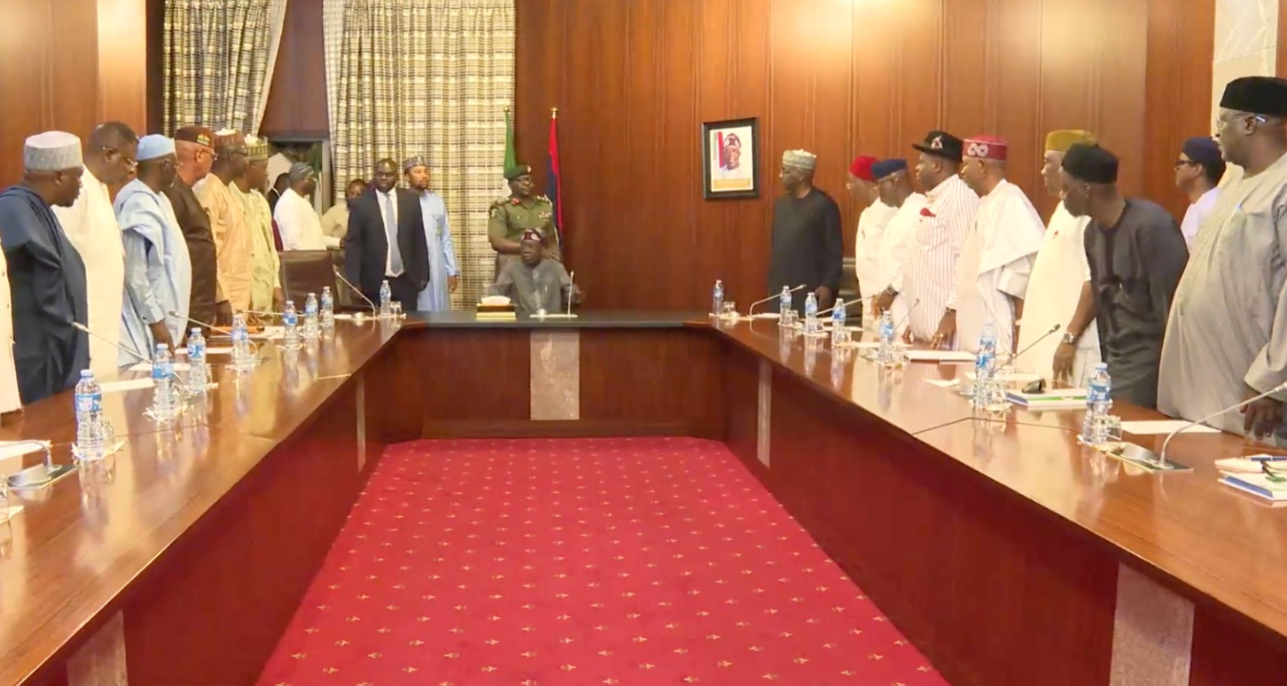
Tinubu disclosed this on Thursday after meeting with state governors at the Presidential Villa in Abuja, saying the Federal Government and the governors had agreed to take immediate steps to reduce transport fares in their respective states.
According to the president, a joint Federal and State committee will begin implementing the measures immediately.
“I am pleased with my discussion with the Governors’ Forum this afternoon. The governors have, on their own initiative, resolved to take immediate measures to bring down the cost of transportation in their states, with a strong focus on leveraging the cost benefits of CNG and electric vehicles,” Tinubu said.
He said the Federal Government was already investing in the energy transition through the Presidential CNG Initiative, noting that more than 120,000 vehicles had been converted nationwide, with over 100,000 additional conversion kits being prepared.
Tinubu also said the government was expanding CNG conversion centres and refuelling infrastructure across the country.
He disclosed that the Federal Government, through the Midstream and Downstream Gas Infrastructure Fund, was financing more than 100 gas projects, including 15 CNG mother stations and 86 daughter stations.
The president said he had directed the rollout of an additional 500 CNG refuelling stations nationwide, on top of the 500 stations earlier ordered.
According to Tinubu, intra-state transportation accounts for a significant portion of the burden faced by Nigerians, with state governments having greater influence over the sector.
“We have agreed to set up a joint Federal and State committee to begin implementing these measures immediately. A vehicle running on CNG spends 60 to 80 per cent less on fuel than one running on petrol.
“From October 1, our goal is that Nigerians begin to partake in those savings through lower transport fares. We have agreed that cheaper fuel should result in cheaper fares,” he said.
The announcement comes amid an ongoing debate over fuel subsidy between the Presidency and former Vice-President Atiku Abubakar, the African Democratic Congress (ADC) presidential candidate for the 2027 election.
Atiku has proposed restoring a redesigned fuel subsidy regime that would subsidise crude supplied to Nigerian refineries rather than imported petrol.
Reacting to Tinubu’s announcement, Atiku’s Senior Special Assistant on Public Communication, Phrank Shaibu, described the move as a reaction to the former vice-president’s subsidy proposal.
Shaibu said the president’s announcement was “not policy innovation” but “panic dressed in presidential grammar.”
He argued that Atiku had already proposed measures aimed at reducing energy costs and restoring Nigerians’ purchasing power.
“CNG is useful, but it cannot become an alibi for three years of economic punishment,” Shaibu said, arguing that the government needed to address the immediate burden of high transportation and food costs.
Meanwhile, state governors have expressed support for the proposed National Affordable CNG Transit Programme (NACTP), which is aimed at reducing transportation costs through the adoption of CNG-powered vehicles.
The governors, under the Nigeria Governors’ Forum (NGF), said the initiative would require state support for vehicle conversions, fleets and other infrastructure, alongside commitments from transport operators to reduce fares.
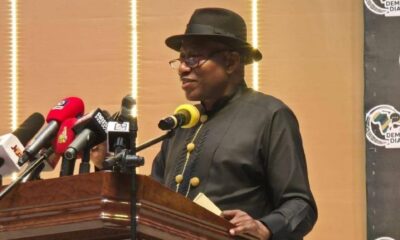
Bayelsa State Governor Douye Diri, who read the communiqué issued after the governors’ meeting in Abuja, said rising transportation costs had contributed significantly to inflation.
He said the governors would work with the private sector to increase the number of CNG-powered vehicles in the country.
“Gas is cheaper than petrol, which will actually reduce the costs of transportation,” Diri said.
He added that lower transport costs would have a multiplier effect across other sectors of the economy.
The governors, however, said details of the financing and implementation framework for the NACTP would still be worked out between the Forum and the programme’s proponents.






Nigerian Elderly Woman Caught Stealing At Ashaiman Market, Begs For Forgiveness

Army raids Boko Haram/ISWAP camp in Adamawa, kills 21

Troops k!ll 21 terrorists, destroy Boko Haram/ISWAP camp in Adamawa

Camera captures daycare worker putting wet wipes in kidsâ mouths and âslammingâ child on table

Man arrested for alleged s3xual @buse of eight-month-old baby

Police rescue ab@ducted Kwara monarch and 2 others

DSS arrest arms supply kingpin, dismantles terroristsâ networks in Katsina and Nasarawa

 Investigation3 days ago
Former BBNaija star Ike Onyema issues warning amid photographer David Martins and wife Alicia Daniellaâs drama; claims that gospel singer Neon Adejo flirted with Alicia
- Investigation3 days ago
K!ller Robots could target humans â UN and Red Cross warn
- Investigation3 days ago
Kano man opens fire at neighbourâs wedding ceremony over loud music, k!lls one guest and injures four others
- Society2 days ago
Government Of Ghana Declines MTN’s GH¢20 Million Donation For Victims Of South African Xenophobic Attacks
- National3 days ago
Osun: Oyetola condemns post-election violence, calls for justice
- Investigation3 days ago
Judge rejects Ghislaine Maxwellâs bid to throw out conviction for aiding Jeffrey Epstein s3xually abuse teenage girls
- Investigation2 days ago
No African university in worldâs top 100 – Good luck Jonathan laments
- News2 days ago
Naira Holds Firm as Dollar Stays Near ₦1,347