Breaking
Hausa Zalla, history and identity in Nigeria, by Dr. Hussaini Abdu

Advertisement
Advertisement
This piece was originally intended to mark Hausa Day on 26 August 2026, but I held off publishing when I learned that Farooq Kperogi and colleagues had scheduled their “Diaspora Dialogue” session on the same subject. With an array of professors lined up to lead the conversation, I chose to wait and listen first. Not all the announced speakers ultimately joined, but the discussion was thoughtful and well managed. This is no small feat given how emotive a subject like this can become.
A few days before that, a friend and former colleague in academia, who is conversant with my research interest in Identity Politics, had called to ask my perspective on what is increasingly being described as Hausa Zalla: the emerging agitation for, and assertion of, an independent or exclusive Hausa identity. What was once a peripheral conversation has, over the past few years, grown into a significant and increasingly fraught debate within “Hausa-Fulani” communities. It has also opened up a wider conversation about history, identity, political power, religion, and the nature of the relationship between the two groups. We spoke for over thirty minutes, openly and at length, and I promised him I would put something in writing to help guide further discussion. This piece is that attempt.
I am approaching this issue not as an expert or a historian and certainly not as someone attempting to settle the historical arguments about the origin, nature and dynamics of Hausa and Fulani identities. I am approaching it as a student of political economy and identity politics.
I am therefore not interested in who is historically right. My interest is largely in why this identity is becoming politically salient now. What grievances are producing it? Who is mobilising it? What interests does it serve? What could its consequences be for the political and social order of northern Nigeria? These are questions I have also touched upon, albeit in a limited way, in my soon-to-be-released book, State of Anarchy: Politics, Violence and Disorder in Nigeria. I am aware, like Professor Toyin Falola noted, that this conversation is not peculiar to Nigeria, as both Hausa and Fulani are transnational ethnic groups. I believe the Hausa Zalla debate needs to be understood within this broader framework. Identity is never simply about ancestry. It is also about power, recognition, representation, resources and belonging.
Hausa Zalla’s Case
First, let us look at the key arguments from both sides of the divide. Proponents of Hausa Zalla advance several strands of argument. I do not necessarily subscribe to all of them, nor do I dispute them. They, however, deserve to be understood on their own terms.
The first is the assertion that the Hausa are an ethnic group, organically and historically distinct from the Fulani. According to this argument, the long association between the two peoples has sometimes been presented in ways that distort this distinction. In this telling, the Hausa are not simply a linguistic category or a cultural identity that anyone who speaks the Hausa language can claim. They constitute a distinct historical community with its own political traditions, institutions and collective identity.
The second strand concerns the history of the Sokoto Jihad of the early nineteenth century. A growing body of Hausa Zalla discourse interprets the jihad not as a purely religious movement but more as a Fulani political revolt against the Hausa ruling establishments of the time. The argument is that Hausaland was already substantially Islamised before the jihad and that, therefore, the jihad cannot simply be understood as an attempt to introduce Islam into a largely non-Muslim society. Rather, proponents argue, religion provided the ideological framework through which a political transformation took place.
From this perspective, the jihad fundamentally altered the political balance in Hausaland. It displaced or subordinated many existing Hausa ruling establishments and established a new political order in which Fulani elites became dominant in many emirates. The argument is not that every element of the jihad was motivated by ethnicity, but that its political consequences created a durable hierarchy between Hausa and Fulani elites.
The third argument extends this historical interpretation into the colonial and postcolonial periods. According to the Hausa Zalla perspective, British colonial rule did not fundamentally reverse the political hierarchy created by the jihad. Instead, the colonial system institutionalised and, in some respects, strengthened existing emirate structures and political elites. The postcolonial Nigerian state, in this reading, subsequently reproduced many of these patterns through politics, traditional institutions and the bureaucracy.
This brings us to perhaps the most contentious aspect of the argument: Islam as the social glue between the Hausa and Fulani. Hausa Zalla proponents increasingly contend that Islam, which historically brought the two communities into a shared religious and cultural space, has also become an instrument through which existing political and social hierarchies are reproduced. They point to the prominence of Fulani elites within traditional institutions, religious establishments, politics and parts of the bureaucracy and argue that religious solidarity is sometimes invoked to discourage questions about ethnic representation and political power.
The fourth argument, therefore, is about identity and representation. Proponents believe that the Hausa have, over time, been persuaded, or compelled, to accept a political and historical identity that does not adequately reflect their distinctiveness. They are particularly critical of the expression “Hausa-Fulani,” which they regard not as an accurate description of two closely associated but distinct peoples, but as a political construction that has served to obscure the numerical and political interests of the Hausa.
One of their strongest objections is to the increasingly common argument that “Hausa is merely a language rather than an ethnic group”. To the advocates of Hausa Zalla, this amounts to rewriting history. They argue that while millions of people who are not ethnically Hausa speak Hausa, the existence of a Hausa language does not invalidate the existence of a Hausa people, just as speaking English does not make someone ethnically English or extinguish the English or French people.
From this perspective, their answer is straightforward: the Hausa must reclaim and assert their identity, strengthen their political representation and become more conscious of their historical position. Some advocates (Hausa Tsantsa) go further, arguing that the traditional institutions of Hausaland should be reassessed and that leadership of emirates historically associated with Hausa communities should, where appropriate, return to Hausa custodianship.
A Counter to Hausa Zalla
However, an increasingly strong reaction is emerging against this position. Those who oppose, or are deeply concerned about, Hausa Zalla do not necessarily deny that Hausa and Fulani have distinct historical origins. Their concern is that the movement is turning historically complex relationships into rigid ethnic boundaries and, in the process, creating a potentially dangerous form of political mobilisation.
Their first argument is that Hausa and Fulani have become deeply intertwined over centuries. Geography, Islam, migration, trade, political alliances and, above all, intermarriage have produced a social reality in which it is increasingly difficult to identify large numbers of people as exclusively Hausa or exclusively Fulani. In many communities, identities overlap. Families have Hausa and Fulani ancestry. People may have one ethnic identity by ancestry, another by language and yet another by cultural or political affiliation. For this group, therefore, the attempt to establish a rigid distinction between Hausa and Fulani risks imposing categories on a social reality that has become much more complicated. Their argument is essentially that history has already done what contemporary identity politics is attempting to undo.
The second concern is the timing. Northern Nigeria is experiencing perhaps its most severe security crisis in a century or two. Insurgency, banditry, kidnapping, communal violence, displacement and the emergence of new extremist networks have weakened social cohesion across large parts of the region. Critics therefore worry that the increasing mobilisation of Hausa identity against Fulani identity could introduce another layer of conflict into an already volatile environment. They fear that a conversation which begins as an attempt to reclaim history could gradually become a politics of exclusion, raising questions about who belongs, who owns particular territories and who has the legitimate right to occupy traditional or political institutions.
The third argument concerns the political consequences of weakening what some regard as the historical Hausa-Fulani political and cultural compact. For generations, Hausa and Fulani have formed an important social and political bloc in northern Nigeria. Although the relationship has never been free of tension or inequality, the two communities have also developed a shared political, cultural and religious space. Those opposed to Hausa Zalla worry that deliberately dismantling this relationship could weaken northern Nigeria politically at precisely the moment when the region is already experiencing fragmentation.
Some go even further; a conspiracy theory has emerged among sections of this camp that Hausa Zalla is being encouraged or manipulated by interests outside northern Nigeria with the objective of fragmenting the region and weakening its political influence. There is, of course, a major difference between identifying a political consequence and proving a conspiracy. The latter requires evidence.
But the fact that this belief is gaining traction is significant in itself. It demonstrates how deeply questions of ethnic identity have become intertwined with anxieties about political power and the future of northern Nigeria. For the opponents of Hausa Zalla, therefore, the danger is not simply historical revisionism. It is the possibility that ethnic fragmentation could become politically instrumentalised at a time of profound insecurity and institutional weakness.
Why History and Sociology Matter
Understanding the historical sociology of Hausa may help our understanding. Hausa society had developed into a network of politically organised city-states and commercial centres long before the nineteenth century. From at least the sixteenth century, these centres were connected through trade, migration, scholarship and political interaction across what we now call northern Nigeria and the wider Sahel. This cosmopolitan character was central to the development and extraordinary expansion of the Hausa language.
Hausa was never simply the language of a single, bounded ethnic community. Over time, it became an imperial and commercial language, capable of absorbing vocabulary, expressions, and influences from the many peoples with whom Hausa communities interacted. Its ability to incorporate external influences was one source of its remarkable resilience and reach.
The expansion of Hausa was therefore not simply the expansion of an ethnic population. It was also the expansion of a language of commerce, administration, urban life and political communication. By the seventeenth century, Hausa had become an increasingly important language of trade across much of the western Sudan and Sahel, alongside and in some areas gradually displacing Dyula as a major commercial lingua franca. Its influence subsequently extended deep into West, North and Central Africa.
This history is important because it helps explain why speaking Hausa has never been synonymous with being ethnically Hausa. A trader, migrant, scholar, pastoralist or administrator could adopt Hausa because it was the language of the marketplace, the city, political authority and everyday interaction. The adoption of Hausa by non-Hausa populations was therefore not necessarily an act of ethnic assimilation. It was often simply a rational response to the linguistic and economic environment in which people lived. Of course, some people fully assimilated. Hausa cities are full of those examples. Kano’s growth is particularly associated with that dynamic.
The Fulani experience provides a particularly important example.
Historically, many Fulani communities maintained relatively strong communal and pastoral identities, although this should not be overstated or treated as universal. Over time, however, some Fulani became increasingly urbanised and integrated into Hausa-speaking political and commercial centres, particularly from the nineteenth century onward. For these communities, adopting Hausa was relatively easy, and often necessary, because Hausa was already the language of the majority in many urban centres, markets, administration and political institutions.
This produced a fascinating sociological phenomenon: people could retain a Fulani identity while becoming culturally and linguistically Hausa. The reverse was also possible. Over centuries of interaction, intermarriage, migration, political incorporation and religious affiliation created identities that did not fit neatly into either category. This is why the modern insistence that one must be either exclusively Hausa or exclusively Fulani sits somewhat uneasily with the region’s historical experience.
The expression “Hausa-Fulani” needs to be understood in this historical context. The term became particularly prominent during the colonial period as an external description of the peoples and political elites of northern Nigeria. In some contexts, colonial officials and others used it as convenient shorthand for a complex social and political formation. It could also carry derogatory or racialised connotations, depending on the context.
What is particularly interesting is how relatively recently the compound identity has been embraced by sections of the people it refers to. Its widespread acceptance as a self-description is much more recent than the centuries of interaction between Hausa and Fulani. That fact alone should make us cautious about treating identity as something fixed and immutable. Indeed, perhaps the most revealing aspect of the Hausa-Fulani debate is that people are arguing over what they should call themselves. That tells us something fundamental about the nature of identity: it is not always inherited; it is also negotiated, contested and reconstructed.
The question, therefore, is not whether Hausa and Fulani identities are real. They are. The question is how identities that were historically distinct became deeply interconnected, how linguistic and cultural assimilation occurred without necessarily eliminating ethnic distinctions, and why a previously fluid and overlapping social relationship is now being subjected to increasingly rigid political boundaries.
That, in my view, is where the Hausa Zalla debate becomes particularly important, not merely as a dispute about history, but as a contemporary struggle over identity, recognition, power and political belonging. I would sharpen this by distinguishing historical identity from the political use of identity. I would also be careful with “false consciousness”: in the study of identities, it is a contested concept and can sound as though the analyst is simply declaring that people are mistaken. The stronger formulation is that identity claims can be sincerely held while also being socially constructed and politically instrumentalised.
Identity Is More Than History
There is an important theoretical point to make here. Identity is not necessarily a biological or anthropological fact waiting to be discovered. It is a social construction. People inherit identities, but they also construct, negotiate, reinterpret and sometimes reinvent them in response to changing social, political and material circumstances.
This is why the search for a single, historically “correct” identity can sometimes be misleading. An identity may have historical foundations and still be reconstructed in the present for contemporary purposes. Equally, a historical identity can be real even if its contemporary political interpretation is incomplete or inaccurate. The important question is therefore not only whether a particular identity claim is historically correct, but what social and material conditions have made that identity politically important at a particular moment.
Identity is rarely just about who people believe they are. It is about where they stand in relation to power, resources, recognition, territory, institutions and political representation. This is why identity politics can be deeply emotional. People do not mobilise around census categories or historical footnotes alone. They mobilise around belonging, dignity, humiliation, exclusion, memory and perceived injustice. History provides the vocabulary, but contemporary circumstances often provide the urgency.
An identity claim can therefore be simultaneously historical, emotional and ideological. This does not mean that the claims people make about their identity are necessarily false. Nor does it mean that historical evidence is irrelevant. To the contrary: historiography remains essential in separating evidence from mythology and memory from documented experience. But historical accuracy alone does not explain why particular versions of history become politically powerful at particular moments. A community may revive an old historical narrative because it provides a compelling explanation for contemporary inequality. Another may emphasise a shared history because it provides a basis for solidarity and political cohesion. Both can sincerely believe in their respective narratives.
This is where the concept sometimes described in social theory as “false consciousness” becomes relevant, although it needs to be used carefully. The concept points to situations in which people may understand and articulate their interests through ideas or identities that have themselves been shaped by wider structures of power.
In other words, people can sincerely believe in an identity narrative while that narrative simultaneously serves interests, institutions or political projects beyond the individual consciousness of those who embrace it.
But I would not begin by asking whether Hausa Zalla is a “false consciousness.” That would be too easy and, frankly, intellectually unhelpful. The more useful question is: what material, political and social conditions are making Hausa Zalla meaningful now? What anxieties does it express? What grievances does it organise? What political interests does it advance? What forms of power does it challenge? And what new forms of exclusion might it produce?
These questions allow us to move beyond the sterile debate over whether one side is historically right and the other historically wrong. Identity politics is rarely about history alone. It is about the political uses of history. And this is perhaps the most important lens through which the Hausa Zalla debate should be understood.
Taking the Anxieties Seriously
To address the Hausa Zalla question, it is not enough to attempt to refute its historical claims or dismiss its assertions as divisive. The more important task is to understand and address the anxieties that give the movement its appeal. This is particularly important in Nigeria because identity groups rarely exist in isolation. They define themselves in relation to others. Hausa identity, in this case, is partly constructed in relation to Fulani identity; Fulani identity is similarly shaped in relation to Hausa and other communities. The same is true across Nigeria. Our identities are relational.
And because political power, access to resources, representation and recognition are scarce and unevenly distributed, these relationships can easily become zero-sum relationships: a gain for one group is perceived as a loss for another; greater representation for one is interpreted as diminished representation for another; recognition of one group’s history can be experienced by another as the erasure of its own.
This is one of the central difficulties of identity politics in Nigeria. We are living through a period in which identity has returned with remarkable force to the centre of politics. The expectation that globalisation, economic integration, urbanisation, and the spread of liberal ideas would gradually weaken ethnic and territorial identities has not been realised as many once anticipated.
Instead, we are witnessing a resurgence of identity politics across the world.
In this sense, identity politics is perhaps one of the greatest contemporary antitheses of neoliberal globalisation. Neoliberal globalisation imagined increasingly integrated markets, mobile capital, interconnected societies and, implicitly, a world in which traditional boundaries would become less consequential. Yet alongside global integration, we have witnessed the strengthening of nationalism, ethnicity, religion, regionalism and other forms of collective identity.
And this is not peculiar to developing societies. It manifests differently in different contexts. In some Western societies, it appears through nationalism, immigration politics, racial and cultural contestation or the politics of belonging. Elsewhere, it takes the form of ethnic mobilisation, xenophobia, religious identity, regional autonomy or struggles over indigeneity. The language and historical circumstances differ, but the underlying question is remarkably similar:
Nigeria is therefore not an exception. What makes our situation particularly complicated is the extraordinary multiplicity of identities and how they intersect with access to political power and material resources. This is why the anxieties behind Hausa Zalla should not simply be dismissed. If sections of the Hausa population believe that their historical identity has been obscured, their political representation is inadequate, their traditional institutions have been appropriated, or their position within the northern political order has become subordinate, those perceptions need to be taken seriously, even when particular historical or sociological interpretations are contested.
To take an anxiety seriously is not the same as accepting every claim made in its name. It means recognising that identity movements usually have social causes: people do not suddenly become intensely conscious of identity without some combination of political, economic, cultural or psychological conditions making that identity meaningful. The same principle applies to those who fear or contest Hausa Zalla; their anxieties also deserve understanding. For communities that have lived together for generations, the prospect of rigid ethnic separation can generate genuine fears about political fragmentation, social cohesion and security. Rwanda and Somalia are instructive here, not because either case is identical to this one, but because both show how little protection shared ethnicity offers on its own. Rwanda’s Hutu and Tutsi shared a language, Kinyarwanda, a culture and a geography, and still descended into genocide. Somalis share a common ethnic stock, and have nonetheless been locked in three decades of fratricidal conflict. Within identity politics, assimilation or a shared identity is rarely enough, because identities are not fixed. They are amoebic, constantly reshaping themselves to fit new needs and new contexts
The task, therefore, is not to decide which anxiety is legitimate and which is not. It is to find ways of de-escalating the zero-sum character of identity politics. That may be the most difficult political challenge before Nigeria. Because if every demand for recognition is interpreted as a threat by another group, and every gain by one community is perceived as a loss by another, identity becomes a permanent source of political competition. The question then becomes whether we can construct a political order in which recognition does not require exclusion, representation does not require domination, and asserting one identity does not necessarily diminish another.
That is ultimately the challenge posed by Hausa Zalla, not simply to the Hausa-Fulani relationship, but to the broader Nigerian political project.
A Political Economy of Identity Rejuvenation
The resurgence of identity politics has a material dimension that cannot be ignored. Economic crisis, deepening poverty, inequality and exclusion are powerful drivers of identity rejuvenation. When people experience declining livelihoods, diminishing opportunities and a growing sense of exclusion from the resources and institutions that shape their lives, identity can become an increasingly important source of explanation, solidarity and political mobilisation.
In conditions of economic distress, people often retreat towards communities they perceive as familiar and protective. Ethnic, religious, regional and other collective identities provide a sense of belonging and security at a time when the state and the wider political economy appear unable to provide either. This is why identity politics cannot be adequately addressed through appeals to tolerance or national unity alone. Material conditions matter. As long as access to land, employment, education, political power, public services, and economic opportunity remains highly unequal and horizontally unequal, and as long as large sections of the population believe these resources are distributed through ethnic, religious, or regional networks, identity will remain politically salient.
Indeed, the more unequal and insecure society becomes, the greater the temptation to interpret economic exclusion through the lens of identity. A young person without employment may begin to understand his exclusion not simply as a consequence of a dysfunctional economy, but as evidence that “people like us” are being denied opportunities by “people like them.” Political entrepreneurs can then convert that perception into a powerful identity narrative.
This is particularly relevant to contemporary Nigeria, where economic hardship is increasingly experienced alongside profound institutional distrust. When citizens lose confidence in the ability of the state to distribute opportunities fairly, they naturally look elsewhere for protection and representation. Identity communities can then become alternative political and social safety nets.
This does not mean that economic deprivation automatically produces ethnic mobilisation. Nor does it mean that identity grievances are merely disguised economic grievances. Identity has its own history, emotional power and cultural meaning. But the two are deeply connected. When living conditions improve, opportunities expand, and resources become more accessible, the material incentives for zero-sum identity politics can diminish. When insecurity and deprivation deepen, identity can become an even more powerful political resource.
This is why addressing the Hausa Zalla question, or, indeed, Nigeria’s wider identity problem, requires more than debating history. We must also ask whether people have jobs, livelihoods, education, security, political voice and a reasonable expectation that their children will live better lives than they do. Until those questions are addressed, identity will remain an important arena through which Nigerians interpret their experiences of inclusion and exclusion. The challenge is therefore simultaneously cultural, political and economic. You cannot sustainably de-escalate identity politics while leaving the material conditions that feed it untouched.
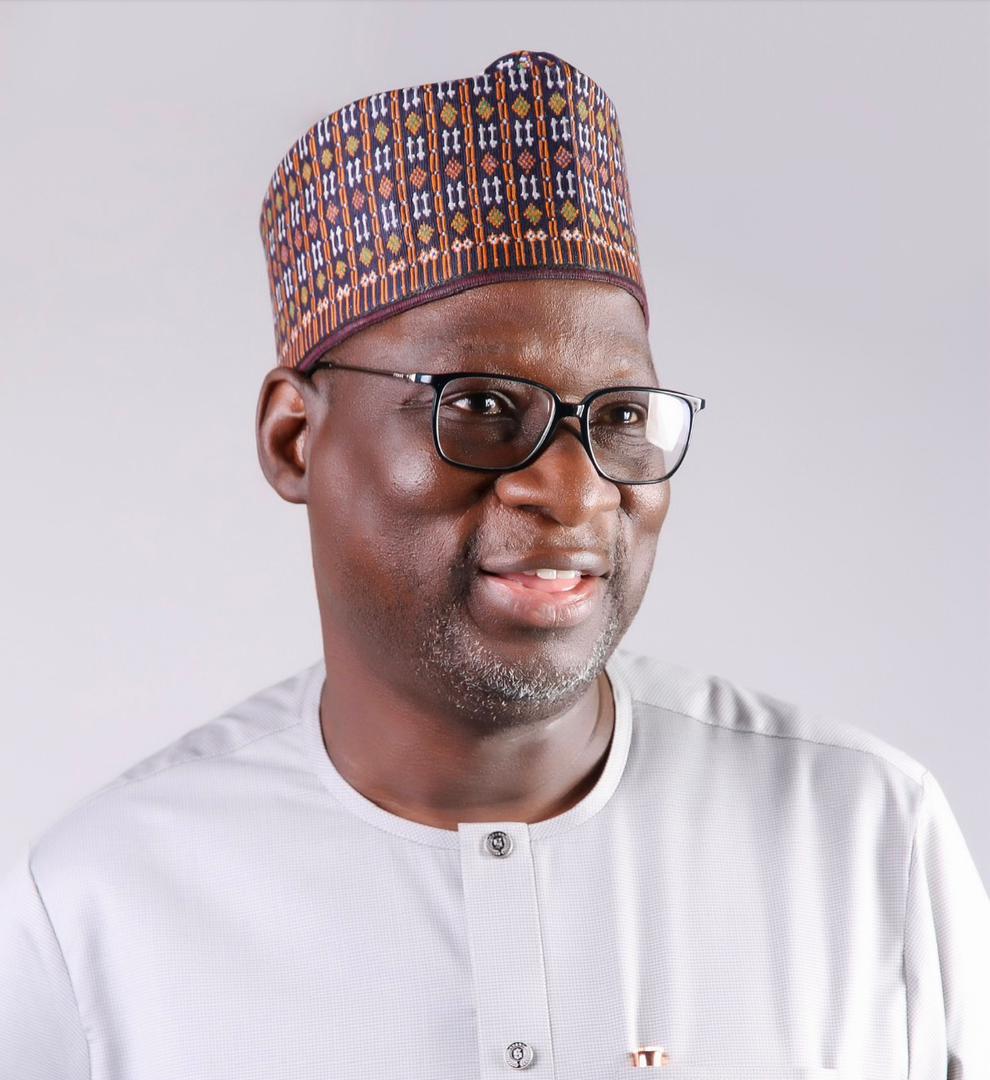
Dr Abdu is an International Development and Humanitarian Specialist based in Abuja.

Nonverbal 5 year old found dead in South Carolina waterway after wandering away from vacation home
âSorry to every woman out there, I had no business commenting on thisâ â Odogwu Asabaâs wife apologises after defending husband

Nigerian govt destroys 1,419 illicit weapons, recovers 5,449 firearms in 2026

Armed Forces of Nigeria records significant successes across theatres of operations against Terrorists, Bandits, Kidnappers, Oil Theft and others

Military conducted 7,062 operations, rescued 777 kidnapped victims in 2 months – DHQ

No Muslim group planning to establish Hisbah in Plateau – JNI

Former Man.United star Scott McTominay set to undergo heart surgery

 Investigation3 days ago
Igbos built Nollywood, but Yorubas have become dominantâ â Francis Duru

 Investigation3 days ago
Egyptian queenâs 673-diamond necklace stolen from museum
- Investigation2 days ago
Iâm free! – football star, Jay Jay Okocha jokes after dancing with his daughter at her wedding
- Investigation3 days ago
âAs someone who got married for love 10 years ago, I really pity men and women of this generationâ â Nigerian lady speaks on modern relationships
- Investigation3 days ago
Sokoto Hisbah denies trying to restrict Christian worship
 Politics1 day ago
Edo begins 14-day fasting, prayers for divine protection, direction
- National3 days ago
No new terror group, mass kidnapping in Ebonyi —Police
- Breaking3 days ago
Troops intercept ₦9.89m ransom, rescue 27 kidnap victims in Kaduna, Zamfara, Kebbi