National
AANI president seeks secure environment to unlock Nigeria’s Orange Economy potential

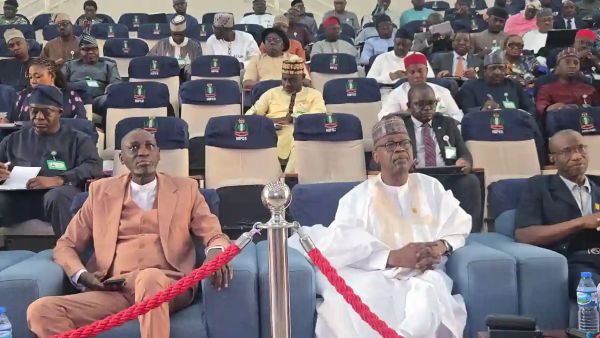
The President of the Alumni Association of the National Institute (AANI), Ambassador Emmanuel Obi Okafor, mni, has called for a secure, stable and enabling environment to unlock the vast potential of Nigeria’s Orange Economy.
He said security is a fundamental prerequisite for entrepreneurship, innovation, investment, and sustainable national development.
Ambassador Okafor made the call at the 5th Distinguished AANI Alumni Lecture at the National Institute for Policy and Strategic Studies (NIPSS), Kuru, Plateau State.
The lecture, themed: “The Orange Economy and Entrepreneurship for Sustainable Development in Nigeria: Security as a Primary Enabler,” brought together policymakers, academics, security experts, development practitioners, members of the AANI community, and participants of the Senior Executive Course 48.
In his welcome address, the AANI president, who is the chairman of the Alumni Lecture Series, described NIPSS as more than a premier institution for policy and strategic studies, stressing that it remains a unique national platform where strategic thinking is cultivated, critical perspectives are exchanged and commitment to national service is strengthened.
He noted that the Distinguished AANI Alumni Lecture Series reflects AANI’s commitment to deploying the collective experience, expertise and intellectual capital of its members in addressing critical national challenges and contributing to Nigeria’s development.
Okafor observed that Nigeria’s creative industries, including music, film, fashion, literature, publishing, visual artsm and digital content creation, possess enormous potential to stimulate economic growth, create employment, promote entrepreneurship, strengthen Nigeria’s global cultural influence, and provide opportunities for its youthful population.
He, however, emphasised that the potential of the sector could only be fully realised through sustained investment in skills development, infrastructure, access to finance, digital connectivity, innovation and intellectual property protection, all of which require a secure and predictable operating environment.
The AANI president therefore urged policymakers to embrace a broader and more developmental conception of national security—one that goes beyond the traditional emphasis on territorial defence and physical security to encompass economic opportunity, entrepreneurship, education, human capital development, social inclusion and the protection of creative enterprise as essential components of sustainable national security.
In his remarks, the Director-General of NIPSS, Professor Ayo Omotayo, described the Distinguished AANI Alumni Lecture Series as one of the Institute’s enduring intellectual traditions for promoting evidence-based policy discourse and stimulating practical responses to Nigeria’s development challenges.
Omotayo observed that Nigeria possesses immense creative talent and entrepreneurial energy but stressed that these assets could only translate into sustainable economic transformation where the requisite institutional and security conditions exist.
He noted that “ideas require institutions, innovation requires investment, entrepreneurship requires confidence, and confidence flourishes only where security prevails”.
He further described security as “the invisible infrastructure upon which economic transformation depends,” and called for coherent policies, effective institutions and stronger partnerships to create an enabling environment for the growth of Nigeria’s creative economy.
Delivering the keynote lecture, Rear Admiral Emmanuel O. Jaiyeola (retd.), mni, described the Orange Economy as one of Nigeria’s most promising pathways to inclusive and sustainable development.
He explained that the Orange Economy, driven by creativity, culture, innovation and intellectual property, offers significant opportunities for employment generation, economic diversification, youth empowerment, cultural preservation and social inclusion.
The keynote speaker identified Nigeria’s large youthful population, rich cultural diversity, abundant creative talent and rapidly expanding digital ecosystem as strategic advantages capable of positioning the country as a major global player in the creative economy.
Jaiyeola, however, identified inadequate infrastructure, limited access to finance, weak intellectual property protection, skills deficits, policy fragmentation and insecurity as major constraints to the sector’s development.
Describing insecurity as “the most pervasive constraint,” he called for stronger collaboration among government institutions, the private sector, educational and training institutions, creative industry stakeholders and development partners.
He also advocated increased investment in digital infrastructure, entrepreneurship development, skills acquisition, intellectual property protection, and other critical enablers of the creative economy.
Contributing to the discussion, Comrade Issa Aremu, mni, Director-General of the Michael Imoudu National Institute for Labour Studies (MINILS), underscored the enormous potential of the Orange Economy to generate employment and livelihood opportunities for Nigeria’s large and growing youthful population.
Aremu drew particular attention to the security vulnerabilities within the informal sector, where a significant proportion of creative and entrepreneurial activities take place.
He advocated the formalisation of the informal sector as an important step towards improving security, regulation, access to finance, social protection and institutional support for entrepreneurs and creative practitioners.
He further called for stronger collaboration between stakeholders in the creative economy and the Federal Ministry of Arts, Culture and the Creative Economy, stressing the need for a coordinated policy framework that would enable the sector to realise its full economic and developmental potential.
He also highlighted the growing importance of the digital space to the Orange Economy and advocated greater attention to the protection of online operations and creative assets.
He urged relevant stakeholders to explore applicable international frameworks, including the Geneva Convention and other relevant international instruments, in strengthening the protection of digital activities and intellectual property in an increasingly interconnected global environment.


Idahosa Dismisses ‘Politics Is Dirty’ Narrative, Hails Okpebholo’s Support at Birthday Celebration

Terror attack: Kebbi govt to support families of 10 slain Police officers

AANI president seeks secure environment to unlock Nigeria’s Orange Economy potential

Police arrest ASUU IMSU officials over strike

Oshiomhole at 74 Celebrates Idahosa at 46, Hails Deputy Governor as Youth Role Model

Okpebholo Joins Dignitaries to Receive Remains of Late Archbishop Akubeze

₦61.45bn UBA debt: Court freezes WEMPCO accounts, executives risk jail
- Society3 days ago
Drama at Elubo as Assembly Pulls Down GH¢4m Building Over Permit Dispute
- Investigation2 days ago
âHarry Potterâ actress reveals life-changing amount of money sheâs made from 0nlyF@ns
- Investigation1 day ago
âTribalism is one of Nigeriaâs problems. Voting for someone solely because of their tribe doesnât exempt you from the consequences of that b@d choiceâ â Solomon Buchi
- Investigation3 days ago
Former US Leader Joe Bidenâs cancer has spread further into his body, His Son Says
- Investigation1 day ago
âPeople who arenât financially stable should legally not be allowed to have childrenâ â TikToker Shirin doubles down amid backlash
- Investigation2 days ago
Kano court remands woman accused of cutting off boyfriendâs genital
- Investigation1 day ago
AFC, UEFA, CONCACAF demand review of Infantinoâs failed FIFA deal
- Investigation1 day ago
Police arrest alleged fake âpastorâ over Jerusalem pilgrimage scam

