Breaking
Atiku’s subsidy promise is political desperation, Presidency fires back

Advertisement
Advertisement
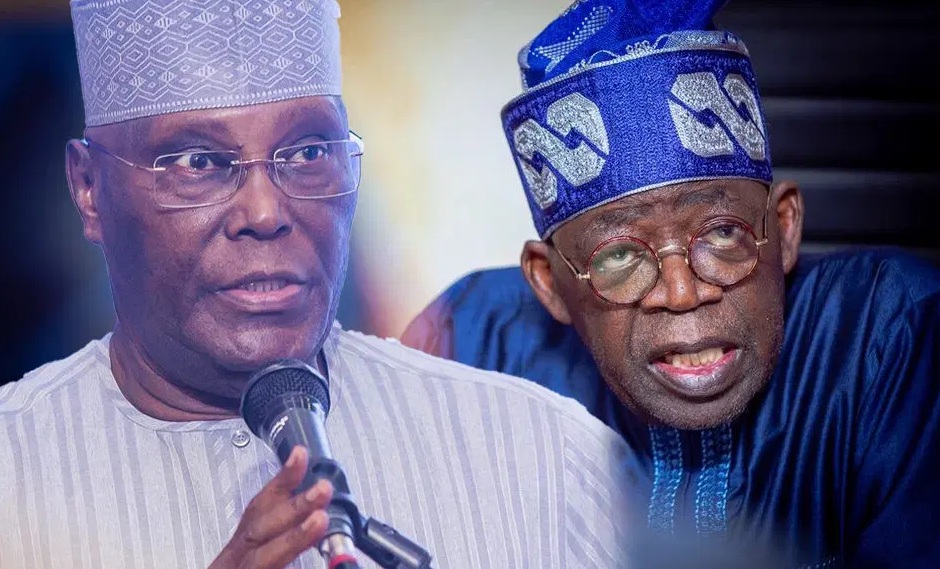
The Presidency has criticised former Vice President Atiku Abubakar’s proposal to restore petrol subsidy if elected president, describing the policy as a reversal of Nigeria’s ongoing petroleum-sector reforms and questioning how such a programme would be financed.
The Special Adviser to President Bola Ahmed Tinubu on Information and Strategy, Bayo Onanuga, in a statement on Thursday, August 20, said Atiku’s proposal amounted to a volte-face from his previous position on petrol subsidy and was driven by political desperation ahead of the 2027 presidential election.
The Presidency, however, acknowledged Atiku’s constitutional right to propose alternative policies, but said Nigerians were entitled to know the fiscal, legal and economic implications of returning to a subsidy regime that was dismantled under the Petroleum Industry Act (PIA).
The statement, titled “Restoring petrol subsidies: Atiku’s volte-face and desperation for power,” followed Atiku’s recent declaration that his administration would restore petrol subsidy if elected president.
Mr Onanuga said Atiku had previously advocated the removal of fuel subsidy in the run-up to the 2023 presidential election but had now reversed his position.
“Even though he used to believe that the subsidy regime must be eliminated, a point he canvassed in the run-up to his defeat in the 2023 election, he has now opportunistically recanted the major plank of his economic doctrine,” he said.
The Presidency argued that the proposal required closer scrutiny because Nigeria’s petroleum industry had undergone significant structural changes since the removal of petrol subsidy in 2023.
According to Onanuga, the subsidy was not simply money sitting in government coffers that could be deployed to make petrol cheaper, but represented the difference between the regulated pump price and the actual cost of supplying the product.
He explained that under the former arrangement, the Nigerian National Petroleum Company, NNPC, absorbed significant under-recoveries by selling petrol below its actual cost, leaving government with substantial financial obligations.
The Presidency also rejected Atiku’s claim that the removal of subsidy had generated a N30 trillion windfall or savings for the Federal Government.
“Contrary to Atiku’s claim in his interview, no N30 trillion subsidy windfall or savings exists anywhere except in his imagination,” Onanuga said.
He said the subsidy regime had already been dismantled under the PIA, which provided a new framework for the downstream petroleum sector and scheduled the end of petrol subsidy by June 2023.
According to him, President Tinubu merely accelerated the process by a few weeks after assuming office in May 2023 to prevent further financial losses.
The Presidency maintained that restoring subsidy would therefore require more than a presidential announcement, arguing that the government would have to establish a new legal, fiscal and administrative framework for the policy.
It said such a framework would have to clearly identify the source of funding and explain how subsidy payments would be administered under the current petroleum-market structure.
Dangote refinery, local production at centre of controversy
A major plank of the Presidency’s argument against subsidy restoration is the transformation of Nigeria’s petroleum landscape, particularly the emergence of large-scale domestic refining capacity.
Mr Onanuga said Nigeria had historically relied heavily on imported petrol, with government absorbing the difference between regulated pump prices and the cost of importing and distributing the product.
He argued that the emergence of the Dangote Refinery and other domestic refining facilities had fundamentally altered the dynamics of the downstream petroleum market.
According to him, returning to the old subsidy regime could undermine the investments and market conditions that have encouraged local refining.
He particularly warned that smaller domestic refineries could struggle if government once again introduced a heavily subsidised petrol market.
The Presidency also argued that increased domestic refining could help Nigeria conserve foreign exchange, strengthen energy security, create jobs and develop the local petroleum industry.
Mr Onanuga said the emerging market-driven system was a sharp departure from the period when Nigeria depended heavily on imported refined petroleum products.
He recalled that during the administration of former President Olusegun Obasanjo, in which Atiku served as vice president, refined petroleum products constituted one of Nigeria’s largest import bills.
According to him, the Tinubu administration had begun reversing that trend by encouraging domestic refining and reducing dependence on imported petrol.
‘Who will pay for subsidy?’
The Presidency challenged Atiku to explain how much his proposed subsidy programme would cost and where the money would come from.
Mr Onanuga said that if petrol was sold below its economic cost, the government would inevitably have to absorb the difference.
He asked whether such a programme would be financed through increased borrowing, reduced allocations to the states and local governments, cuts in infrastructure and social spending, or a combination of the options.
“In practical terms, therefore, Nigerians should ask a straightforward question: If the subsidy is restored, who pays for it?” he said.
He also questioned what pump price Atiku’s proposed subsidy would support, asking whether petrol would be sold at N200 or N500 per litre when its economic cost could be substantially higher.
The Presidency argued that the subsidy regime had historically imposed a heavy burden on public finances and, at various times, had been financed through borrowing and other public-sector arrangements.
Mr Onanuga said millions of barrels of crude oil had previously been pledged against loans used to finance the subsidy regime, while the NNPC had at some point faced significant financial pressure arising from obligations to petroleum suppliers.
FG defends subsidy removal
The Presidency also linked the removal of petrol subsidy to improved government revenues and stronger allocations to the three tiers of government.
Mr Onanuga said the funds that would previously have been committed to subsidising petrol were now available to the Federal Government, states and local governments for public expenditure.
He cited the July Federation Account allocation of about N3 trillion to the three tiers of government as evidence of the improved fiscal position.
The Presidency argued that increased allocations could enable state and local governments to pay salaries, execute infrastructure projects and provide social services.
It maintained that the challenge facing Nigerians was not whether government should provide relief from high energy costs, but how such relief could be achieved without recreating the fiscal problems associated with the former subsidy regime.
“There is no disagreement that the cost of petrol places enormous pressure on Nigerian households and businesses. The hardship created by higher energy and transportation costs is real,” Onanuga said.
He said the Tinubu administration was therefore pursuing alternative measures to reduce energy costs, including the promotion of Compressed Natural Gas (CNG) as a cheaper alternative to petrol.
According to him, CNG could be about 70 per cent cheaper than petrol for some users, particularly commercial transport operators and businesses.
He noted that major companies, including Dangote and BUA, had already incorporated CNG-powered trucks into their fleets.
The Presidency, however, urged commercial transport operators to pass the benefits of lower energy costs on to consumers through reduced transportation and distribution charges.
Presidency demands details from Atiku
Mr Onanuga said any political promise to restore subsidy must be supported by clear fiscal calculations rather than broad campaign rhetoric.
He challenged Atiku to provide Nigerians with details of the proposed policy, including its projected annual cost, source of funding and legal implications.
He also asked whether an Atiku administration would seek amendments to the PIA and other petroleum-sector regulations to facilitate the return of subsidy.
The Presidency further questioned how a new subsidy regime would be protected from the alleged fraud, manipulation and abuse associated with the previous arrangement.
It also asked what exactly the subsidy would cover under the emerging domestic refining model — whether the cost of local production, transportation and distribution or another component of the petroleum value chain.
The statement said Nigeria could not afford to return to a system in which the costs of subsidising petrol were obscured until they emerged later as public debt, reduced government spending and pressure on the naira.
Mr Onanuga nevertheless said the government welcomed debate over the cost of living and alternative economic policies.
He urged political parties and presidential aspirants to present Nigerians with realistic proposals capable of addressing hardship without undermining the structural reforms already implemented in the petroleum sector.
“The country should welcome robust debate about the cost of living and the direction of economic policy. But that debate must be anchored in Nigeria’s reality today, not yesterday’s petroleum economy,” he said.
The Presidency therefore called on Atiku and other political actors to disclose the full fiscal and legal implications of any proposal to restore petrol subsidy before seeking Nigerians’ support.


Atiku’s subsidy promise is political desperation, Presidency fires back

Adeleke presents certificate of return to Tinubu at Aso Rock

Osun APC stakeholders write Tinubu, blame Oyetola for governorship election loss

Shina Peller joins Oyo North senatorial race on APM platform

Adeleke presents certificate of return to Tinubu

Sokoto boat mishap claims 41 lives, 11 rescued — NIWA

Ogoniland: Don’t resume oil production until pollution is addressed, Reps member warns

 News2 days ago
Lagos Manager in Court Over Alleged ₦6.1m Warehouse Theft
- Investigation3 days ago
Sad! Veteran Nollywood actor, Taiwo Hassan âOgogoâ battling stage 4 cancer
- News2 days ago
Abuja Flood Crisis: Maitama Structures Face Demolition Over Blocked Waterways
- Investigation2 days ago
âHell is realâ â Solomon Buchi slams Pastor Tobi Adegboyega for trivialising hellfire
- Investigation2 days ago
âI am not going to apologize to Monday Okpobolo,I posted his WAEC results for the people of Edo state to see who is governing them. I feel so bad for his kids- singer, Davido
- Investigation3 days ago
Troops foil mass abduction in Zamfara
- Investigation3 days ago
Four Almajiri d!e after suspected food poisoning in Kano
- Investigation2 days ago
I wouldâve been in Osun if Tinubu wanted APC victory. Thereâs nothing Adeleke can do – Wike