Breaking
Iran won’t reopen Strait of Hormuz until US meets conditions — Revolutionary Guards

Advertisement
Advertisement
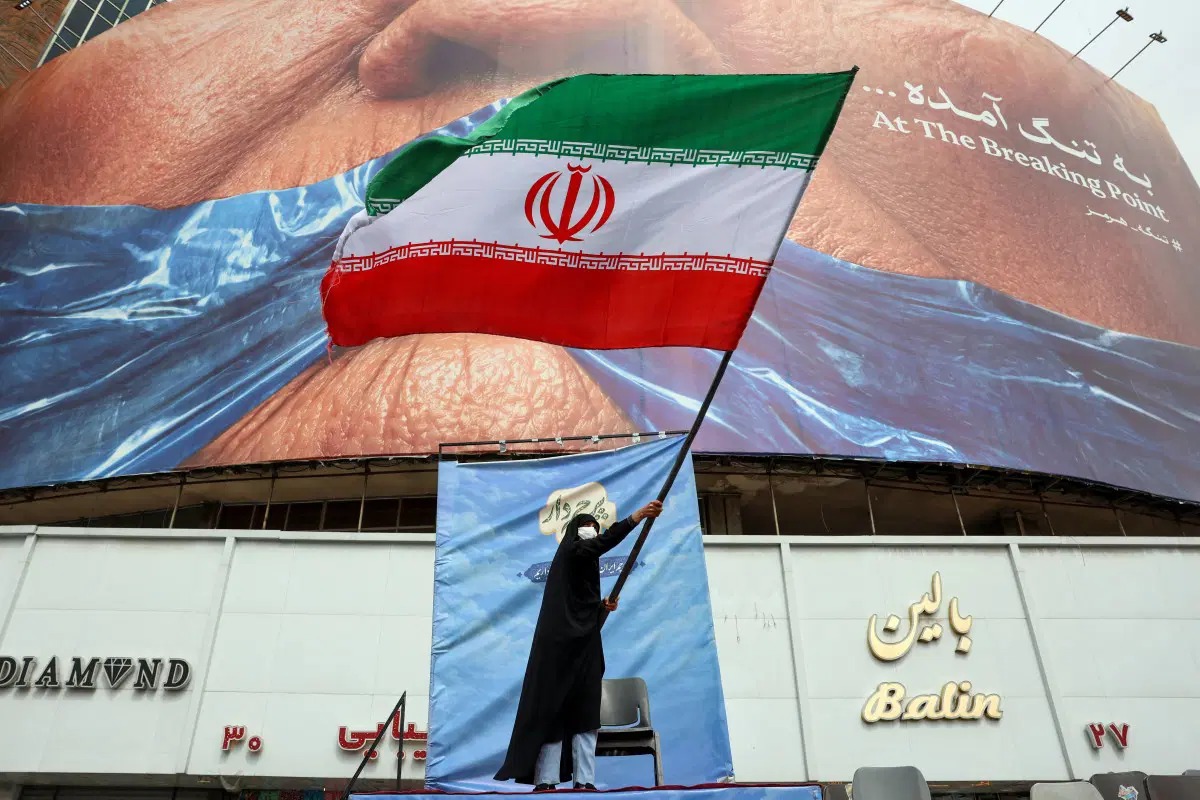
Iran’s Revolutionary Guards have warned that the country will not fully reopen the strategic Strait of Hormuz until the United States meets a series of conditions, including lifting sanctions, withdrawing its forces from the region and paying compensation for war damages.
The position, announced amid renewed diplomatic efforts to restore shipping through the vital waterway, was reinforced by Mohammad Bagher Zolghadr, secretary of Iran’s Supreme National Security Council, in a statement carried by Iranian state media.
Zolghadr said the strait would remain closed until Washington “corrects its behaviour” towards Tehran, adding that Iran would not retreat from its demands either during negotiations or amid continued tensions.
Among the conditions outlined by the Iranian official are an end to US military action against Iran and its regional allies, the lifting of the US naval blockade, withdrawal of American naval and air forces from areas surrounding Iran, removal of sanctions and the release of Iranian assets frozen abroad.
Tehran is also demanding compensation for what it described as damages caused by two wars of aggression against Iran.
Iran has further demanded that Washington permanently end threats and what Tehran considers hostile or insulting rhetoric against the country.
The demands come as Oman continues to mediate between Washington and Tehran in efforts to establish a new arrangement for shipping through the Strait of Hormuz.
Iranian Foreign Minister Abbas Araghchi has indicated that progress has been made on a possible shipping arrangement with Oman, but Tehran maintains that an interim shipping agreement would not automatically amount to a full reopening of the waterway.
The Strait of Hormuz is one of the world’s most strategically important maritime passages, connecting the Persian Gulf with the Gulf of Oman and the wider Arabian Sea.
A prolonged disruption of shipping through the strait could have significant consequences for international energy markets because a substantial share of global oil and gas supplies normally passes through the waterway.
The latest Iranian position therefore threatens to prolong uncertainty in global energy markets, particularly as Washington and Tehran remain divided over sanctions, military deployments and the terms of any final settlement.
The dispute also comes against the background of a fragile ceasefire arrangement reached earlier in the year between Iran and the United States.
A June memorandum of understanding had envisaged an extension of the ceasefire and the reopening of the Strait of Hormuz, but the arrangement has subsequently come under severe strain amid renewed hostilities and disagreements over its implementation.
The United States has also rejected Iran’s efforts to impose a system that would give Tehran greater control over shipping through the strait.
Washington has maintained pressure on Tehran through sanctions and maritime restrictions, while President Donald Trump has insisted that any final agreement must address broader US security concerns.
Iran, however, has accused the United States of violating previous understandings and has insisted that sanctions relief and other concessions must form part of any lasting settlement.
The latest demands could further complicate negotiations because several of Tehran’s conditions would require major changes in US military and economic policy.
The call for war compensation is particularly significant, as Washington has not indicated that it is prepared to accept Iran’s characterisation of the conflict or agree to reparations as a condition for reopening the waterway.
The standoff has also heightened concerns among Gulf states whose economies and energy exports depend heavily on secure maritime access.
The UAE has accused Iran of attacks on vessels in the region, while other Gulf countries have repeatedly called for freedom of navigation and the protection of commercial shipping.
Despite the hardening rhetoric, diplomatic channels remain open, with Oman continuing its mediation efforts between the two sides.
Iranian President Masoud Pezeshkian has also expressed optimism about reaching an agreement, describing the current period as a potentially important moment for diplomacy.
For now, however, Tehran’s position is that the Strait of Hormuz will not return fully to normal until Washington meets its conditions, leaving the future of one of the world’s most important shipping routes tied directly to the outcome of the US-Iran negotiations.


Tonto Dikeh unveils new ministry

Boards are expanding the CFO’s mandate—with COO duties increasingly in the mix

Hall of Fame basketball coach and NBA player, Don Nelson d!es at 86

Nigeria Just Cut Tokunbo Import Duty to 5 Percent but Nobody Is Checking Whether the Cars Were Written Off in America

Ooni rejoices Oba Adebisi’s Queen on her 40th birthday

15 passengers burnt to d3ath in Niger State auto crash

Newborn Baby Found Abandoned In Trash Bin, Rescued By Concerned Resident

 Investigation3 days ago
Jude is not a good person, I donât know if he used juju on Paul – PSquareâs elder brother, Henry Okoye finally opens up on family feud (video)
- News3 days ago
Two Farmers Abducted in Ondo as Suspects Demand ₦100m Ransom
- Society2 days ago
Man Allegedly Collected GH¢60,000 as a Lawyer, Then Paid a Qualified Lawyer Just GH¢8,000 to Handle the Case
- News3 days ago
Customs Intercepts ₦362m Worth of Contraband in Adamawa and Taraba
- Investigation2 days ago
âHe was the coolest guyâ – Tom Holland says Justin Bieber was his childhood celebrity obsession
- Investigation3 days ago
Man City reject Barcelonaâs £38.5m bid for Rodri
- Investigation2 days ago
Power sectorâs progress will now be measured by communities electrified and not megawatts – Minister of Power Joseph Tegbe
- Investigation3 days ago
Grammy-nominated singer Jubilant Sykesâ son pleads not guilty to his brutal murd£r