Breaking
Japan commits $3.5m grant to boost Nigeria’s rice seed production

Advertisement
Advertisement
The government of Japan on Monday provided about 587 million Japanese yen, equivalent to 3.5 million US Dollars, to strengthen rice seed production and boost agriculture and Nigeria’s food security.
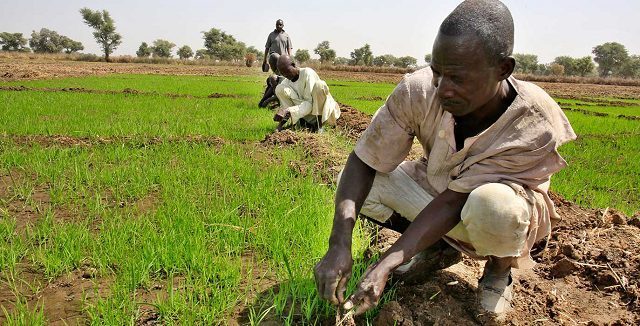
Japanese Ambassador to Nigeria, Mr Hideo Suzuki, disclosed this at the handover ceremony of the Project for the Enhancement of Rice Seeds Production System at the National Cereals Research Institute, NCRI, Badeggi, Bida Local Government Area of Niger.
Suzuki explained that the project would strengthen NCRI capacity to produce high-quality breeder and foundation rice seeds, thereby improving the quality of certified seeds supply to farmers nationwide and ultimately increasing yields, productivity and confidence in Nigeria’s seed system.
He said agriculture remained a cornerstone of Nigeria’s economy and food security, noting that the growing demand for rice continued to outpace domestic production.
The Ambassador said that Japan was using the project to support the Federal government Second National Rice Development Strategy (2020–2030) aimed at doubling domestic rice production.
Suzuki pointed out that quality seed was fundamental to successful agriculture, as modern farming technologies and good agronomic practices could only reach their full potential when farmers had access to reliable planting materials.
“Good seed is the beginning of a good harvest,” he said.
He said the grant would finance modern agricultural equipment for NCRI headquarters and its outstations in Niger and Oyo states, comprising 20 medium-sized tractors, three rice transplanters, four small combine harvesters and two excavators for seed cultivation and production.
Other equipment, he said, included four constant-temperature germination testers, three sets of automatic weather observation systems for testing purposes and seven small flat drying machines for post-harvest processing.
Suzuki said the investment goes beyond machinery, describing it as an investment in knowledge, innovation and the future of Nigerian agriculture, which would improve seed production efficiency and quality, reduce labour-intensive processes and enhance NCRI’s capacity to serve farmers nationwide.
He said the project also combined equipment provision with technical assistance, operation and maintenance training and institutional capacity development, stressing that sustainable agricultural development required both machinery and human capacity.
Japanese ambassador Hideo Suzuki at equipment handover in Niger
He urged NCRI to ensure proper operation, maintenance and effective utilisation of the equipment so that its benefits would continue to reach Nigerian farmers for many years.
Suzuki added that Japan remained committed to strengthening agricultural productivity, food security and rural livelihoods in Nigeria.
In his remarks, Alhaji Aliyu Sabi- Abdullahi, Minister of State for Agriculture and Food Security, commended the Government and people of Japan and the Japan International Cooperation Agency (JICA) for their consistent support for Nigeria agricultural development.
He described the intervention as timely and strategic, saying it would strengthen rice seed production and mechanisation while addressing critical gaps in the rice value chain.
Abdullahi said that agriculture remains central to Nigeria economic transformation and national stability, stressing that food security is not merely an agricultural issue but a matter of national security and economic sovereignty.
The minister said that the project aligned with the Renewed Hope Agenda of President Bola Tinubu, particularly the Federal government priorities of achieving food security, reducing dependence on imports, creating jobs, empowering farmers and stimulating inclusive economic growth.
In his address, Mr Keiji Ishigame, Chief Representative of JICA Nigeria Office, said JICA launched the Coalition for African Rice Development (CARD) in 2008 with partners to support African countries to increase rice production and reduce dependence on imports.
He said Nigeria remains a key participant in CARD and developed the National Rice Development Strategy II (NRDS II), 2020 to 2030, as a roadmap for transforming the rice sector through improved productivity, stronger seed systems, mechanisation and value-chain development.
He said the equipment provided included tractors, seed production and processing machinery, laboratory equipment, an Automatic Weather Station and maintenance tools installed at NCRI headquarters in Badeggi and its outstations in Ibadan and Mokwa.
Ishigame said JICA’s intervention in Nigeria rice sector had evolved over the years to cover production, post-harvest management, marketing, agricultural extension, institutional strengthening and policy development.
He added that JICA was also implementing the Capacity Development for Enhancement of Rice Seed Production in Nigeria project to strengthen institutions and stakeholders involved in rice seed multiplication, quality control and seed management.
On his part, Gov. Umaru Bago of Niger, reaffirmed the state government’s commitment to initiatives aimed at boosting rice seed production and food security.
Bago, represented by Malam Muhammed Baba, Managing Director, Niger Agricultural and Mechanisation Development Authority (NAMDA), said improving access to quality rice seeds would enhance farmers’ productivity, food security and reduce dependence on food imports.
Earlier, Dr Mohammed Ndagi-Ishaq, Executive Director, NCRI, said the project had significantly enhanced the institute’s capacity for rice seed production.
He said the provision of modern agricultural machinery and seed-processing equipment would improve the efficiency, quality and scale of seed production, adding that the institute had developed and released high-yielding and climate-resilient crop varieties, including zinc-biofortified rice varieties.
He appealed to Japan, through its Embassy and JICA, to support NCRI with five Hilux vehicles to strengthen field inspection, monitoring and technical support in remote locations.
Also speaking, Prince Sunday Fagbemi, Chairman, NCRI Governing Board, described the intervention as a testament to the power of international cooperation and a shared commitment to food security and economic prosperity.
The News Agency of Nigeria (NAN) reports that the equipment supplied included tractors and attachments, rice transplanters, combine harvesters, seed graders, paddy huskers and germination testers.
Others were laboratory equipment, grain moisture meters, dryers, an Automatic Weather Station, maintenance tools, spare parts and other consumables.
NAN


MTN Ghana CEO Reveals Biggest Data Bundle Consumer On Its Network

May we live long to protect our children – Nigerian doctor writes after treating 12-year-old girl subjected to ‘hellfire punishment’ over alleged N500 theft

NDLEA Warns Parents as Drugs Are Hidden Inside Popular Sweets

Chad Removes Visa Requirements for All African Travellers

Nigerian Army Opens Applications for 2027 Short Service Commission

Japan commits $3.5m grant to boost Nigeria’s rice seed production

Married woman sent out of NYSC camp "for committing adultery" shares her side of the story

 Society2 days ago
Drama at Elubo as Assembly Pulls Down GH¢4m Building Over Permit Dispute
- Investigation3 days ago
Power sectorâs progress will now be measured by communities electrified and not megawatts – Minister of Power Joseph Tegbe
- Society2 days ago
Drama at Elubo as Assembly Pulls Down GH¢4m Building Over Permit Dispute
- Investigation3 days ago
Former US Leader Joe Bidenâs cancer has spread further into his body, His Son Says
- Investigation2 days ago
Kano court remands woman accused of cutting off boyfriendâs genital
- Society3 days ago
He Chopped Me And Later Bribed Me With ¢100 Not To Expose Him — Student Exposes Obuasi SHS Headmaster
- Society2 days ago
Ghana’s Deputy Head of Mission to Saudi Arabia Sanni Jajah Passes Away
- Investigation2 days ago
âHarry Potterâ actress reveals life-changing amount of money sheâs made from 0nlyF@ns