Breaking
Kaduna IGR hits N10bn monthly after Tinubu’s tax reforms— Uba Sani

Advertisement
Advertisement
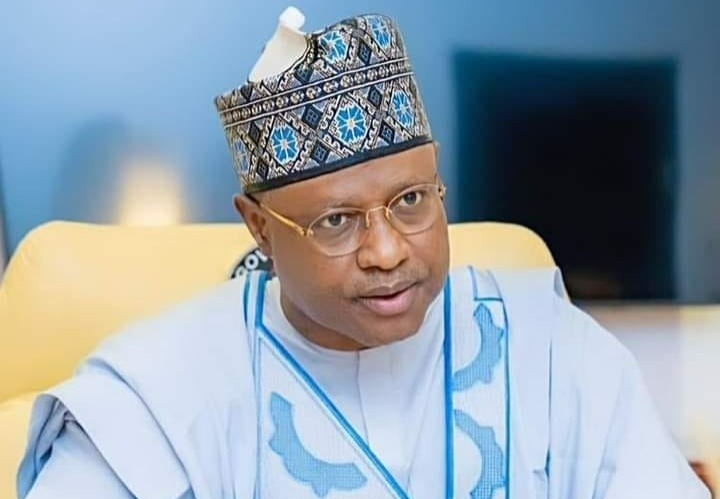
Kaduna State Governor, Uba Sani, has said Nigeria’s tax reforms have significantly boosted revenue generation, with the country recording about N21.6 trillion in revenue in the first half of 2026.
Mr Sani disclosed this on Wednesday in Kaduna at the 160th meeting of the Joint Revenue Board, held with the theme, “One Year of Tax Reform: Assessing Progress and Addressing Challenges.”
The governor said the reforms introduced by President Bola Tinubu had strengthened revenue mobilisation while improving the efficiency of the country’s tax administration.
According to him, Nigeria’s revenue stood at approximately N10.1 trillion in 2023, N21.6 trillion in 2024 and about N36.8 trillion in 2025.
“In the first half of 2026 alone, revenue reached approximately N21.6 trillion, representing a 49 per cent increase over the corresponding period of the previous year,” he said.
Mr Sani commended President Tinubu for taking what he described as “the bold and politically demanding decision” to fundamentally reform Nigeria’s tax architecture through landmark legislation, including the Act that transformed the former Joint Tax Board into the Joint Revenue Board.
He said the reform reflected an understanding that “a modern economy cannot be sustained by an outdated, fragmented or overly complex revenue system.”
“Nigeria requires a tax architecture that is coherent, predictable, efficient and capable of supporting national development without unnecessarily constraining enterprise and investment,” he said.
The governor also commended the Chairman of the Nigeria Revenue Service, Zach Adedeji, for his leadership in advancing the tax reform agenda.
He said Adedeji’s contribution had gone beyond technical competence to include an understanding of the broader objective of tax reform, which he said was to strengthen revenue mobilisation while making the system simpler, fairer, more predictable and responsive to taxpayers.
“Reforms of this magnitude inevitably require courage. They demand the patience to build consensus, the discipline to stay the course and the institutional imagination to turn legislation into effective administrative practice. Mr Adedeji has demonstrated these qualities with distinction,” Mr Sani said.
The governor also praised the immediate past Executive Chairman of the Kaduna State Internal Revenue Service, KADIRS, Jerry Adams, and his team for increasing the state’s internally generated revenue from barely N4billion to N10 billion monthly.
He said the revenue figures were more than mere fiscal statistics, describing them as evidence of “an emerging capacity to finance national development increasingly from domestic resources.”
According to him, the tax reforms were designed to simplify Nigeria’s complex tax environment, reduce multiple and overlapping taxation, deploy technology and e-invoicing to minimise leakages, and consolidate revenue administration.
He added that the reforms were also aimed at rebuilding the relationship between government and taxpayers.
The governor said sustainable taxation could not be based on coercion alone, but must be founded on fairness, transparency, predictability and trust.
“Citizens and businesses are more likely to comply when they understand their obligations, encounter a system that is straightforward to navigate, and have confidence that the resources they contribute are being responsibly applied to the public good.
“The objective, therefore, should not simply be to collect more revenue. It should be to build a tax system in which compliance becomes easier, enforcement becomes more intelligent and voluntary participation becomes the norm rather than the exception,” he said.
Mr Sani said Kaduna State had embraced the philosophy, noting that KADIRS had continued to invest in technology-driven revenue collection, professionalise its workforce and strengthen taxpayer education and engagement.
“Our objective is not simply to increase collections, but to build a revenue system that is broader, fairer, more efficient and more sustainable,” he said.
He added that the state was focused on expanding the tax base rather than placing a heavier burden on existing compliant taxpayers.
“We seek to make compliance easier and enforcement more intelligent, targeted and transparent.
“Above all, we seek to establish a relationship with taxpayers based not on fear, but on clarity, fairness and mutual responsibility.
“This is also why the institutional architecture created by the new reform matters so greatly,” the governor said.


Uber announces exit from Nigeria after 12 years of operation

Kano 2027: Woman among 19 candidates challenging Governor Yusuf in governorship race

Amaechi made pregnant woman give birth in prison â Wike alleges

Kaduna IGR hits N10bn monthly after Tinubu’s tax reforms— Uba Sani

Police dismiss three officers over UNIPORT graduate k!lling

Ekiti makes tourism history, bags ‘Most active Tourism State’ for third consecutive year
Ekiti makes tourism history, bags ‘Most active Tourism State’ for third consecutive year
- Investigation3 days ago
Iâm free! – football star, Jay Jay Okocha jokes after dancing with his daughter at her wedding
- Investigation2 days ago
âI wanted a child so badly that I accidentally discovered a very dark world in Nigeriaâ â Woman opens up about her desperate journey to have a baby

 Breaking3 days ago
Diphtheria outbreak hits 29 Katsina LGAs
- Investigation2 days ago
Iâm hungry. My children live in the city but they don’t visit or check on me – Elderly woman caught stealing farm produce in Kaduna shares her sad story
- National2 days ago
EFCC dismisses over 40 staff for corruption, prosecutes five others
- Investigation1 day ago
Germany defender Rüdiger announces international retirement
- Investigation1 day ago
Serial âb^tt snifferâ arrested again after trying to smell people’s b^ms in shops
- Breaking3 days ago
NiMet predicts 3-day cloudiness, sunshine nationwide