Politics
Religion, Power and the State: Who is bigger than Nigeria?

There is something deeply unsettling about a country that knows where the line is but appears unwilling to draw it.
Nigeria has laws against incitement. It has laws against threats to public order. It has institutions charged with protecting citizens from hate speech, religious intolerance and violence. Yet, when some of the most influential voices in the religious space appear to cross those boundaries, the national response often becomes strangely hesitant.
That hesitation is now the issue.
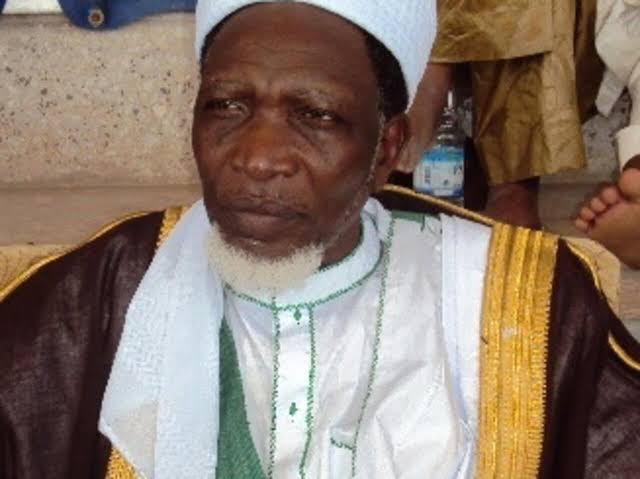
The recent controversy surrounding Sheikh Sani Yahaya Jingir is instructive. The National Human Rights Commission did not merely express disapproval of his remarks. It reviewed the viral video, described the utterances as capable of promoting religious hatred and violence, and called for his arrest and prosecution. The intervention was subsequently reinforced by the Nigeria Inter Religious Council, jointly led by the Sultan of Sokoto and the President of the Christian Association of Nigeria.
That should have settled the principle.
It has not.
The principle is simple. Religious authority cannot become political immunity. A turban does not place a man above the law. Neither does a collar. A mosque is not a sanctuary from accountability. Neither is a church. Influence may command respect, but it cannot confer exemption.
This is why the larger conversation cannot be reduced to Jingir.
Sheikh Ahmad Gumi provides another uncomfortable part of the Nigerian story. He went into forests where armed bandits operated and established direct contact with them. He argued repeatedly for dialogue and negotiation. On television, he described the conflict in ethnic terms and characterised some of the Fulani actors involved as militants fighting for ethnic survival.
There may have been a legitimate argument for dialogue. Indeed, governments themselves have employed negotiation and local mediation in dealing with armed groups. The mistake would therefore be to suggest that every attempt to talk to violent actors is itself criminal.
But there is a difference between authorised state policy and the emergence of a parallel influence structure around armed men.
There is also a difference between pleading for peace and repeatedly framing criminal violence through an ethnic grievance that risks turning victims and perpetrators into opposing communities.
That distinction matters.
Gumi has since rejected statements attributed to him that he says were doctored or manipulated. His explanations deserve to be heard. So do his arguments for dialogue. But explanations do not remove the responsibility of the state to examine conduct, statements and consequences.
The same principle must apply elsewhere.
Consider the increasingly assertive interventions of the Muslim Rights Concern, MURIC, under Professor Ishaq Akintola. There is nothing inherently illegitimate about demanding political representation for Muslims. There is nothing inherently illegitimate about challenging a government over perceived discrimination.
But when political argument is expressed in terms that divide citizens into religious constituencies and suggest that political allegiance should be determined by faith, Nigerians are entitled to ask where representation ends and religious mobilisation begins.
MURIC has demanded Muslim political candidates in parts of the South West and has gone further in its criticism of the Oyo State government, accusing Governor Seyi Makinde of pursuing what it called the Christianisation of Oyo.
That language deserves scrutiny, not because its authors are Muslims, but because religious entitlement is dangerous whichever direction it travels.
And that is precisely why Christian voices must not be given a free pass either.
If a Christian cleric tells Christians that political power belongs naturally to them, he should be confronted. If a pastor weaponises religious identity against Muslims, he should be called out. If a bishop turns political disagreement into religious warfare, the same law should apply. No Muslim should have to apologise for the misconduct of a Muslim cleric. No Christian should have to defend the misconduct of a Christian cleric.
The standard must be conduct, not creed.
That is the part of this debate Nigeria keeps getting wrong.
We have become accustomed to selective outrage. A poor man says something reckless and the machinery of the state can descend upon him with impressive efficiency. A powerful religious personality says something equally dangerous and suddenly everybody begins looking for context, nuance, reconciliation and further explanation.
Context is important. Nuance is necessary. But justice cannot be built on the social status of the person being examined.
The Nigerian state must learn to distinguish between religious freedom and religious impunity.
Freedom allows a cleric to preach his faith. It allows a religious organisation to defend its interests. It allows citizens to criticise government. It allows people to argue passionately for political representation.
It does not allow anybody to designate fellow citizens as lesser Nigerians because of their faith.
It does not allow anyone to encourage religious hostility.
It does not permit the language of political competition to become a summons to communal confrontation.
And it certainly cannot permit private influence over armed groups to evolve into an alternative security architecture.
This is not an argument for censorship. It is an argument for consistency.
The state should not silence inconvenient religious voices merely because their views embarrass government. Neither should it tolerate dangerous rhetoric merely because the speaker commands a large following or enjoys access to political power.
There is another danger here. Every time government hesitates to confront inflammatory religious speech, it transfers authority from the Constitution to the loudest voice in the room.
That is how a republic gradually loses the monopoly of legitimate authority.
The answer is not to place religion under government control. The answer is to ensure that religious influence operates within the same constitutional space as every other influence.
There are responsible religious leaders who understand this. The interfaith peace accord signed in Abuja recently by Muslim and Christian leaders is evidence that religious authority can also be used to lower the temperature rather than raise it.
Nigeria does not need fewer religious voices.
It needs responsible ones.
It does not need a state that fears religion.
It needs a state confident enough to protect religion from being turned into an instrument of political exclusion, ethnic mobilisation or violence.
And it needs citizens willing to ask the uncomfortable question whenever the boundary is crossed:
Who is bigger than Nigeria?
Not the imam.
Not the pastor.
Not the bishop.
Not the activist.
Not the politician.
Not the traditional ruler.
Not even the government.
Nobody.
The republic must remain bigger than all of them.
That is not hostility to religion. It is respect for the country in which all our religions must coexist.


Uber announces exit from Nigeria after 12 years of operation

Kano 2027: Woman among 19 candidates challenging Governor Yusuf in governorship race

Amaechi made pregnant woman give birth in prison â Wike alleges

Kaduna IGR hits N10bn monthly after Tinubu’s tax reforms— Uba Sani

Police dismiss three officers over UNIPORT graduate k!lling

Ekiti makes tourism history, bags ‘Most active Tourism State’ for third consecutive year
Ekiti makes tourism history, bags ‘Most active Tourism State’ for third consecutive year
- Investigation3 days ago
Iâm free! – football star, Jay Jay Okocha jokes after dancing with his daughter at her wedding
- Investigation2 days ago
âI wanted a child so badly that I accidentally discovered a very dark world in Nigeriaâ â Woman opens up about her desperate journey to have a baby

 Breaking3 days ago
Diphtheria outbreak hits 29 Katsina LGAs
- Investigation2 days ago
Iâm hungry. My children live in the city but they don’t visit or check on me – Elderly woman caught stealing farm produce in Kaduna shares her sad story
- National2 days ago
EFCC dismisses over 40 staff for corruption, prosecutes five others
- Investigation1 day ago
Germany defender Rüdiger announces international retirement
- Investigation1 day ago
Serial âb^tt snifferâ arrested again after trying to smell people’s b^ms in shops
- Breaking3 days ago
NiMet predicts 3-day cloudiness, sunshine nationwide