World
Inside school investigations frozen under Trump: Racial slurs, sexual harassment and more

This Video Is Trending Right Now
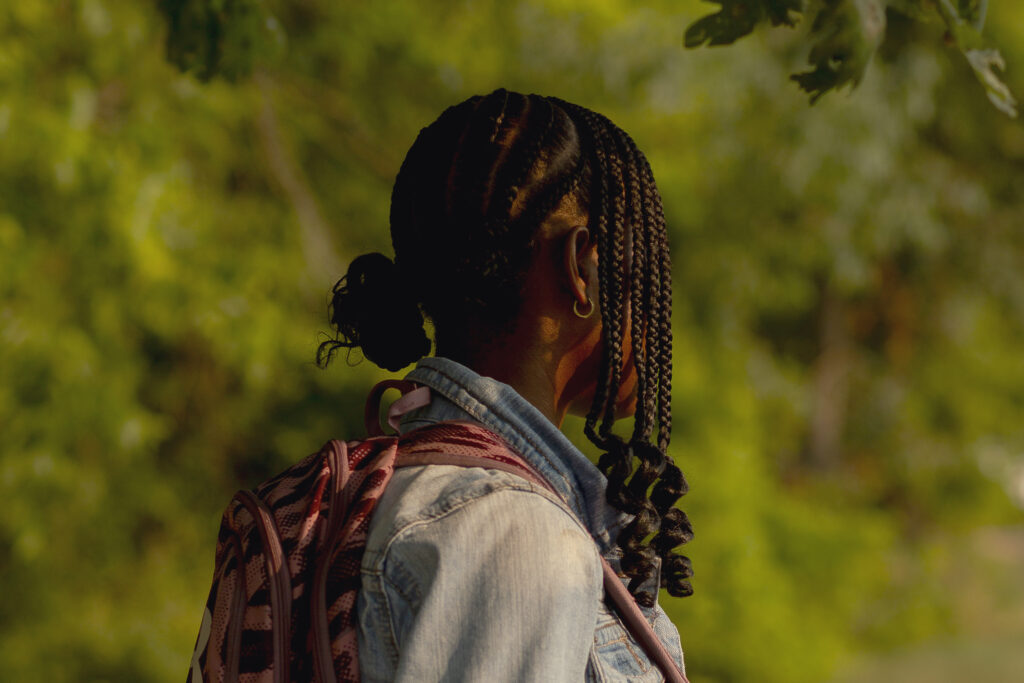
By the time Black History Month arrived to Chesaning Middle School in central Michigan in 2024, the only Black girl in the fifth grade had already endured a string of racial slurs. On the bus, she was called a “monkey,” she said. Students hurled the n-word at her and said her skin was “burnt like a piece of chicken.”
Then, apparently inspired by a February lesson about slavery, a White boy asked her, “Hey slave, where are your tools so you can get back to working?”
School officials told the girl’s mom that they were dealing with the situation, but the harassment continued, the mother and daughter said in an interview. Frustrated and angry, the mother picked up her iPhone one day, searched for “civil rights” and landed on a federal website.
She found a complaint form and filled it out.
“She’s being bullied to where she can’t even focus on schoolwork,” the mother wrote. She detailed racial harassment and said her daughter had been mentally and emotionally scarred. “I have to get my child help.”
Her complaint was forwarded to the Education Department’s Office for Civil Rights, the office responsible for ensuring that students can attend school free of racial harassment and that for decades has investigated discrimination claims in schools across the country. Originally created to enforce the Civil Rights Act of 1964, the office pressured Southern schools to dismantle segregation and later was tasked with investigating discrimination in schools based on sex, disability and other factors, in addition to race.
In June 2024, the office launched an investigation of Chesaning Union Schools. By that fall, investigators had documented the allegations of harassment and expressed their concern that the district had failed to properly respond, according to an investigative document obtained by The Washington Post and two people familiar with the situation. In early January 2025, federal officials opened negotiations with the district on an improvement plan that would settle the case.
What happened next marked a break with decades of federal practice. Instead of resolving such investigations, the Trump administration indefinitely froze them, according to eight current and former employees, who, like others, spoke on the condition of anonymity because they were not authorized to speak about their work publicly. The administration gutted the Office for Civil Rights and prioritized investigations into transgender athletes and other conservative priorities.
More than three dozen investigations were complete, including this one in Michigan, and at the final stage — negotiations that could have required remedies such as training, better accountability systems and, in some cases, compensation for students.
But those agreements were never finalized, school district officials and other people familiar with the matter said. When President Donald Trump’s second term began, there were thousands of pending investigations. In the 18 months since then, the civil rights office has completed only three settlements, known as resolution agreements, involving racial harassment and no agreements regarding sexual harassment or violence, according to the department’s online database. By contrast, in 2024, the office completed 25 resolution agreements related to racial harassment and 47 related to sexual harassment or violence.
The details of pending investigations are typically cloaked in secrecy. But documents and interviews with current and former officials offer a rare look at allegations that are pending inside the agency.
Among them: Black students were called the n-word, “monkey” and other racial slurs. Children from the Middle East were called terrorists. Video of a sexual encounter between students was dropped into a group chat without consent. And a principal was accused of inappropriately touching girls.
Because of the inaction, there have been no federally mandated protections for students, consequences or accountability for the schools involved.
“The Department of Education’s role is literally to ensure that students don’t experience discrimination at school so they can access their education. What you have here is the Department of Education saying, ‘We won’t do that,’” said Michael Pillera, who worked for a decade at the Office for Civil Rights.
In a statement, Assistant Secretary for Civil Rights Kimberly Richey pointed to a backlog of about 19,000 cases inherited from the Biden administration and said that former president Joe Biden had failed students.
“Any implication that there was a purposeful decision to allow important cases to linger is dishonest,” she said in an emailed statement. “We are utilizing every tool at our disposal to resolve the backlog and return common-sense to our schools.”
But several current and former staffers said they were barred from working on certain types of cases. One former official, who spoke on the condition of anonymity for fear of reprisals directed at his new employer, said his office was close to wrapping up two cases of serious racial harassment in the final days of the Biden administration only to see the cases ignored after Trump arrived and changed the office’s priorities.
“There are real people and real lives at the end of these cases,” he said. “There are consequences for people emotionally, educationally. That story has somehow got lost.”
In response to the Michigan case, Erin H. Walz, an attorney for Chesaning Union Schools, said in an email that the district “categorically denies” the alleged harassment as described by The Post but declined to say what was inaccurate, citing student privacy laws.
Mike McGough, Chesaning’s superintendent, expressed frustration with the Office for Civil Rights.
“The diminished capacity of OCR serves neither party,” he said in an interview. “Complainants haven’t been able to get their claims heard. We don’t get to defend ourselves. We would have continued the process and I believe would have reached a fair and equitable resolution.”
Two months after Trump returned to the White House, the Cleveland office overseeing the Chesaning case was closed. Meanwhile, the racial harassment would only grow worse for one Black girl trying to survive middle school.
A change in priorities
The inaction on racial and sexual harassment cases stems from two decisions by the Trump administration: It cut the staff at the Office for Civil Rights by more than half and closed seven of 12 regional offices, overwhelming the remaining staff. (Some workers who were terminated returned following litigation.)
The administration also has prioritized investigating other types of cases, such as schools that allow transgender girls to compete on girls’ sports teams, antisemitism on college campuses and colleges that promote race- or gender-based scholarships. Executive orders issued on the day Trump returned to office took aim at diversity, equity and inclusion programs and policies that help transgender students.
In 2026, the office reached 31 resolution agreements enforcing Title VI, the federal law that bars discrimination based on race. All of them involved university partnerships with the PhD Project, which sought to recruit Black and Hispanic students to business school. The Education Department said these partnerships discriminated against people of other races.
Meantime, it was virtually impossible to get the go-ahead for the type of racial and sexual harassment cases that once made up some of the agency’s highest-profile work, several current and former employees said.
At the start of the Trump administration, work on all civil rights cases was halted, as is typical with a new administration, they said. But while some work was eventually unfrozen, they said cases that were pending from the Biden administration were not. Although staffers are officially allowed to work on new racial and sexual harassment cases, they need approval from headquarters to proceed with them. And that’s difficult if not impossible to get, partly because there is such a backlog, those people said.
There’s “no point” in working on these racial or sexual harassment cases because they won’t advance, said one of the staffers in the civil rights office who spoke on the condition of anonymity. “My team leader is just like, `No. We’re letting it sit.’”
That’s what happened in eight cases of racial or sexual harassment examined by The Post. Each case has been ignored for the past 18 months, according to people familiar with the cases.
In Ludlow, Massachusetts, a draft letter of findings noted widespread reports of racial harassment at the middle school between 2021 and 2024. White students reportedly called Black students the n-word and “monkeys,” remarked negatively on their hair or skin color and more.
In January 2025, an attorney with the Office for Civil Rights informed Ludlow Public Schools that the agency had concluded that the district failed to appropriately respond to harassment of one student and had concerns about treatment of others, emails obtained from the district through a public records request show. The parties opened negotiations toward a voluntary agreement that would close the case.
The district tentatively agreed to take a range of steps including paying tuition for a student who left the district, conducting mandatory trainings for all district employees on racial discrimination law and retaining a consultant to help the district implement “inclusive policies and procedures.”
They were close to an agreement on Jan. 21, 2025. Then the government stopped communicating with the district, and the case has been dormant since, people familiar with the case said.
Becky Bouchard, the district’s legal compliance officer, told The Post that Ludlow has taken some steps on its own, including providing guidance and support to students and staff and addressing concerns “as they arise.” She said the district takes all reports of discrimination and harassment seriously, investigates concerns consistent with law and policy and is committed to providing students with a “safe, respectful and inclusive” environment.
There has also been no action since early 2025 in Grand Junction, Colorado, where the civil rights office found that two students of Middle Eastern descent were bullied on the playground, in the hallways and in bathrooms. Other students allegedly called them “camel humpers” and “terrorists,” advised them to “go back to where you’re from” and said “you’re the reason my sister can’t sleep at night,” an investigation document shows.
A spokeswoman for the school system, Mesa County Valley School District 51, said that not all of the allegations are accurate but declined to specify what she believed to be inaccurate, citing laws that protect student privacy. She said the district aims to make decisions based on all available facts and to ensure the process is “fair for everyone involved.”
And at Phoenix Union High School in Arizona, an investigation into racial harassment of a pair of Black siblings showed that the academic performance and mental health of one sibling declined, while the other missed class and felt unable to communicate with teachers as a result. Schools may be in violation of the law if they fail to adequately respond to harassment that is so severe that it denies a student’s ability to benefit from their education. It is unclear whether this case was determined to have reached that level of severity.
Federal officials were negotiating a resolution with the school system in late December 2024 and early January 2025. Then the federal government stopped communicating, a district official said. A spokesman added, “We remain committed to creating welcoming environments that provide respectful treatment” for all.
Stalled sexual harassment cases detailed in documents obtained by The Post include allegations that a student in Arizona climbed over a bathroom wall to record other students, then shared the photos and videos with others; that a principal in Texas touched a student in a way that made her uncomfortable, commented on the attractiveness of cheerleading uniforms, and chest-bumped a cheerleader during a football game; and that a Louisiana college student secretly taped himself having sex with a woman and then shared the video with his fraternity brothers.
In each case, negotiations over resolutions were abruptly curtailed in early 2025 and remain unresolved, according to officials at each school.
Now the future of the Office for Civil Rights is uncertain.
The Trump administration announced in June that it would transfer much of the office’s work to the Justice Department, part of its effort to hollow out the Education Department in hopes of eventually shutting it down. Staffers at the Education Department say they have not been told how investigations will be conducted after the change takes effect.
At the Education Department, the civil rights office is obligated to look into every complaint filed. But at the Justice Department, attorneys pick and choose their cases.
‘Hey slave’
The harassment of the Black girl in Michigan persisted long after the complaint was filed and long after it was shelved, according to the mother and daughter, with mounting educational and emotional consequences.
The mother’s younger siblings had attended Chesaning schools without experiencing harassment, and her older children did not have problems either, she said. It was different for her youngest.
It began in fall 2023, when the girl entered the fifth grade, the mother and daughter said in interviews. Many of the allegations are also detailed in an investigative document, and others allegedly occurred after the civil rights office stopped engaging on the case. The mother spoke on the condition of anonymity because of concerns that telling her story could impact her job. She is legally the girl’s guardian and also her godmother, and they refer to each other as mother and daughter.
Students harassed the girl all over campus, she said: Sometimes she was insulted on the bus. Sometimes students would push her in the hallways and mutter the n-word under their breath. Once, a classmate told her she could not play with her group on the playground because she was Black. Naturally quiet and shy, she didn’t argue back.
During Black History Month, her class watched a documentary about the civil rights movement. When a protester in the film recounted a racist police officer using the n-word, it seemed to the girl that everyone in class snapped their heads to look at her. The girl asked her teacher for permission to sit in the hallway and begged her mother to let her stay home altogether.
Both said no.
“I scooched down in my chair because I didn’t want to be there,” the girl said in an interview.
She was in line for lunch in the cafeteria when she heard a White boy say “hey slave,” she recalled.
“Go get digging,” he continued, “I need some cotton.”
She felt herself starting to cry. The girl went to see the lunch monitor, who told her to go to the office, where she was asked why she didn’t tell the lunch monitor. The school said it would handle the matter, though the mother said officials would not tell her what punishment the boy received.
McGough, the superintendent, said he could not comment on this specific case due to privacy laws but, in general, cases of persistent harassment are dealt with using significant and progressive discipline.
Over winter and spring 2024, the mother documented her frustration and complaints in a long Facebook post and in emails sent to school and federal officials and reviewed by The Post.
In one example, another student called the girl a “Black monkey.” When called out by a school police officer, he defended himself this way: “I said ‘Black monkey,’ but I didn’t say it to her.’” The officer made him apologize, according to an email her mother sent to the federal official investigating the case.
By fall 2024, the federal investigation was complete. Officials concluded that the district knew about the harassment, according to a draft letter of findings reviewed by The Post.
The evidence “raises compliance concerns that the District did not consistently take prompt and effective steps to determine if the harassing conduct was occurring, remedy its effects, and prevent recurrence,” the letter said.
A proposed resolution agreement was sent to the school district in January 2025. It would have required Chesaning to better track incidents of harassment; train teachers, staff and students about racial harassment; conduct a climate survey to gauge the presence and impact of racial harassment; and provide counseling and tutoring to the girl who was harassed. The agreement also proposed that the district develop a plan so the girl would not be subjected to future harassment.
But the district and the government never reached an agreement, and the attorney working on the case was laid off from the agency.
Walz, the district’s attorney, declined to say whether Chesaning has taken any steps to address school climate.
The harassment continued, and, according to the family, school officials knew it.
Once, the girl reported use of the n-word to officials in the school office, she said, and they asked her whether she thought that was an accurate word to describe her. When the girl said no, a school official replied, “If you don’t think you’re that, why are you coming down here and complaining about it?” she recalled.
“They were trying to put the blame on me,” she said.
In May of this year, the mother found a boxcutter that belonged in the laundry room in her daughter’s room and questioned her about it. The girl confessed that the bullying was too much to handle and that she had considered hurting herself.
A meeting at the school left the mother unsatisfied that things would improve. She began considering other school districts for eighth grade. The girl is still traumatized, her mother said, and is in counseling.
For a time, the mother had felt sure the government would address the harassment. She believes the lawyer working on the case cared. “I could hear it in her voice,” she said.
But it’s been so long since she heard from the lawyer. More than a year since she heard from anyone at the Office for Civil Rights.
She no longer expects them to help.
Razzan Nakhlawi contributed to this report.


Trump’s remarkable private admission leaked by US officials: report

Inside school investigations frozen under Trump: Racial slurs, sexual harassment and more

Gov Lawal receives ZIK Pan-African Leadership Award in Ghana

Are Raccoons Evolving Into Pets?

Protesters block Mokwa-Bida Highway over rising banditry

I mistakenly followed another woman and my wife vowed not to forgive me – Nigerian man bemoans end of his marriage

Italy-based bizman arrested at Enugu airport, excretes 98 wraps of cocaine

 Society2 days ago
Two Ladies Subjected To Public Humiliation, Forced To Remove Their Drɔss, Clothes And Dance After Being Caught Stealing Bone-Straight Wig
- Investigation2 days ago
Jude is not a good person, I donât know if he used juju on Paul – PSquareâs elder brother, Henry Okoye finally opens up on family feud (video)
- Investigation3 days ago
âCheating on a man who doesn’t provide for you isn’t infidelity, it’s self-defenceâ â Reality star, Zari The Boss Lady
- Investigation3 days ago
Peter âMr Pâ Okoye backs lawyerâs explanation of the ongoing lawsuit against Jude Okoye and his wife, Ifeoma Okoye
- Investigation3 days ago
âI like myself nowâ â Juma Jux responds to concerns over his slimmer appearance
- News2 days ago
Two Farmers Abducted in Ondo as Suspects Demand ₦100m Ransom
- Society1 day ago
Man Allegedly Collected GH¢60,000 as a Lawyer, Then Paid a Qualified Lawyer Just GH¢8,000 to Handle the Case
 News2 days ago
Woman Arrested Over Alleged ₦42m Visa Scam Targeting 90 Travellers